
Why the same display does not suit every part of the store
A display that works well in a showroom can underperform in a busy aisle. In a showroom, shoppers usually stop, ask questions and spend time comparing finishes, sizes and features. In an aisle, people are often moving fast, carrying baskets or pushing trolleys, so the display needs to catch the eye quickly and not block the flow.
That difference matters because the same kiosk or 360-degree product stand can serve two very different purposes. In a showroom, it can be a guided selling tool. In an aisle, it must work like a quick decision point, giving clear information in seconds. If the unit is too large, too high or too close to the walking line, it becomes a nuisance rather than a sales aid.
Many retailers in Gauteng and the coastal cities ask for one format and then try to use it everywhere. That often leads to poor placement, blocked sightlines, or shoppers simply walking past. The better approach is to match the display to the pace of the area, then build the content and hardware around that use. Small detail, big difference.
What showroom placement does best
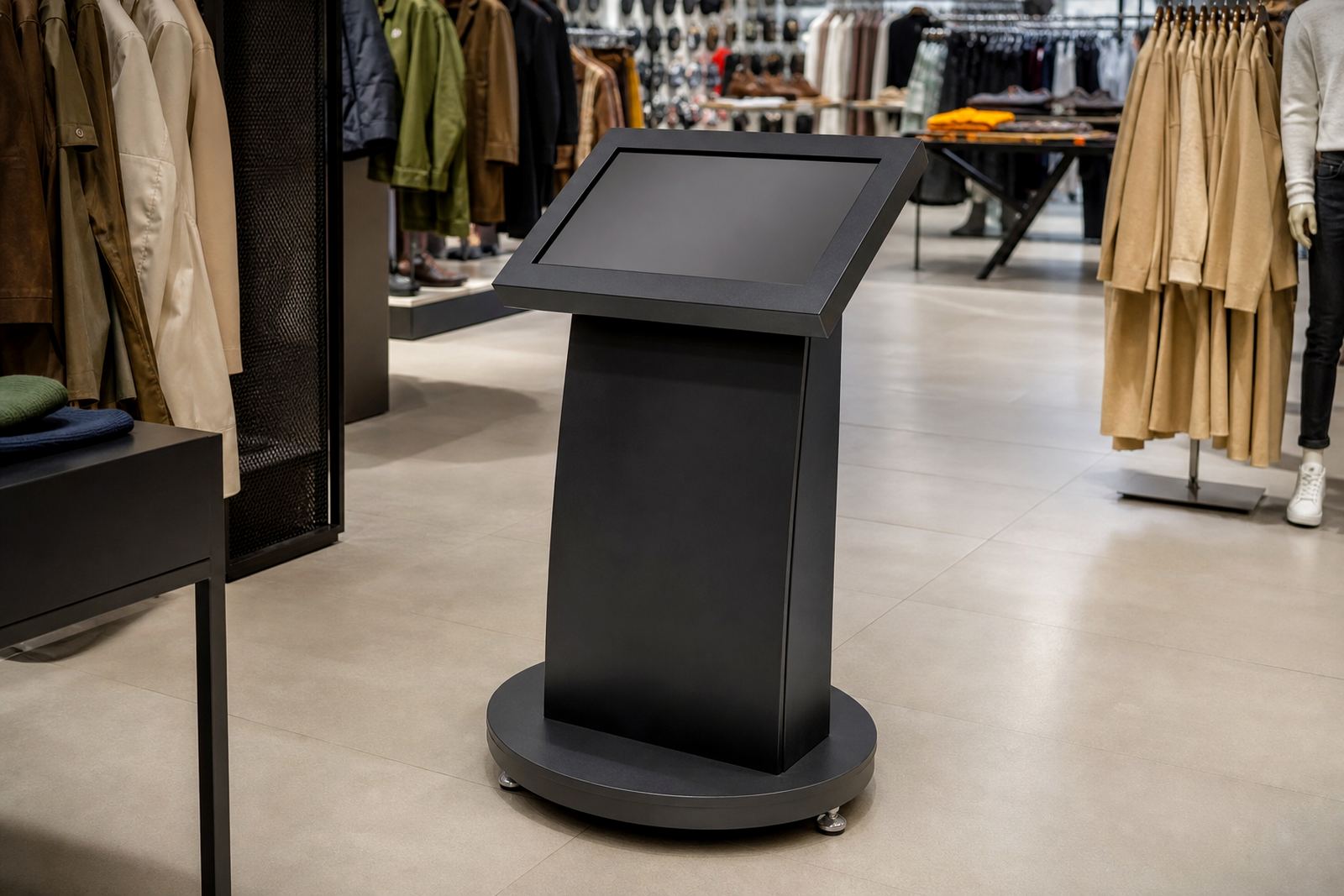
A showroom is where shoppers expect a bit more time. This is the best place for interactive touchscreen kiosks that explain product ranges, compare specifications, show stock options, or guide staff and customers through a buying process. It also suits 360-degree product display stands when the item itself needs to be seen from every angle, such as appliances, decor pieces, fittings or premium accessories.
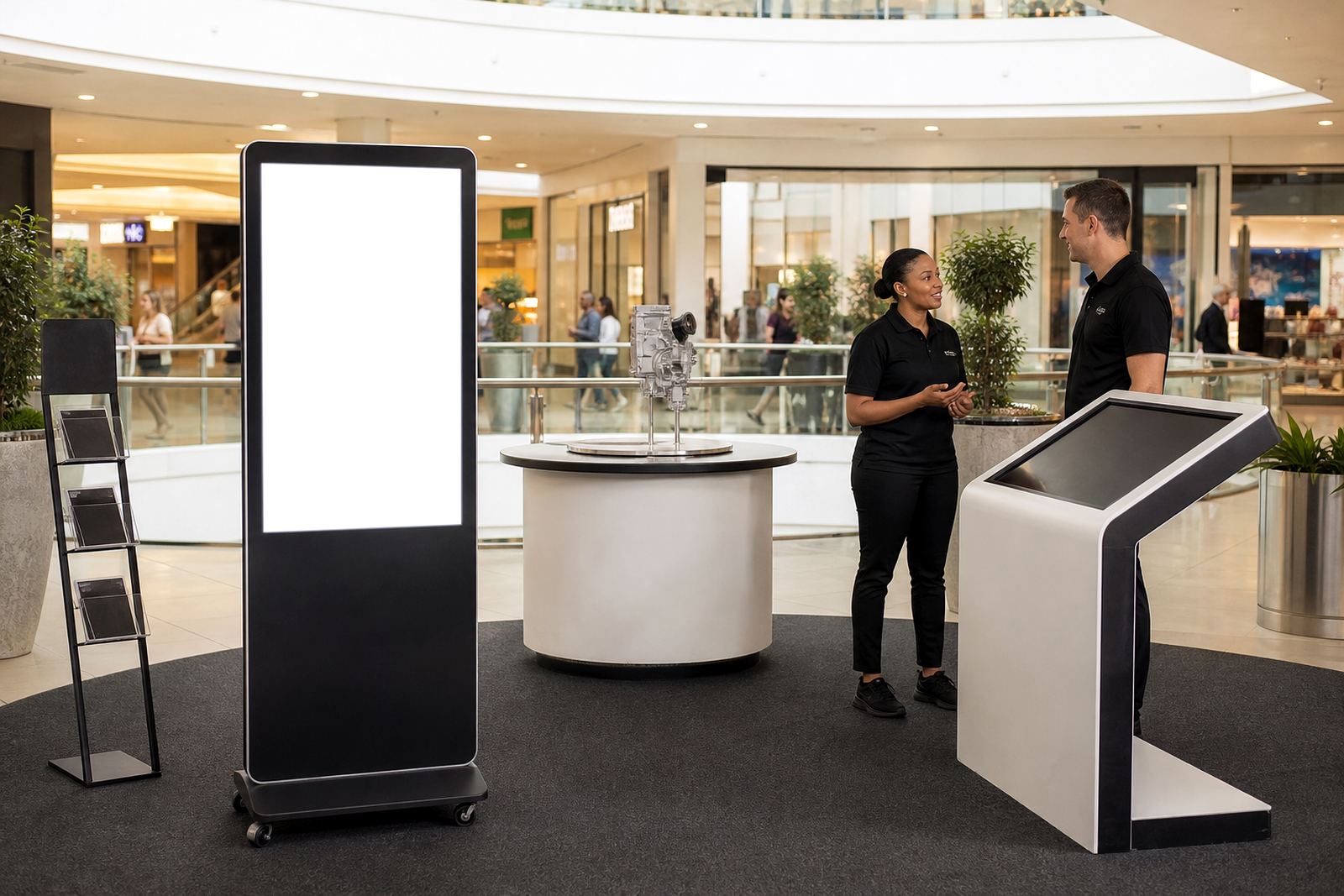
In a showroom, the display should support consultation. Staff can stand beside the unit, talk through the options and load content that matches local demand. For example, a retailer in Sandton might use one unit to show premium finishes and another to present standard ranges for price-conscious buyers. In Cape Town, where humidity can affect some electronics and fittings, placement also needs to consider airflow and protection from direct sunlight.
- Use showroom units where customers can stop without blocking others.
- Keep enough space for two people to stand beside the display.
- Place screens near the product category being discussed, not at the entrance only.
- Use content that answers common questions before a salesperson repeats them.
In this setting, the display can be more detailed and slower paced. That means clearer menus, larger images and less pressure to make the decision in a few seconds. A showroom unit should invite touch, not rush the shopper.
What aisle placement must achieve in under 10 seconds
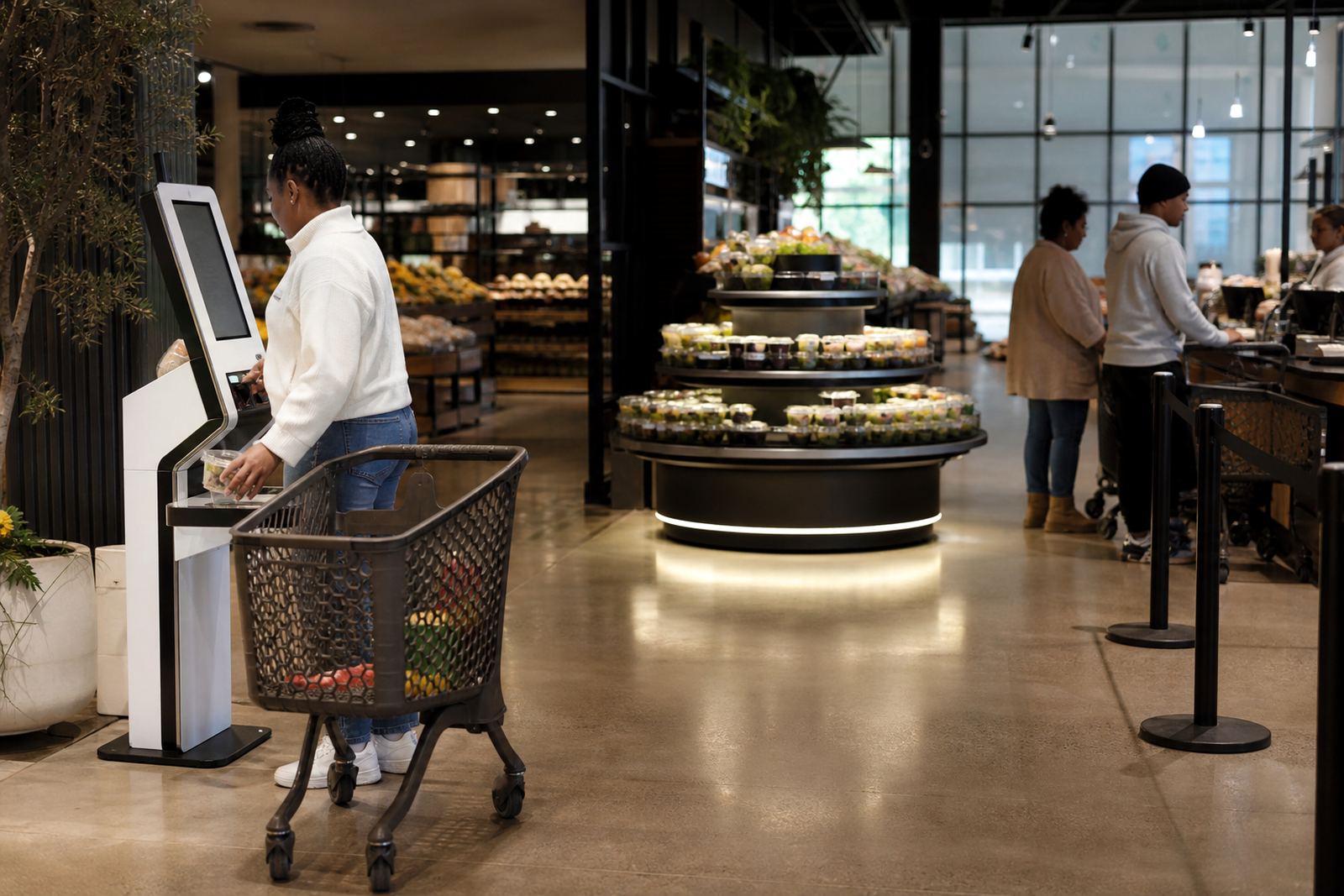
An aisle display has a harder job. It must attract attention, fit the store layout and avoid causing congestion. In a high traffic retail aisle, the shopper may only glance at the unit once. If the message is unclear, the opportunity is gone. The unit has to communicate fast, usually with one main action or one product story at a time.
For aisle placement, the most important factors are footprint, height and visibility from both ends of the aisle. If the base is too wide, it may interfere with trolleys or pallet movement. If it is too tall, it may block sightlines to other merchandise. In stores with tight back-of-house access or municipal fire routes to maintain, the position must also leave enough clearance for safe movement.
- Choose a compact base that does not pinch the aisle.
- Keep the screen angled toward natural foot traffic.
- Use short content blocks with large text and strong product images.
- Make sure the unit can handle cleaning, bumps and daily movement.
When placed correctly, aisle units can push impulse interest and direct shoppers toward a category without slowing the store down. The point is not to make the aisle feel like a mini showroom. It is to give a useful prompt in a busy space and then let the customer continue shopping.
How to decide between a focused stand and a guided kiosk
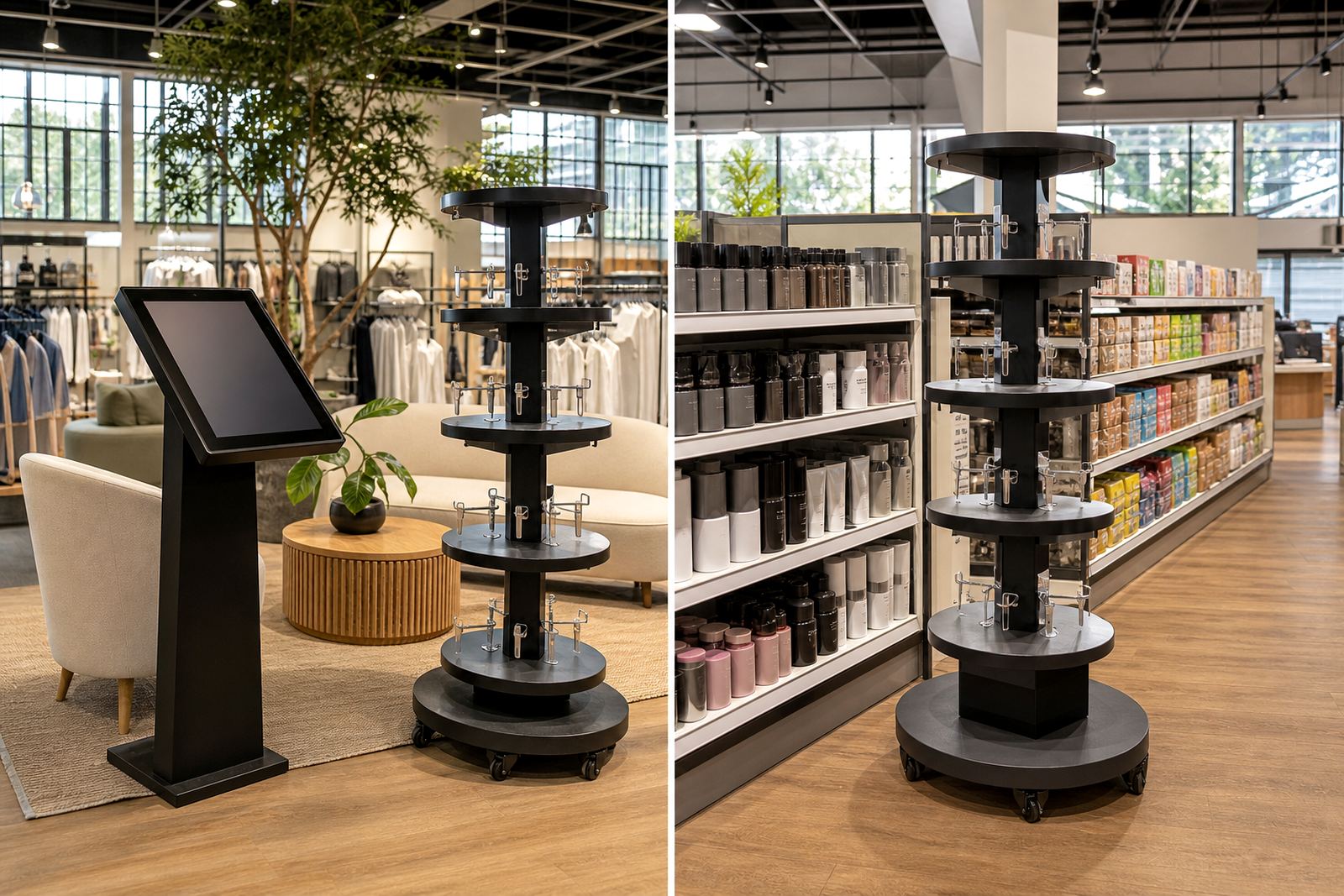
The decision starts with the question: what do you want the shopper to do next? If you want them to explore a range, compare features or ask for help, a touchscreen kiosk makes sense. If the goal is to show a product from all sides and help the customer judge design or finish, a 360-degree display stand may be the better fit.
In practice, many stores use both. A fashion or homeware retailer in Pretoria might put a touchscreen kiosk near the entrance for broad navigation, then use a product turntable deeper inside the store to show a specific collection. A hardware or appliance retailer in Durban may need a kiosk for technical details and an aisle display for quick product discovery. Different spaces, different jobs.
The size of the store also matters. Midrand showrooms often have the room for wider layouts and longer dwell times. Smaller city stores need tighter placement and more disciplined content. Johan van Wyk, our Technical Director, often points out that power points, network access and service clearance should be checked before a unit is moved into position, not after.
- Use a kiosk when the shopper needs guidance or comparison.
- Use a 360-degree stand when the item itself needs close visual inspection.
- Choose the placement based on traffic flow, not only on available wall space.
- Plan for servicing, cable access and safe cleaning around the unit.
Local conditions that change the answer from store to store
South African retail spaces are not all the same. A showroom in Bloemfontein has different heat and dust conditions from a coastal store in Durban or Cape Town. A shop in Johannesburg may face stronger foot traffic and more frequent load-shedding planning than a smaller regional outlet. These details affect where a display should go and what support it needs.
Power stability is one example. If a unit sits in a high visibility area but loses function during load-shedding, the retailer needs a backup plan. That may mean battery support, staged content, or a placement choice that still works even when the screen is off. Network access is another factor. A kiosk near an office or stock room may have easier integration, but it may not be the best visual position for shoppers. You have to balance both.
Lerato Khumalo, our Operations Manager, usually works through the store layout with the client before installation. That helps prevent common problems such as placing a screen where glare is too strong, or placing a product stand where trolley traffic is heavy. These things sound minor, but they decide whether the unit is used daily or ignored.
A simple store rule for better placement decisions
If the store is meant for browsing, give the shopper space and detail. If the store is meant for speed, give the shopper clarity and reach. That single rule helps when deciding between showroom placement and aisle placement. It also keeps the display from fighting the store layout.
Before a unit is signed off, check three things: how far away it will be seen, how long the shopper will stand there, and what else is happening in that space. If the answer is different for each area, the placement should be different too. A showroom can handle a deeper interaction. An aisle needs a quicker one. Same product category, different retail behaviour.
At iTouch 360, we work with retailers across Johannesburg, Pretoria, Cape Town, Durban and Bloemfontein to assess the space, design the solution, load content and handle installation. When the placement is right, the display feels like part of the store rather than something dropped into it. That is when shoppers notice it and staff use it properly, every day.