
Why queues build up in busy South African stores
In retail, queues usually start long before the till point. A customer walks in looking for product details, stock availability, pricing, or help with a basic decision, and that traffic often lands on one counter. In a Midrand store on a Friday afternoon, that pressure builds fast, especially when shoppers are collecting for the weekend or rushing in after work.
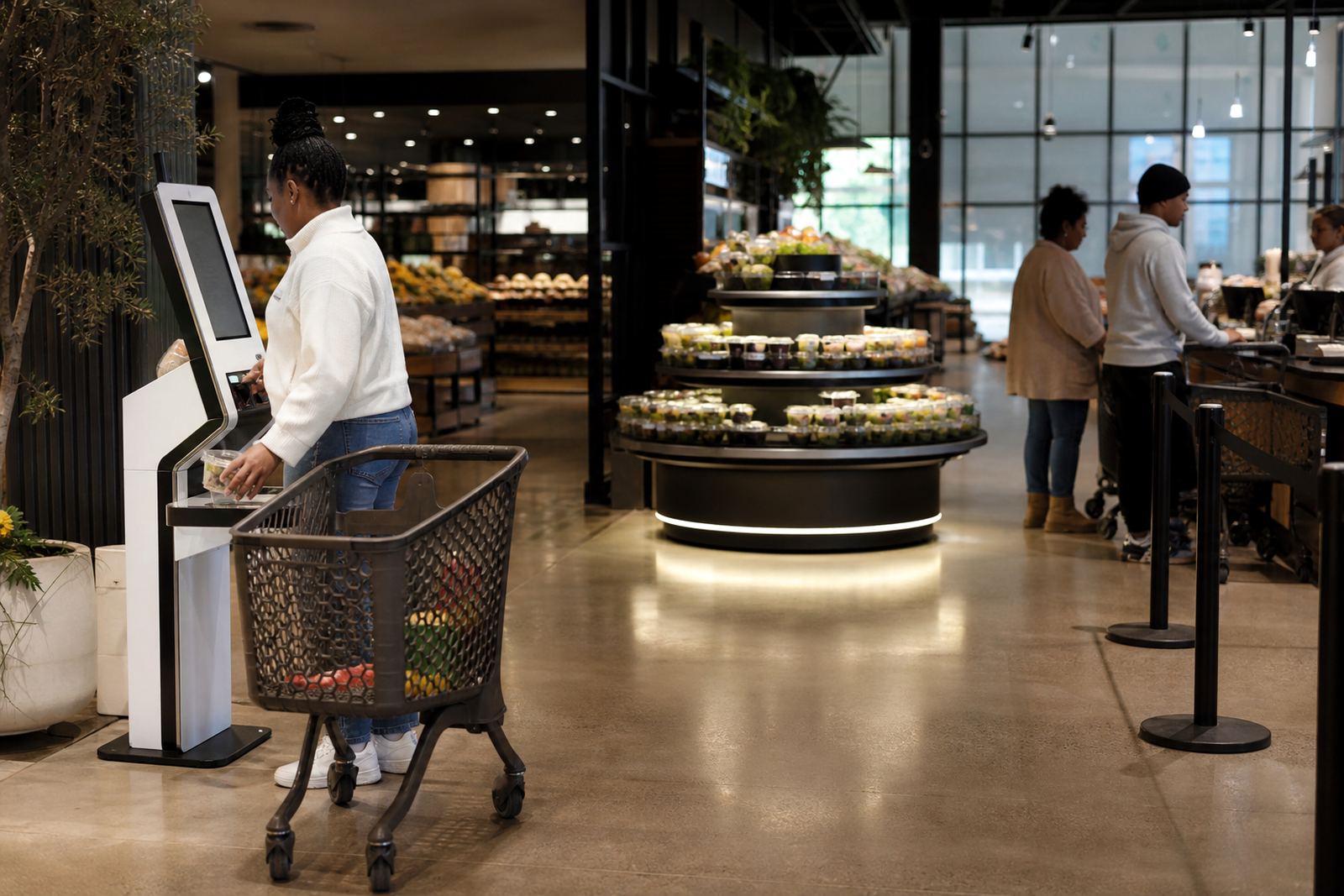
Queue reduction is not only about adding another person to the front line. It is about moving simple tasks away from service points so staff can focus on the jobs that need human attention. When shoppers can check options, confirm information, or complete a basic step on their own, the whole store moves more evenly and the wait feels shorter, even when foot traffic is high.
Where self-service kiosks take pressure off the counter
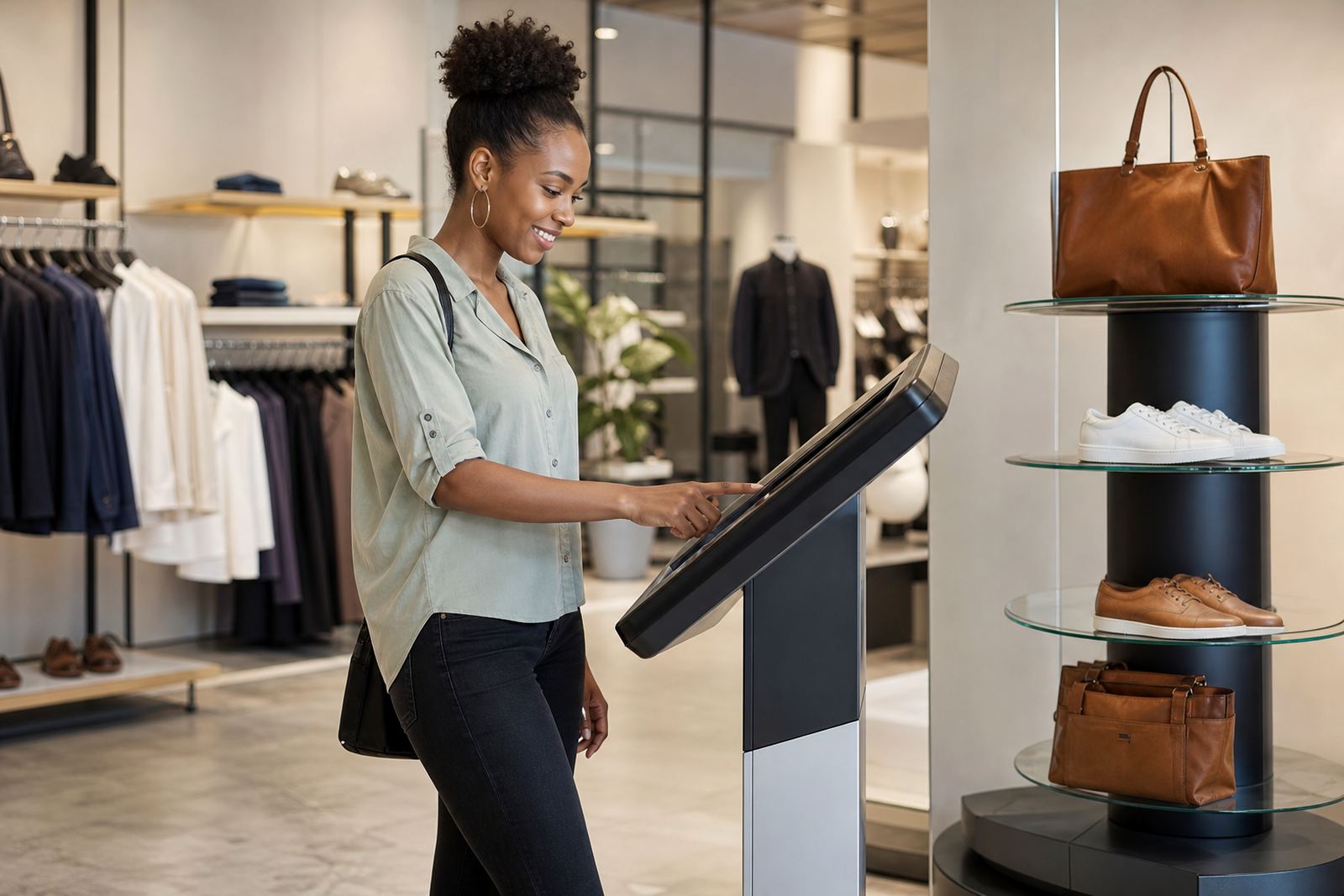
Self-service kiosks work best where repeat questions slow the team down. A shopper can use a touchscreen to browse products, compare variants, confirm promotions, or submit a request without waiting for an available assistant. That means fewer people standing in one line for information that could be handled in under a minute.
- Product lookup and item comparison
- Store information and wayfinding
- Queue ticket issuing for service bays
- Order capture for assisted collection
- Promotions and stock alerts in high traffic aisles
For stores in Johannesburg, Pretoria or Cape Town, this also helps during peak trade periods when staffing is stretched. A kiosk gives customers a clear next step and reduces the chance of shoppers abandoning the queue because they think the wait is too long.
Guided flow makes the whole store easier to move through
Queue reduction is not only about the counter. It also depends on how people move from entrance to product display to payment. Guided flow tools such as directional displays, touchpoints for service selection, and clear self-service check in steps can spread demand across the store instead of forcing everyone into one spot.
When the flow is clear, staff spend less time redirecting people and more time helping customers who are ready to buy. In a busy Durban branch, for example, a shopper can use a kiosk to select the department they need, then get directed to the correct service point rather than asking three different people for help. It sounds simple but it saves real time.
That also helps with compliance and order. Retailers in malls or high traffic centres often need to keep walkways clear and avoid bottlenecks near entrances. Guided flow supports that without making the store feel controlled or cold.
What to plan before installing queue reduction tools
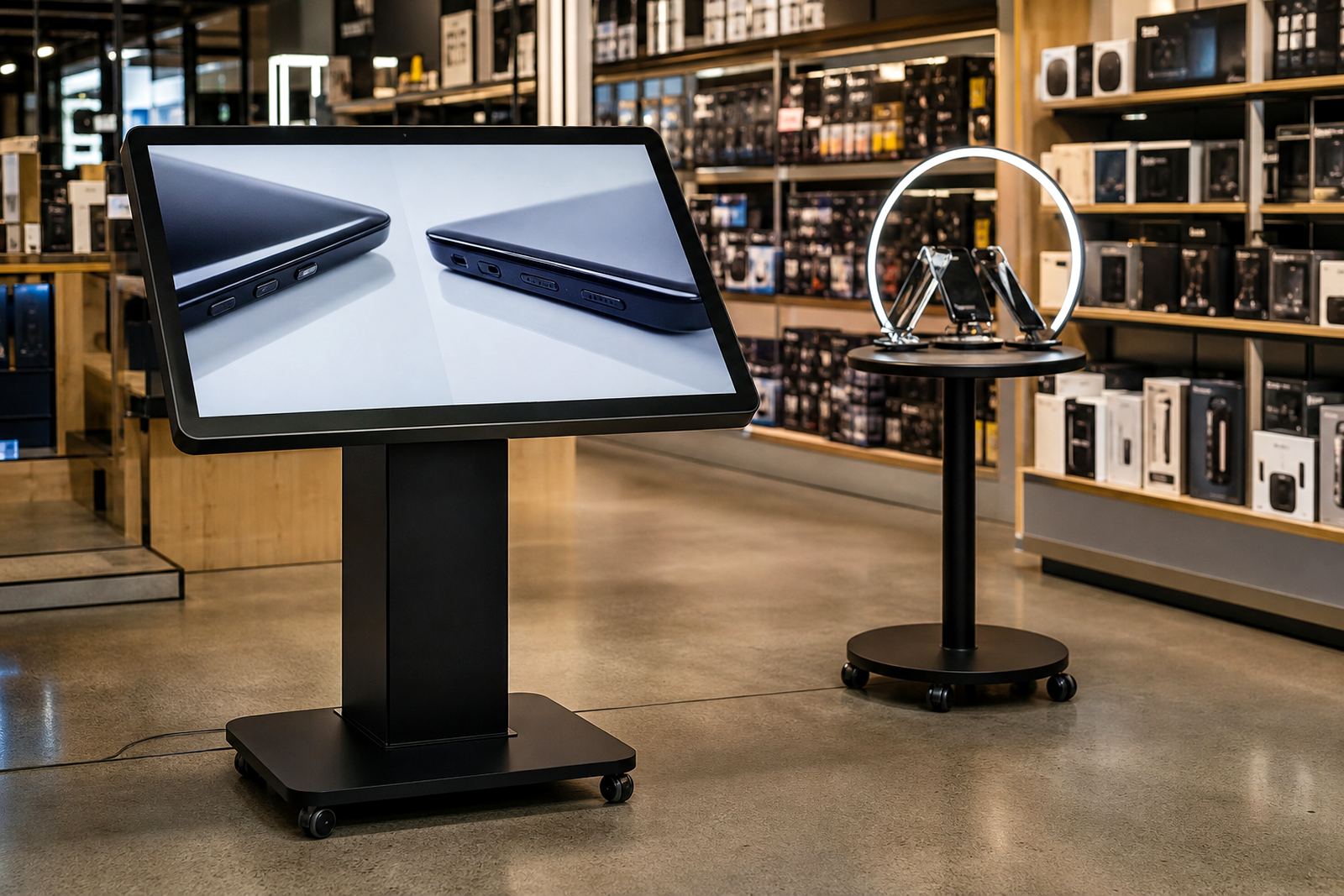
Good queue reduction starts with a proper site assessment. You need to know where people gather, where the line breaks down, and which services are causing the most friction. A kiosk placed in the wrong spot can create a second queue, so the layout matters as much as the screen itself.
It is also worth planning for local conditions. In South Africa, load shedding, unstable Wi-Fi and coastal humidity can all affect performance. A retail solution should be configured for power interruptions, backed by suitable network integration and protected where the environment is damp or dusty. If the system is going into a Cape Town store near the coast, the housing and installation details need to be right from day one.
- Check foot traffic patterns at peak and off peak times
- Place the kiosk where customers naturally pause
- Allow enough space for wheelchair access and clear movement
- Plan power backup and network stability early
- Train staff to guide first time users without slowing the line
How retailers keep the system working day after day
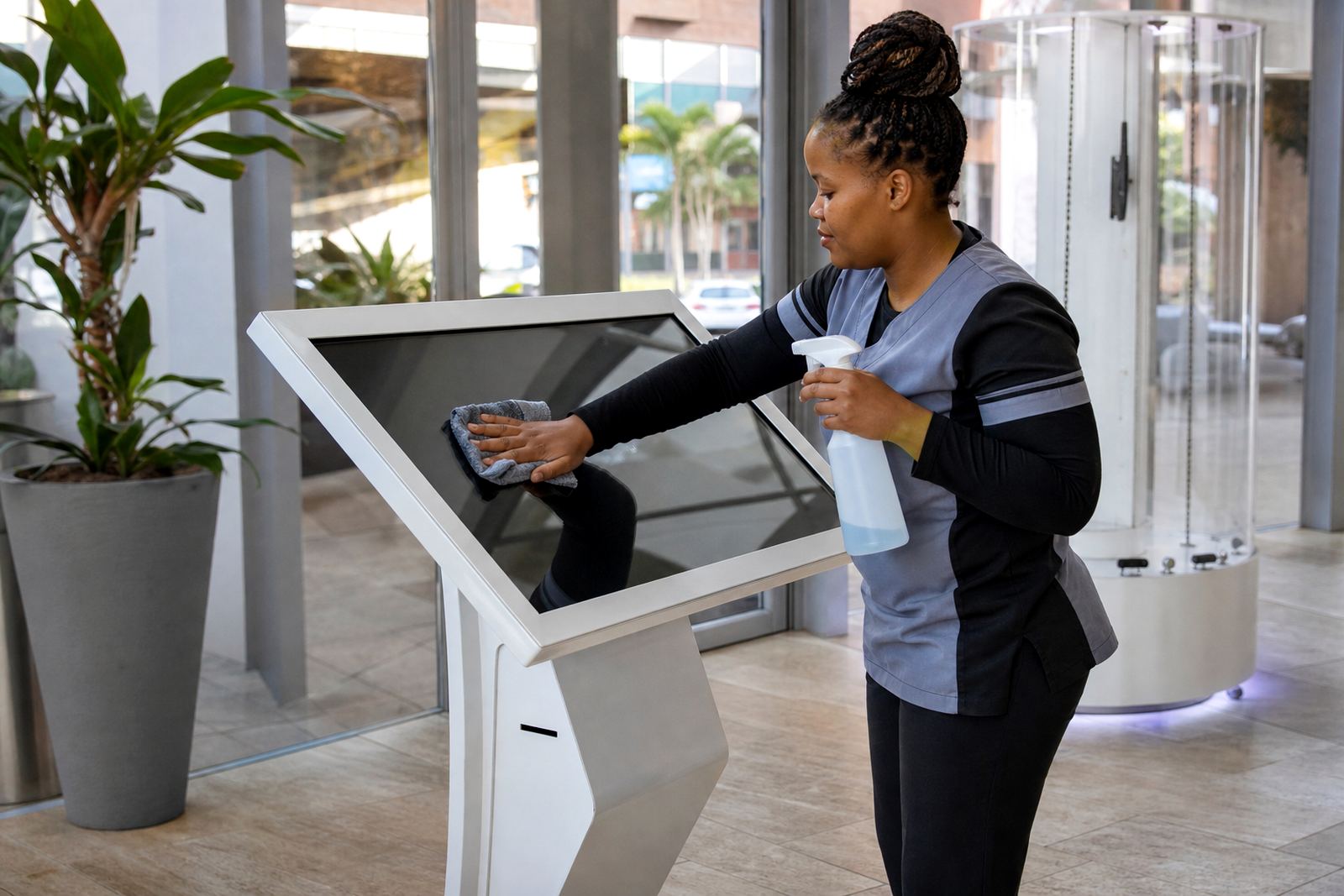
A queue reduction setup needs regular attention, not just a once-off install. Touchscreens should be kept clean, software should be configured correctly, and content should stay accurate when products or promotions change. If a screen goes down or becomes confusing, customers will fall back to the counter and the queue grows again.
Preventative servicing helps avoid that. So does basic staff training. When team members know how to send a shopper to the right screen, restart a unit safely, or report a fault early, downtime stays low and the whole system keeps earning its place on the floor. Minor issues can become major delays if no one is watching for them, and that is where support retains real value.
Retailers often also overlook parts replacement. A small fault in a touch panel, cable or mounting point can slow service more than expected, especially in stores with heavy daily use. Keeping spare parts and repair support in place is practical, not optional.
A practical Midrand example for national retailers
Consider a Midrand retailer serving both trade customers and walk in shoppers. On month end, the counter gets crowded with people asking for product information, stock checks and collection details. Instead of lining everyone up at one point, a self-service kiosk can handle the first layer of requests while staff focus on sales support and fulfilment.
The result is a calmer floor, faster movement and less pressure on the team. The same approach can scale to branches in Sandton, Centurion, Johannesburg, Pretoria, Durban, Cape Town and Bloemfontein, because the process stays consistent even if the store size changes. That consistency is valuable for regional rollouts and for retailers that need the same customer journey across multiple sites.
For businesses that want a cleaner front of house and fewer delays at service points, queue reduction tools are a practical investment. They help customers move with less friction, and they help staff work with more control over the day.
Choosing a solution that fits your store format
Not every retailer needs the same setup. A smaller shop may only need one enquiry kiosk and clear signage, while a larger branch may need several touchpoints, content loading, software configuration and integration with the store network. The right mix depends on your floor space, your customer flow and how much of the front line you want to move away from the counter.
iTouch 360 works from Midrand and supports retailers across South Africa with site assessments, solution design, custom branding, delivery installation, fault repairs, staff training and support retainers. If your store needs better queue control, the first step is usually a practical look at the floor and a plan for what should happen before the customer reaches the counter.