
Why dwell time matters on a busy retail floor
In South African retail, dwell time is the stretch of moments a shopper spends at a product bay, kiosk or display. It matters because people who stay longer tend to ask more questions, compare more options and notice details they might miss in a quick walk past. In stores with heavy foot traffic, that extra minute can be the difference between a casual look and a real buying decision.
For retailers in Johannesburg, Pretoria and Sandton, dwell time is often squeezed by busy schedules and people shopping on the move. In Cape Town and Durban, where weekend footfall can be strong, the challenge is different: customers may browse widely but still leave without a clear reason to commit. A well placed interactive display gives them a reason to stop, touch, turn and learn.
At iTouch 360 in Midrand, we see the same pattern across clothing, electronics, homeware and speciality retail. The stores that do best are not simply the ones with the loudest promotion. They are the ones that make the product easy to explore, even when the floor is hectic and staff are helping other customers.
How touchscreen kiosks slow the pace in a good way
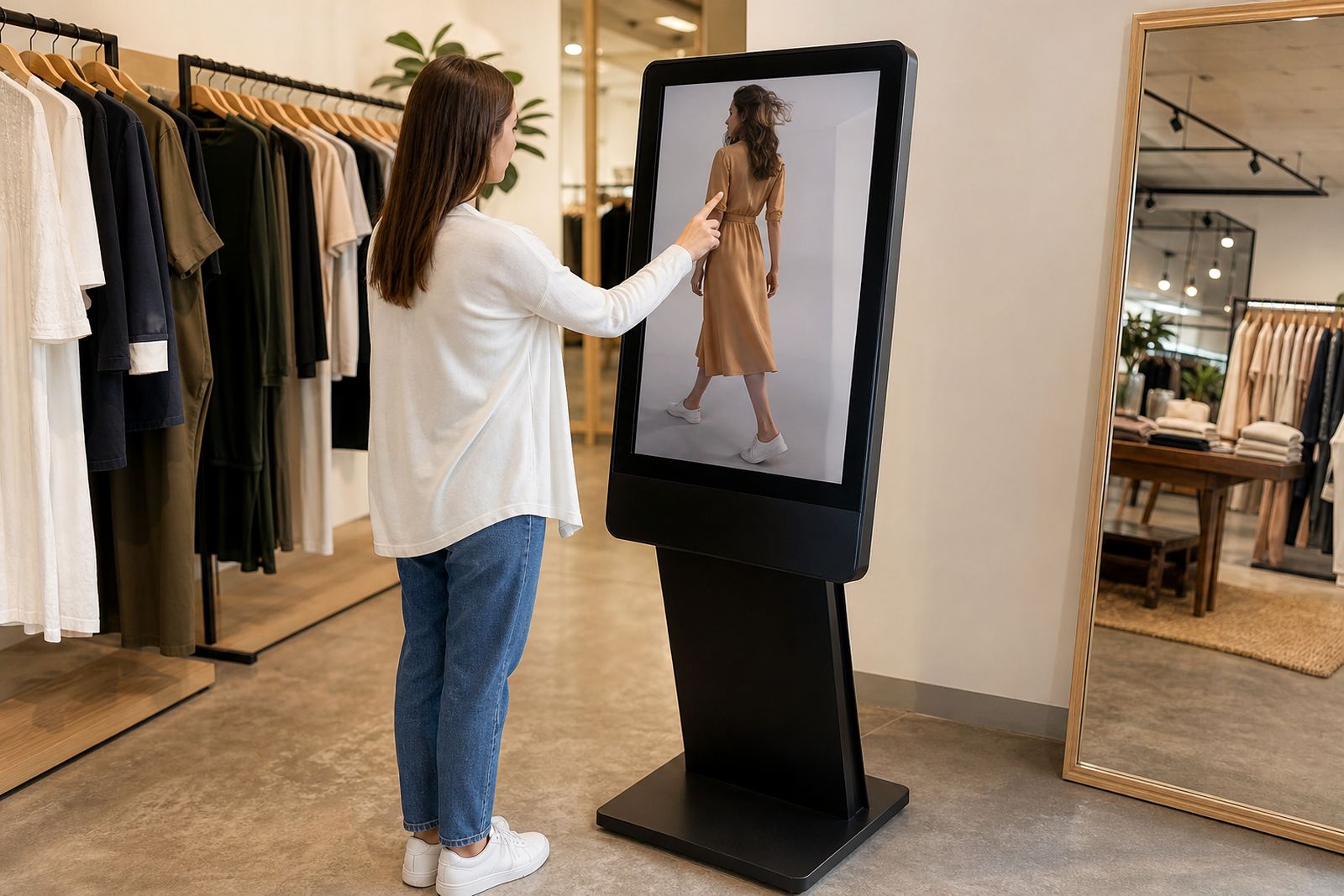
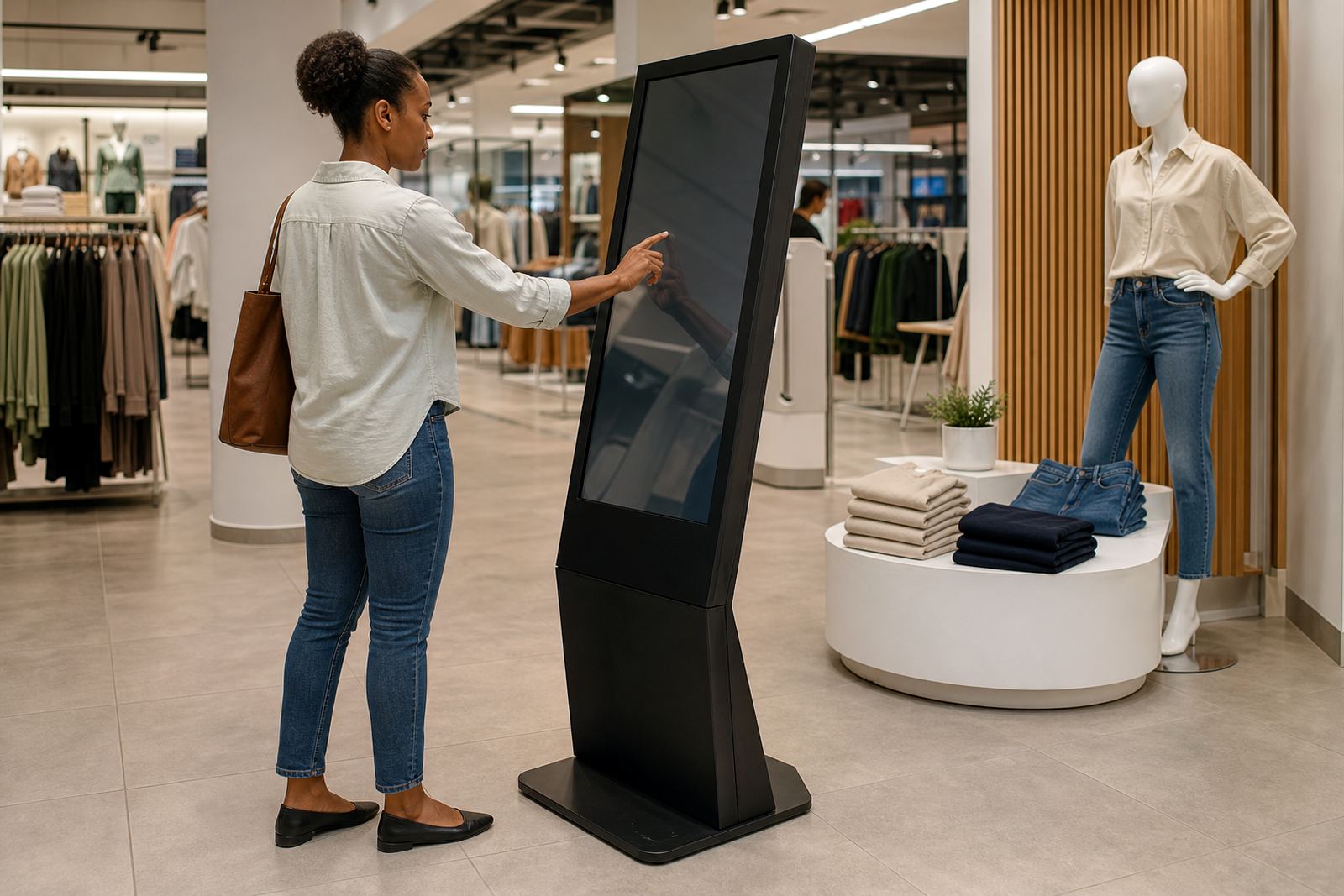
A touchscreen kiosk works because it invites participation. Instead of reading a shelf talker and moving on, the shopper can browse features, compare finishes, watch a short demo or check stock related information. That small act of choosing for themselves creates a stronger connection to the item.
Good kiosk content should be simple, fast to load and easy to use with one hand. If it takes too long to respond, or the menu is cluttered, people lose interest quickly. This is especially important in stores where power interruptions and network drops can happen. The system must recover cleanly after load-shedding and come back ready for use without staff needing to reset everything from scratch.
- Use large buttons that are easy to read from 1 to 2 metres away.
- Keep the first screen focused on 3 to 5 clear choices, not a long list.
- Show practical information first, like size, colour, materials and care instructions.
- Use short videos or image sequences instead of heavy text blocks.
- Make sure the kiosk can operate reliably in stores with patchy Wi-Fi or unstable back-up power.
Why 360-degree product stands keep shoppers engaged longer
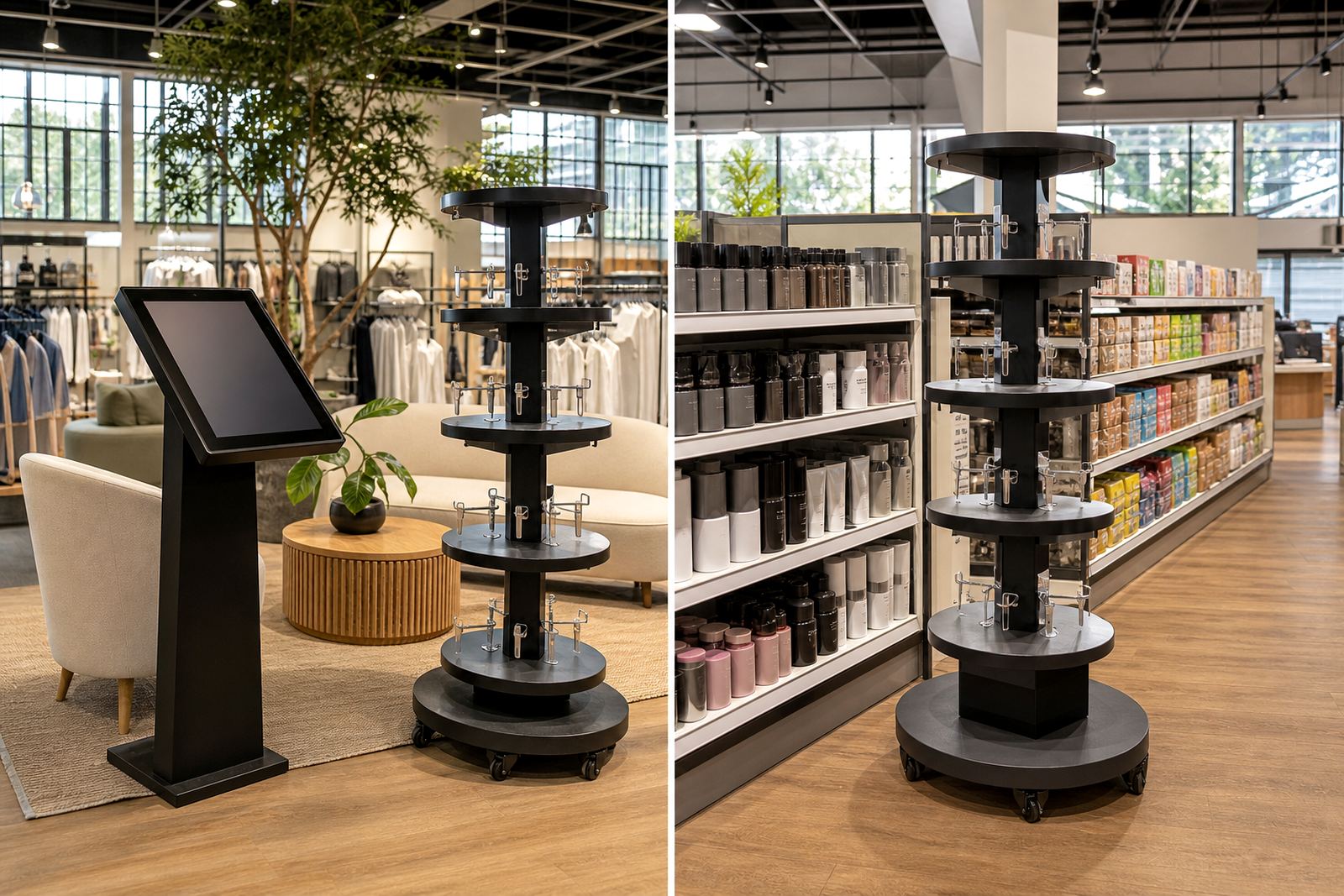
A 360-degree display stand gives customers a better sense of shape, finish and detail than a flat shelf view. They can turn the product, inspect the sides and compare it from different angles. That is useful when selling premium items, packaged products or goods where presentation matters just as much as function.
For retailers, the advantage is not only visual. The stand creates a physical pause point. Shoppers slow down, lean in and spend a little more time in front of the item. That extra attention can lift product recall and make staff conversations easier because the customer has already formed a clearer opinion.
In coastal towns like Durban or Cape Town, material choice matters too. Humidity can affect finishes, adhesives and moving parts if the display is poorly specified. In inland areas like Bloemfontein and Midrand, dust and daily traffic are bigger concerns. A display should be built for the actual shop conditions, not just for a polished photograph.
Design choices that actually add minutes to the visit
If the goal is longer dwell time, the design must support curiosity. That means placing the display where shoppers naturally slow down, usually near entrances, feature aisles or decision points. It also means thinking about sightlines, lighting and how staff move around the stand. If the area feels crowded, people keep walking.
Custom branding helps when it is used with restraint. Clear signage, strong product naming and a neat layout can guide the eye without making the area feel busy. The aim is to reduce friction. Shoppers should understand what they are looking at within seconds, then have a reason to stay a little longer.
- Position displays near end caps, queue areas or high-interest product zones.
- Use lighting that highlights the item without glare on the screen or surface.
- Keep cables, routers and power packs hidden but accessible for servicing.
- Match the stand height to the typical viewing angle of your customer base.
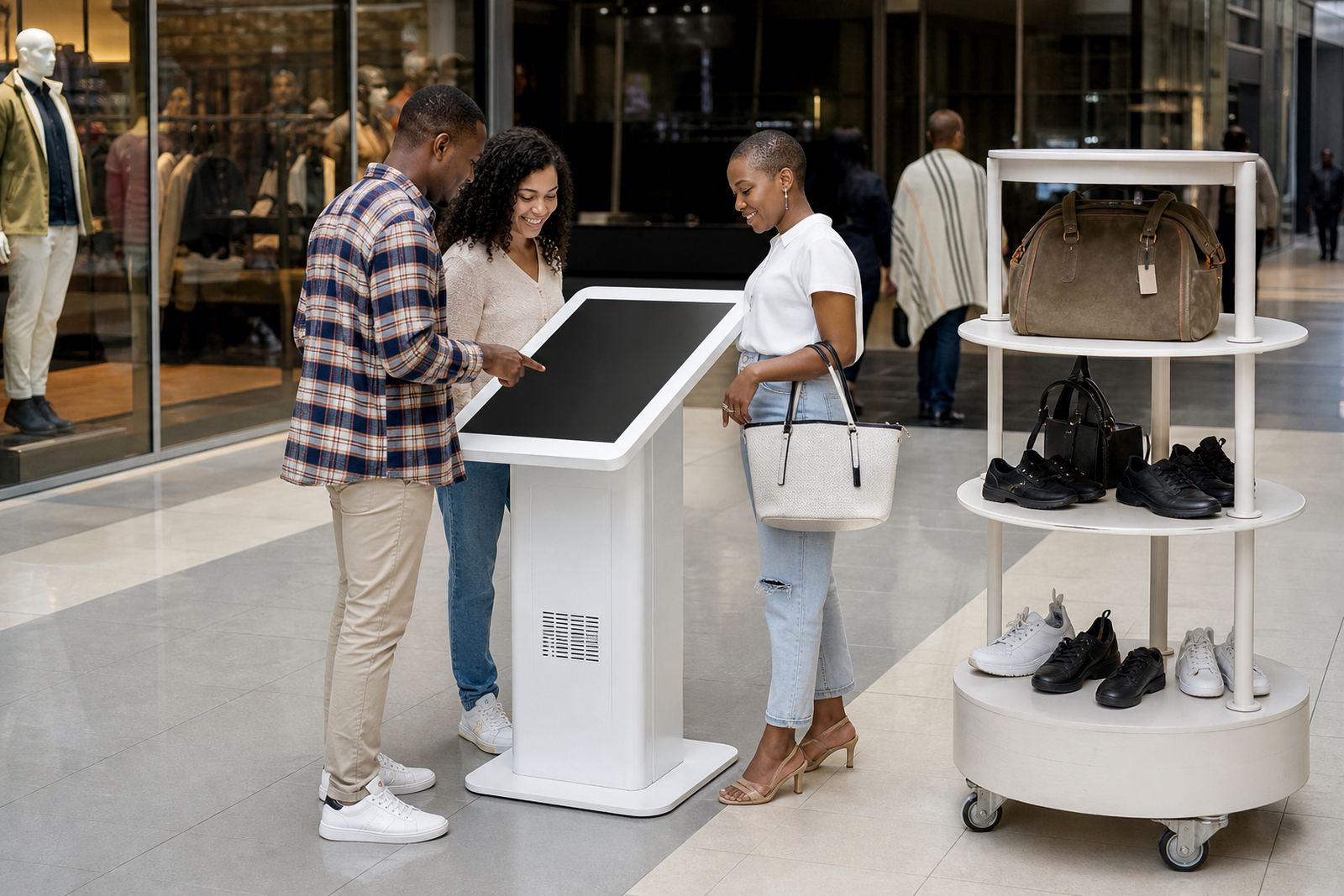
- Allow enough space for two or three shoppers to browse without blocking the aisle.
Stores in Gauteng often deal with a fast moving customer base, so the display has to work quickly. In smaller regional centres, the same display may need to support longer browsing time and more questions. That is why one-size-fits-all layouts usually underperform. The best results come from site assessments and proper solution design, not guesswork.
Content that keeps interest without overwhelming the shopper
Interactive content should answer the questions shoppers already have in mind. What is it? What does it do? Why is this one worth more than the one next to it? If the answer is buried under too much text or too many steps, the display loses momentum.
Short clips, product comparisons and simple callouts work better than long explanations. In many stores, customers are standing for only a short period before they decide whether to buy or move on. The job of the kiosk is to make the next step obvious. If staff are needed to explain everything, the display has not done its job properly.
That is why content loading and software configuration matter. Once the display is set up, the information should be consistent across branches. A shopper in Pretoria should not get a different product message from a shopper in Cape Town unless there is a local reason for it. Consistency builds trust and helps store teams work from the same script.
A local retail example from Midrand to the coast
A Midrand retailer with branches supplying customers across Johannesburg, Pretoria and Durban wanted shoppers to spend more time at a new product range without pushing hard sales. The solution was a touchscreen kiosk paired with a 360-degree display stand placed just inside the main entrance. Customers could view the product from every side, check features and compare options before speaking to staff.
Within the first few weeks, team members noticed that customers were stopping for longer and asking more specific questions. That made the sales conversation easier because people came in already informed. The store also saw fewer rushed decisions, which mattered because the product was not an everyday purchase. It needed explanation, and the display did some of that work before the staff stepped in.
For busy branches in Sandton and Centurion, the same approach helps where time is tight and customer attention is split between errands. For supply into Cape Town, Durban and Bloemfontein, the practical detail is making sure the installation can be serviced, updated and supported without long delays. A display that stays offline for days is not helping anyone.
What retailers should ask before installing interactive displays
Before ordering any interactive display, retailers should look at the floor plan, power points, data access and the kind of customer behaviour they want to encourage. A display is not just a screen or a stand. It is part of the buying journey, and it needs to fit the store layout as well as the merchandise.
It also helps to think about maintenance from the start. Will the team need training? Who will update the content? What happens if a part fails or a network setting changes after a promotion ends? These are the questions that separate a display that looks good on day one from one that keeps working week after week.
- Can the display run through load-shedding with suitable back-up power?
- Is the stand suitable for the store's humidity, dust and foot traffic?
- Will staff be able to use it after basic training?
- Can the content be updated for seasonal ranges or promotions?
- Is there a support plan for servicing, repairs and parts replacement?
For South African retailers, shopper dwell time is not just about keeping people in one place. It is about creating a reason for them to pause, look properly and feel confident enough to buy. Done well, interactive displays turn a quick glance into a meaningful moment.