
Start with the season, not just the sale price
Seasonal displays often fail when they are treated like a last-minute poster job. A better approach is to plan the full shopper journey around the season, from the moment a customer spots the bay to the moment they choose a size, colour or add-on. For retailers in Johannesburg or Cape Town, that can mean a Christmas, back-to-school or winter promotion that combines a physical display with a touchscreen kiosk showing product details, bundle options and stock availability.
Keep the message simple. One season, one main offer, one clear action. Shoppers do not need a wall of text, they need a fast reason to stop and interact. If your store has mixed traffic, place the kiosk where customers already pause, near new arrivals, tills or a feature table. That gives the digital content a fair chance to do its job.
Use digital content to explain what the stand cannot
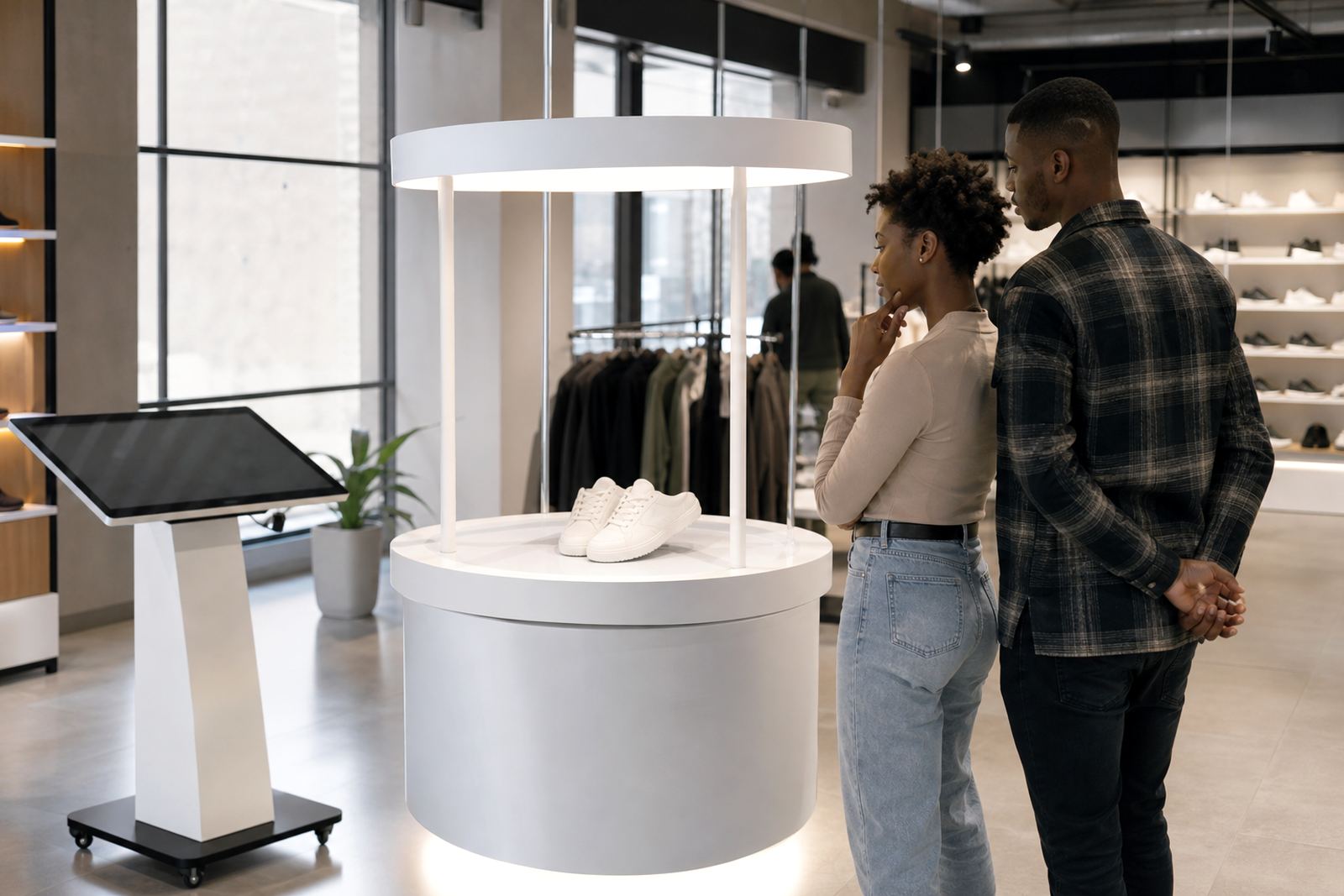
A 360-degree display stand is useful because it lets people see a product from every angle without asking staff to handle it over and over. That matters for items with finishes, moving parts or packaging that changes by variant. Add a screen beside it and you can show usage clips, size guides, care instructions and seasonal pairing ideas in one place.
In a winter campaign, for example, a retailer in Pretoria could show a warm colour range on the stand while the screen explains product features, delivery times and which models are best for indoor use. The point is not to replace staff, it is to answer the first five questions before a customer even asks. That saves time during busy periods and keeps the floor team focused on closing sales.
- Show product features in short loops of 15 to 30 seconds.
- Use large text and high contrast for bright store lighting.
- Keep the menu to three or four choices so shoppers dont lose interest.
- Update pricing and promotions as soon as the campaign changes.
Build a display that can handle South African trading conditions
Seasonal promotions often happen when stores are busiest, hottest or running on backup power. That means the display hardware needs to cope with load-shedding, dust, humidity and long trading hours. In coastal areas like Durban and Cape Town, moisture can affect exposed components if the equipment is poorly placed, so position units away from direct doors and wet floor zones. In Gauteng malls, glare from natural light can make small text hard to read, which is why screen angle and brightness matter.
Ask for a setup that includes proper cable management, lockable access where needed, and software that can recover quickly after a power interruption. If your outlet runs on a generator or inverter, test the system before the campaign starts. A display that freezes at 4pm on a Saturday can undo a lot of good work. One missing power cycle on a busy weekend and staff are left explaining instead of selling.
Match the display to the type of season
Different trading periods call for different content and layout. A school campaign should feel practical and easy to browse. A summer promotion can be brighter and more open. A festive display can carry more movement, but it still needs structure so shoppers can find the right category quickly. The best seasonal ideas are the ones that fit the actual buying mood in the store.
- Back-to-school: focus on bundles, quick comparisons and stock by age group or size.
- Winter: show warmth, comfort, durability and easy care details.
- Festive season: keep gift ideas grouped by price point and use simple navigation.
- Clearance periods: highlight urgency, but still show product specs and remaining variants.
For a store in Bloemfontein, that could mean a winter window display with a touchscreen running gift ideas for households, while the nearby stand shows the main product in a 360-degree view. The customer sees the item, understands it, then decides faster. That is the sort of practical support seasonal retail needs.
Make staff part of the experience, not an afterthought
Seasonal technology works best when the team knows how to use it. If staff cannot explain the screen prompts or update the display content during trading, the system becomes decorative instead of useful. Training should cover basic navigation, reboot steps, content changes and what to do if the network drops. It also helps if one person on each shift knows the process for cleaning screens and checking the stand is secure.
Retailers often underestimate how much smoother a campaign runs when the floor team has a simple script. They can point shoppers to the kiosk, explain what the 360-degree stand shows, and move people through the offer without confusion. That is especially useful during high traffic weekends when queues build and questions come in fast.
- Train staff before the campaign starts, not on launch day.
- Give them a short guide for common questions and resets.
- Nominate one person to check the display at opening and after lunch.
- Keep spare content files and a backup plan for power or connectivity issues.
A Midrand example that works across provinces
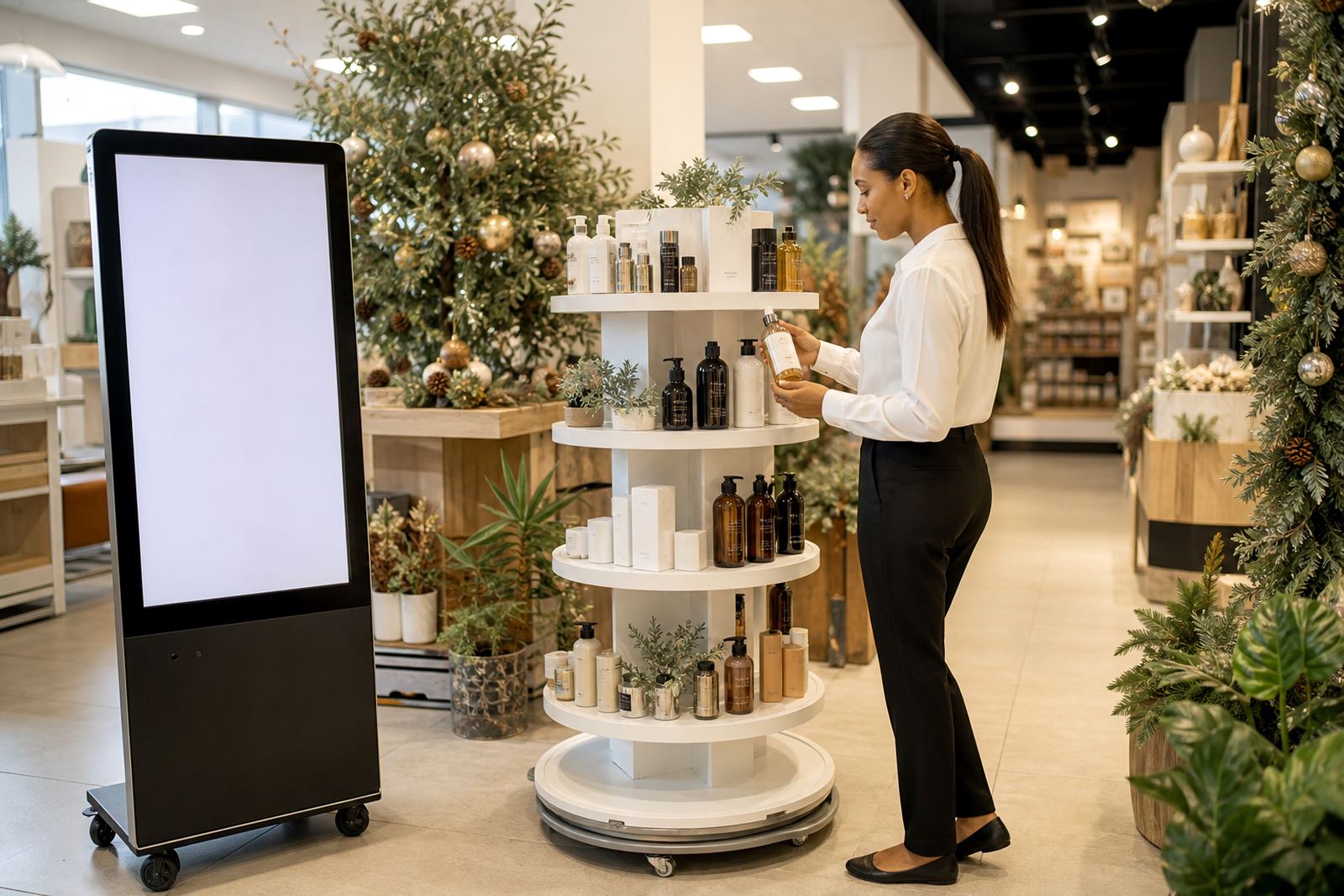
A Midrand retailer launching a seasonal homeware campaign might use a touchscreen kiosk at the entrance and a 360-degree stand near the promoted range. The screen can show product sizes, finish options and care tips, while the stand lets shoppers inspect the item from every side. The same setup can be adapted for stores in Johannesburg, Pretoria, Sandton, Durban or Cape Town with local pricing, different stock mixes and province specific messaging where needed.
This approach works because it gives retailers one system that can be changed for each season without starting from scratch. After the campaign ends, the content can be replaced with the next promotion, and the hardware stays in place for the following cycle. That makes the investment easier to justify and keeps the in-store experience fresh. It is also easier for head office to manage when all branches follow the same structure, just with local adjustments.
Plan the next campaign before the current one ends
The strongest seasonal displays are planned with the next trading period in mind. If your team waits until the last week, the result is usually rushed content, uneven branding and missed sales opportunities. A better method is to review what worked, what customers asked for, and which products got the most attention. Then adjust the layout, content and support plan before the next promotion begins.
For South African retailers, that matters because seasonal trading is often compressed by public holidays, short planning windows and changing stock patterns. A display system that can be refreshed quickly gives you more control. It also helps when branches need different messages for urban malls, roadside stores or smaller regional outlets. Keep the structure consistent, then change the content to suit the season and the store.