
Why premium stock needs a different kind of display
High-value items sell better when customers can inspect them properly. A jewellery line, fragrance range, electronics accessory or collector item asks for more than static shelving. The display has to show the product clearly, protect it during busy trading hours and still suit the tone of the store.
In South African retail, that balance matters even more because store space is often tight, foot traffic changes by the hour and trading conditions can shift with load shedding or local power interruptions. A good presentation system keeps working through those pressures. It should be neat, easy for staff to manage and durable enough for daily use in Sandton, Menlyn, the V&A precinct or a busy mall in Durban.
- Clear sightlines so shoppers can inspect product detail quickly
- Controlled access so items do not get handled too freely
- Space for pricing, spec sheets and brand messaging
- Materials and finishes that suit premium interiors
How touchscreen kiosks support the sale without interrupting it
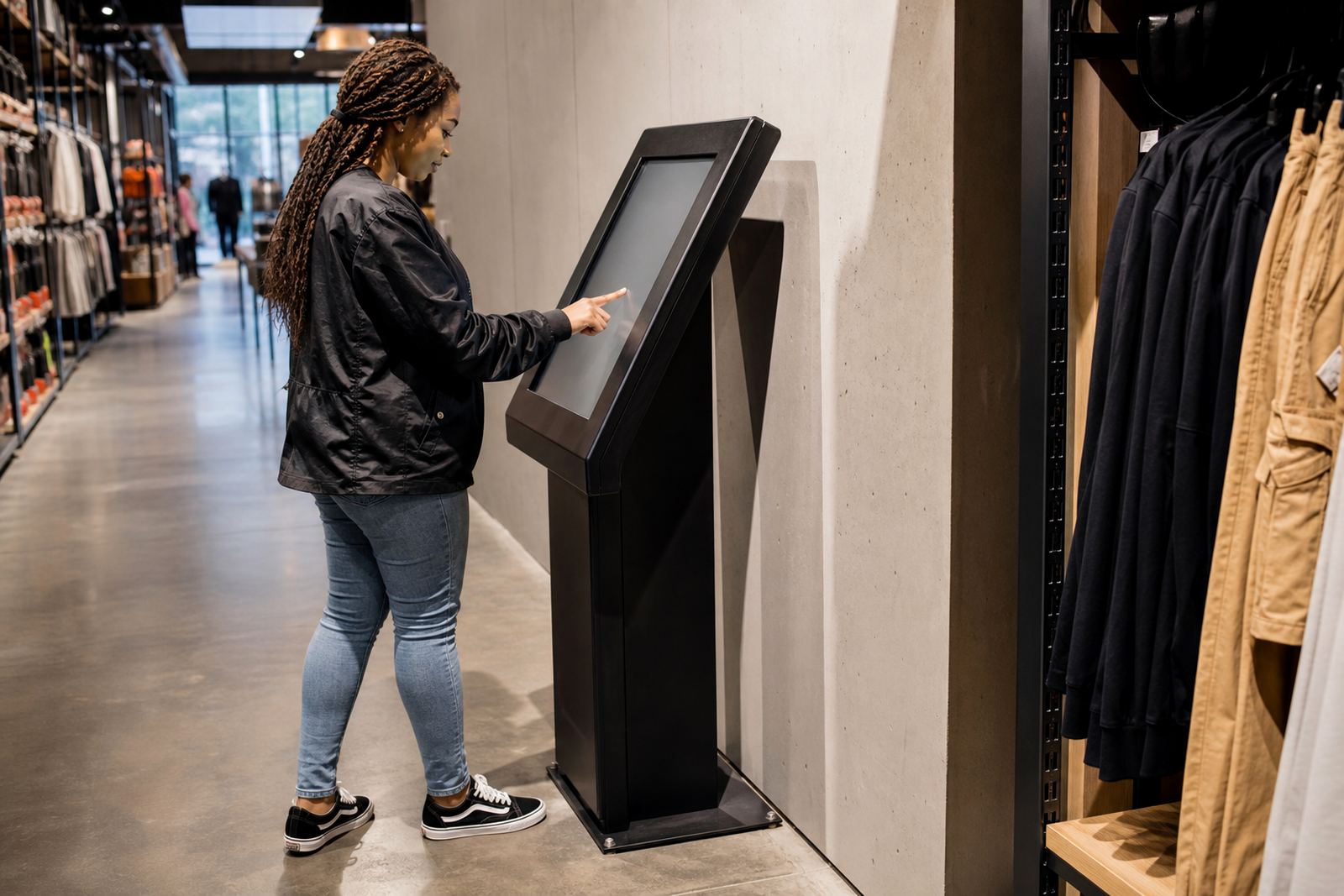
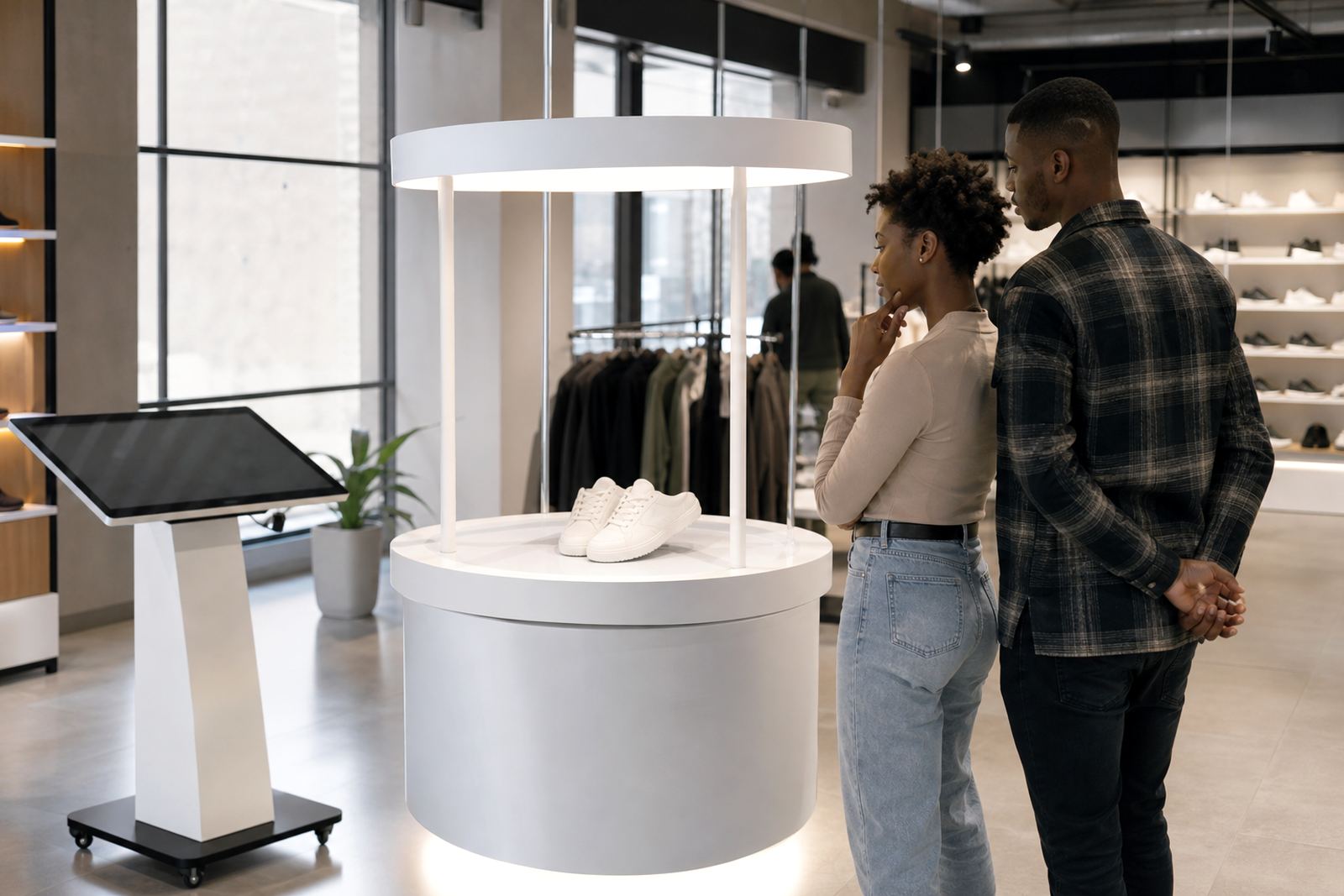
An interactive kiosk works best when it adds information without forcing a long wait. Customers can browse ranges, compare finishes, watch product demonstrations and check stock availability while a consultant handles the sale. That is useful for premium goods where decisions are often careful and involve more than one shopper.
The right setup also helps staff. Instead of repeating the same product details all day, the team can guide customers through key features, care instructions and warranty information. This keeps the conversation focused and gives the shopper a sense of control. If the kiosk is placed near a display table or feature wall, it can support the sale from the first look right through to payment.
- Product comparisons and feature highlights
- Promotions for seasonal ranges or new arrivals
- Video or image content for texture, colour and finish
- Simple navigation for quick staff assistance
360-degree display stands for detail, movement and trust
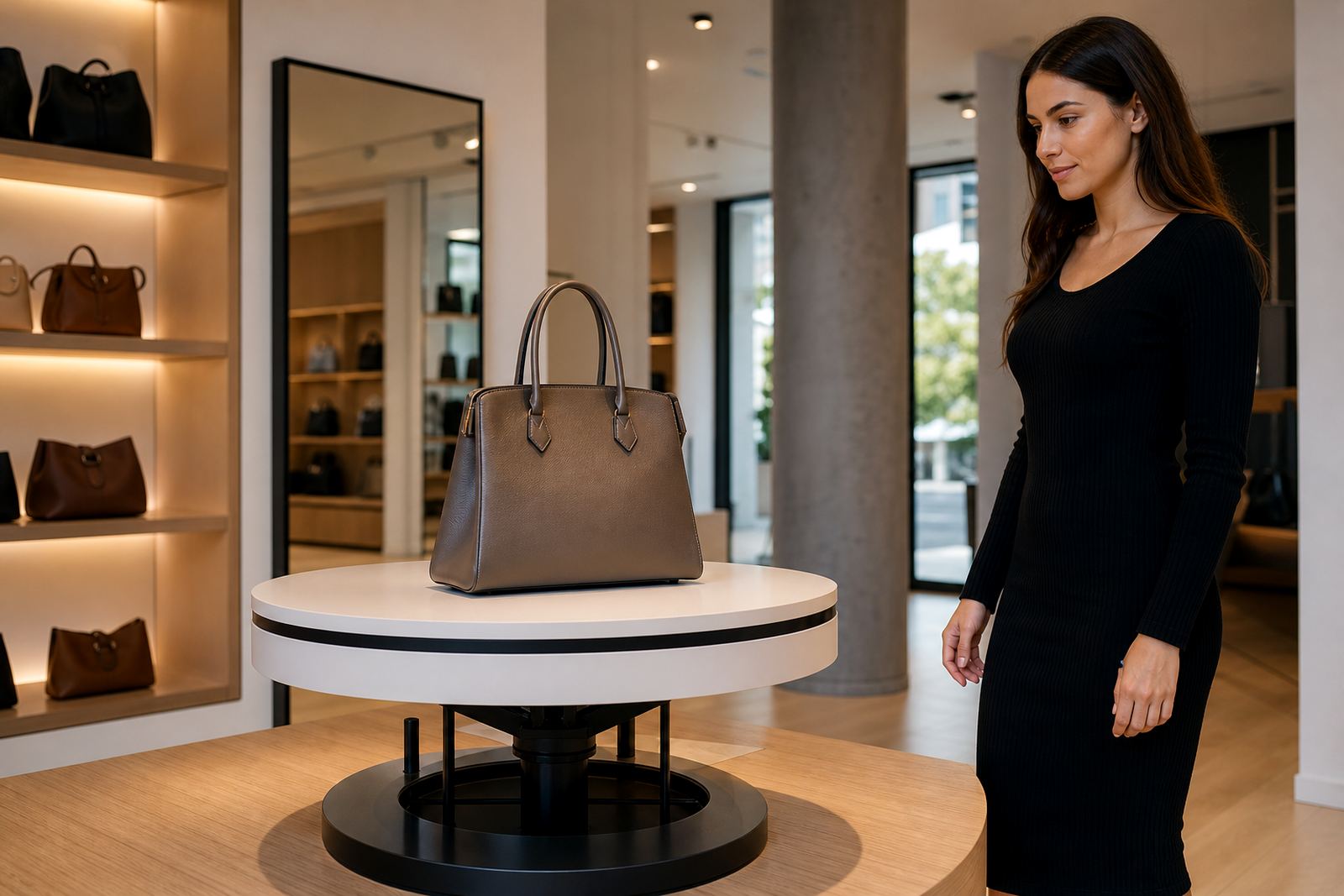
For premium products, being able to inspect an item from every angle helps build trust. A 360-degree display stand lets shoppers view the shape, finish and proportions without lifting the product repeatedly. That is useful for watches, décor pieces, footwear, small appliances and accessories where the details really matter.
The stand also adds movement to the floor, which draws attention without looking loud. In a showroom this can be the difference between someone walking past and someone stopping to look. The key is controlled rotation, stable mounting and a height that suits the product. If the item sits too low, it gets lost. If it sits too high, customers lean awkwardly and the experience feels uncomfortable.
For coastal stores in Cape Town or Durban, materials should cope with humidity and frequent cleaning. In Gauteng, where dust and dry air are common, easy maintenance matters too. The display should look sharp after repeated use and it should not need constant fixing.
Security and presentation should work together
Retailers often think they must choose between open access and product security. In practice, the best premium displays do both. The customer sees enough to appreciate the item, while the system controls handling and reduces risk during peak times. This is especially useful in stores that sell compact, high-value stock with a high turnover.
A well planned display can include lockable compartments, hidden cable routes, protected screens and secure mounting points. It should also allow staff to service the unit without disrupting the floor. If there are replacement parts or software updates, the solution should be easy to maintain between trading hours.
- Lockable access for stock and components
- Neat cable management for a cleaner floor look
- Stable bases for busy retail environments
- Simple servicing to limit downtime
What retailers should ask before ordering a display system
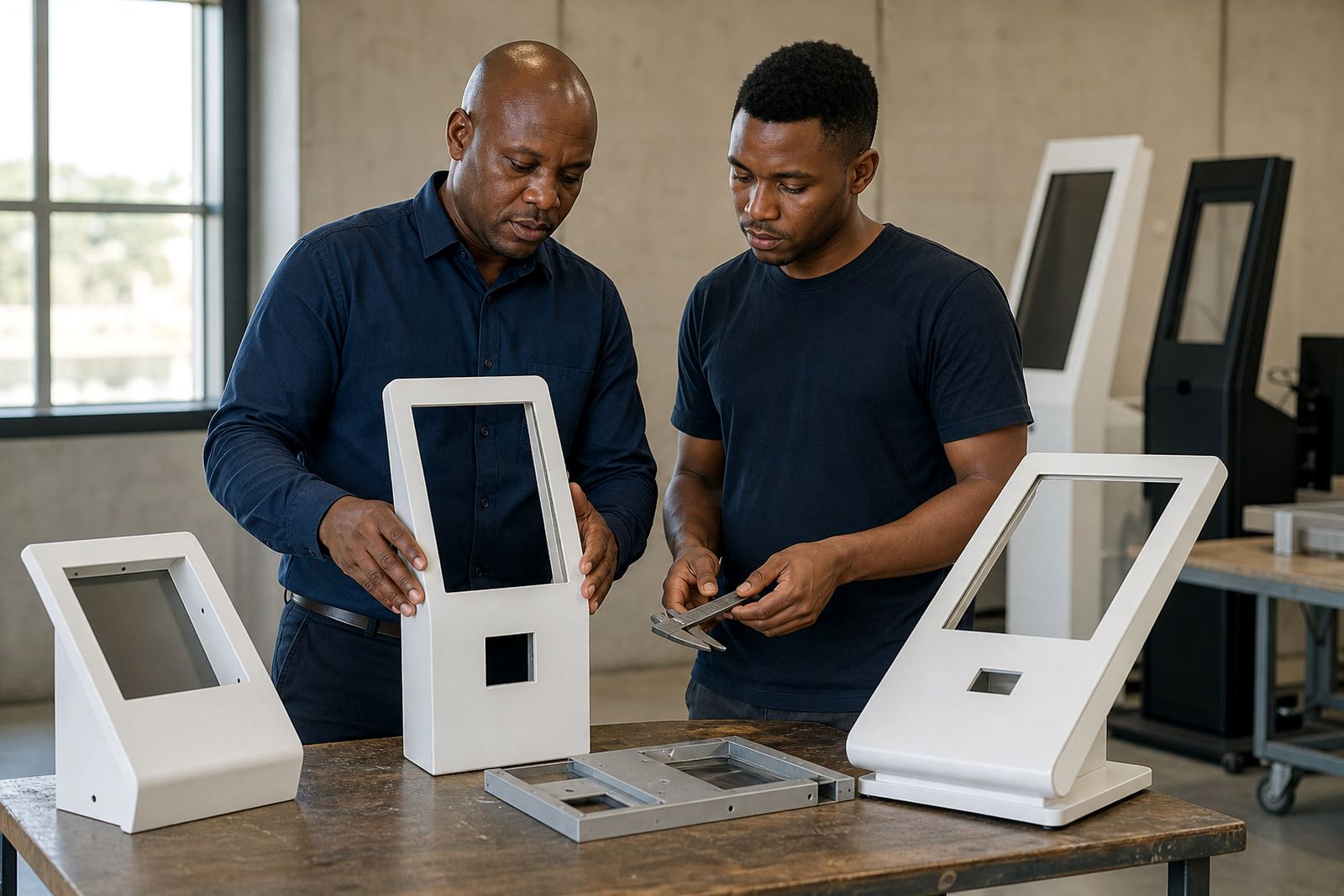
Before placing an order, the store team should work through a practical checklist. The goal is not just a good looking fixture, but one that fits the product, the floor plan and the way staff actually work. A solution that looks right in a showroom sample can still fail if it is too large for the aisle or too complex for daily use.
Ask how the unit will be delivered and installed, whether the software can be updated remotely and how power and network connections will be handled. Also check if the display can be branded for specific campaigns and whether staff training is included. In a multi-branch retail group, consistency across locations makes a big difference, especially when one branch is in Pretoria and another in Cape Town.
- Will the footprint suit the available floor space?
- Can the content be updated quickly for promotions?
- Is the finish suitable for premium interiors and heavy use?
- What servicing is needed after installation?
A local rollout that has to work in real trading conditions
A Midrand-based retailer launching a premium range into Johannesburg, Pretoria and Durban needs more than a nice concept. It needs site assessments, careful installation and support after launch. The store in Sandton may need a compact feature kiosk near the entrance, while a Cape Town branch may benefit from a display that handles higher moisture and tighter space near the till point.
This is where planning saves money. If the team checks access routes, power points and network connection before delivery, installation runs smoother and there is less disruption to trading. Preventative servicing also helps. A screen that is cleaned properly, a stand that is checked for wear and a unit that is repaired promptly will last longer and keep looking the part.
At iTouch 360, the focus is on practical presentation systems for South African retail. From Midrand to Bloemfontein, the aim is the same: make premium products easier to see, easier to understand and safer to present on the floor.