
Why consistency matters from one store to the next
Retail campaigns work better when every branch speaks the same visual language. If a display in Midrand uses one shade of navy, a different finish on the housing, and another version of the product message in Durban, customers notice the gap. That does not always happen consciously, but it affects trust and recall. In practice, brand consistency displays keep the look, the wording and the product interaction aligned so the campaign feels planned rather than pieced together.
For South African retailers, this matters even more across mixed trading conditions. A store in Sandton may have a polished mall environment, while a branch in Bloemfontein might need a more practical layout that handles dust and heavier daily wear. The core brand story should still land the same way. Consistency also makes rollout easier for new promotions, seasonal launches and national pricing changes, because teams are not guessing what should go where.
What needs to stay the same in a multi-store rollout
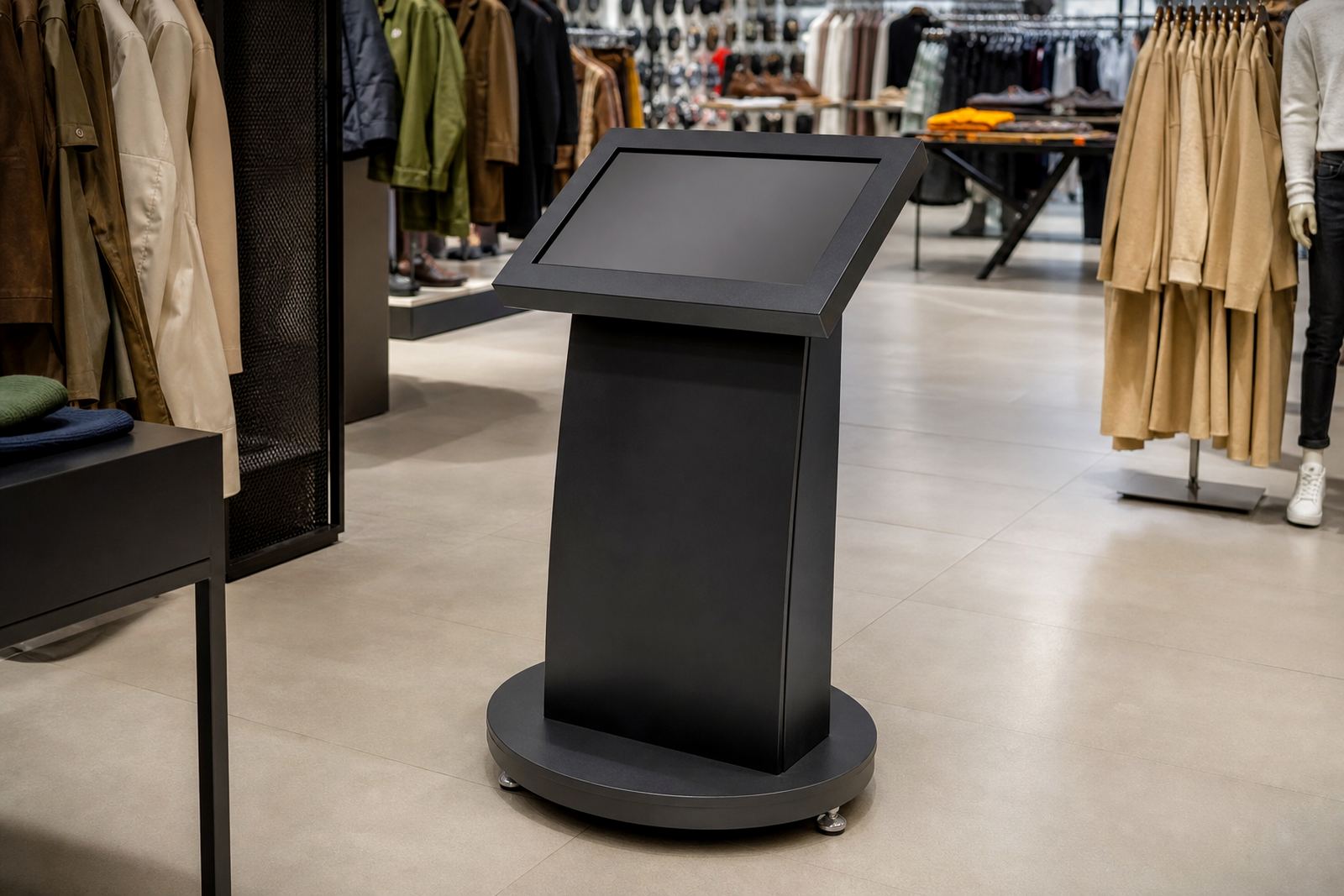
Consistency is not only about colour. It includes the shape of the stand, the screen position, the type of finish, the lighting level, and how content appears on the touchscreen. If one branch loads videos in portrait and another in landscape, or one store uses a matte surround while another goes gloss, the campaign can lose its rhythm. The goal is to make each unit feel familiar, even if the store layout changes.
- Use the same colour references and finish specs across all branches.
- Keep messaging short and approved, with the same headings and product claims.
- Match screen size, viewing height and touch response so the customer experience feels even.
- Standardise file formats and content loading so staff do not improvise.
- Track serial numbers and asset labels for easier servicing and replacements.
At iTouch 360, that usually starts with a site assessment and a clear rollout brief. Our team looks at customer flow, power points, network access and where the unit will sit relative to aisles, tills and promotional zones. That early planning stops small inconsistencies from turning into repeated problems across the network.
How touchscreen kiosks keep campaign messages aligned
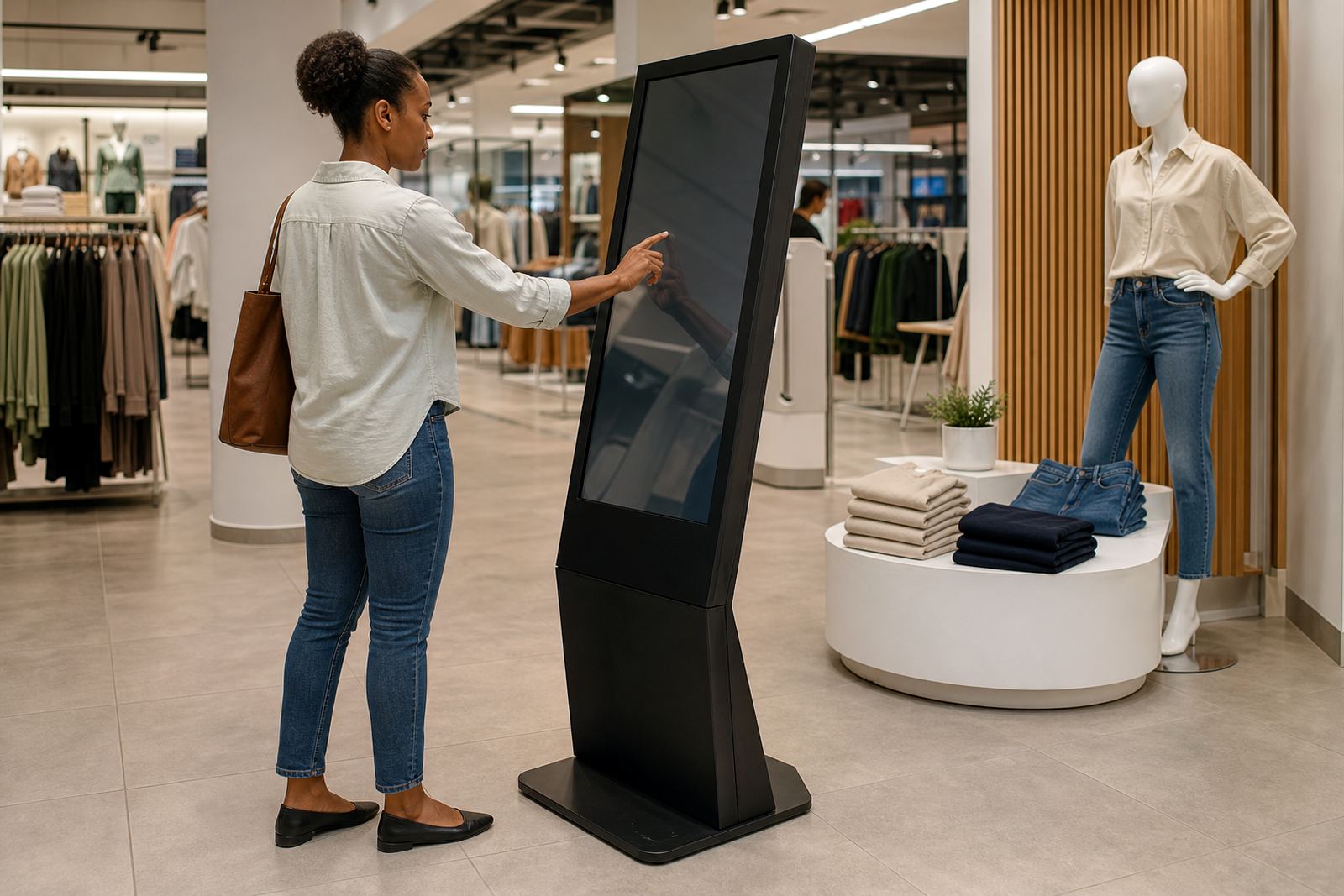
Interactive kiosks are useful because they let retailers control the message centrally. A promotion can be updated once and then loaded across several branches, which is much cleaner than relying on printed boards that go out of date fast. For a chain with stores in Johannesburg, Pretoria and Cape Town, that means the same pricing, the same product explainer and the same call to action can be used everywhere, even when the stock mix differs slightly by region.
The technical side matters too. A display that lags, freezes or loses its network connection will weaken the brand no matter how well it is designed. That is why software configuration, network integration and preventative servicing need to be part of the plan. In some sites, a simple offline content package is safer during load-shedding or patchy connectivity. In others, a live update system makes sense, provided the branch has stable power and the right permissions from centre management. Either way, the message should look and behave the same from branch to branch, not almost the same.
Using 360-degree product stands for a shared visual standard
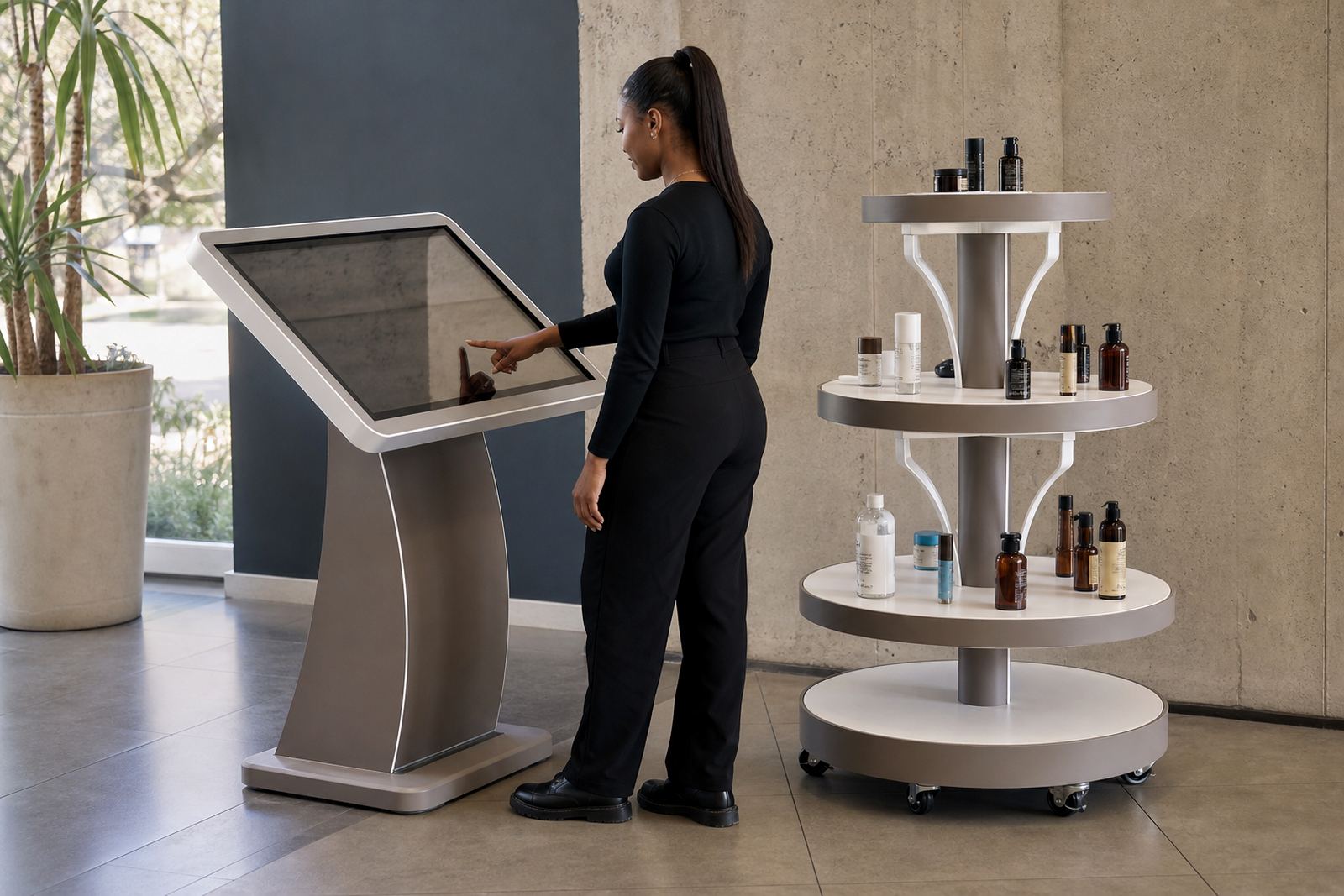
360-degree product display stands help brands present a product in the same way across all stores, which is useful when the item has details on every side. The stand should rotate smoothly, hold the product at a consistent height, and keep the viewing angle stable. If one store tilts the product forward and another places it too low, the presentation feels uneven. A small difference like that can affect how premium the product appears.
These stands are also practical for stores with high customer traffic. Shoppers can view packaging, finishes and features without needing a staff member at hand every time. For retail teams, that means less repetition and more time spent helping customers who are ready to buy. In humid coastal areas such as Durban, the materials and moving parts should be chosen with corrosion in mind. In busy inland stores, dust management and regular cleaning are just as important. Good consistency is not only visual, it is operational too.
- Choose materials that suit coastal humidity and daily handling.
- Keep rotation speed, lighting and product placement identical across branches.
- Use one master content set for product names, features and campaign claims.
- Allow for easy servicing so a fault in one store does not affect the whole rollout.
Local rollout example: from Midrand to the coast
A retailer based in Midrand might launch a national campaign for a premium home accessory range and need the same presentation in Johannesburg, Pretoria, Durban and Cape Town within the same month. In that case, the display brief should cover the unit dimensions, colour finish, on-screen content, installation method and support plan before the first unit leaves the workshop. If one branch has a narrow entrance and another has a wider central floor, the stand still needs to look like part of the same family.
This is where a coordinated team helps. Our operations, technical and installation staff can work through the set-up in sequence, from solution design and content loading to delivery installation and staff training. It also helps when client support has a clear service log for each branch, because a broken touch point or damaged part can be addressed without disrupting the whole campaign. That kind of consistency saves time and prevents the slow drift that often happens when stores each manage their own version of the same display.
A practical checklist for keeping the brand steady
Retailers often lose consistency through the small things. A different shade of print, a replacement part from the wrong batch, or a branch manager changing the screen order can all weaken the presentation. The answer is not more paperwork for its own sake, but a simple operating standard that each store can follow. Once that standard is set, the display program becomes easier to maintain over time.
- Lock the final artwork, colours and finishes before production starts.
- Approve one content library for all branches, with named versions.
- Schedule preventative servicing before peak trading periods.
- Keep spare parts on hand for fast fault repairs and replacements.
- Train floor staff on basic care, daily checks and who to call when there is a problem.
For retailers expanding across South Africa, the value is clear: a customer in Bloemfontein should recognise the same brand promise as a customer in Sandton. That is what consistent displays do. They make the store feel organised, dependable and ready for trade, even when the conditions around it are not. We have seen campaigns hold their shape far better when the display plan is treated as part of the retail strategy, not just a visual add-on.