
Busy toy aisles need quick, playful decisions
In a toy store, the challenge is not only getting attention, it is helping families make a clear choice before the child loses interest. An interactive touchscreen kiosk gives shoppers a simple way to browse categories, filter by age, theme or price, and see product details without waiting for a staff member to check stock. That matters in busy centres in Johannesburg, Pretoria, Cape Town, Durban and Bloemfontein where weekend footfall can build fast.
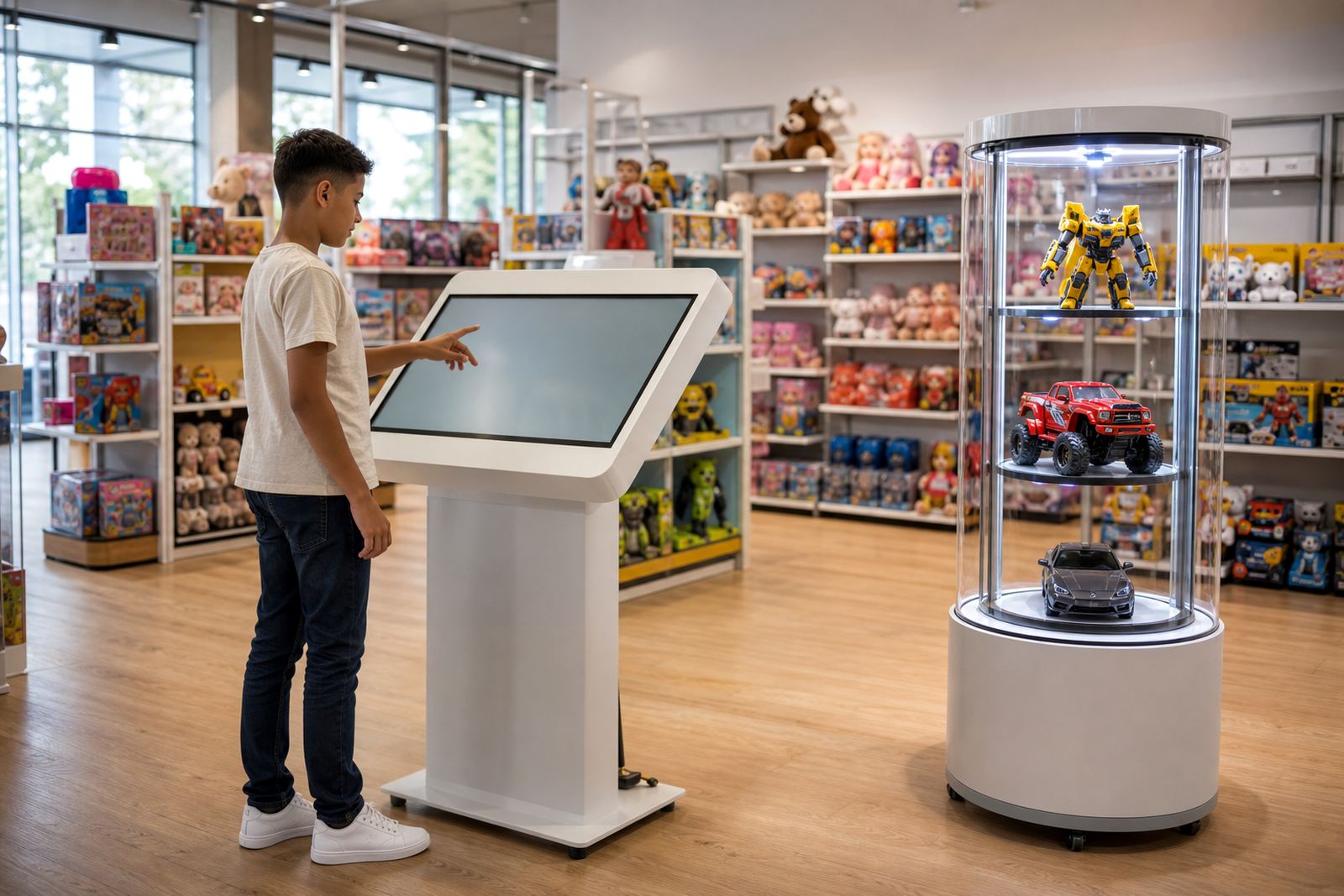
For stores selling puzzles, dolls, ride-ons, STEM kits and games, a bright screen near the entrance or demo zone can guide the customer straight to the right bay. It also helps when parents are shopping with more than one child. One can interact with the screen while the other handles a sample toy or watches a product video, so the visit feels easier not rushed.
Typical equipment for a toy retail floor
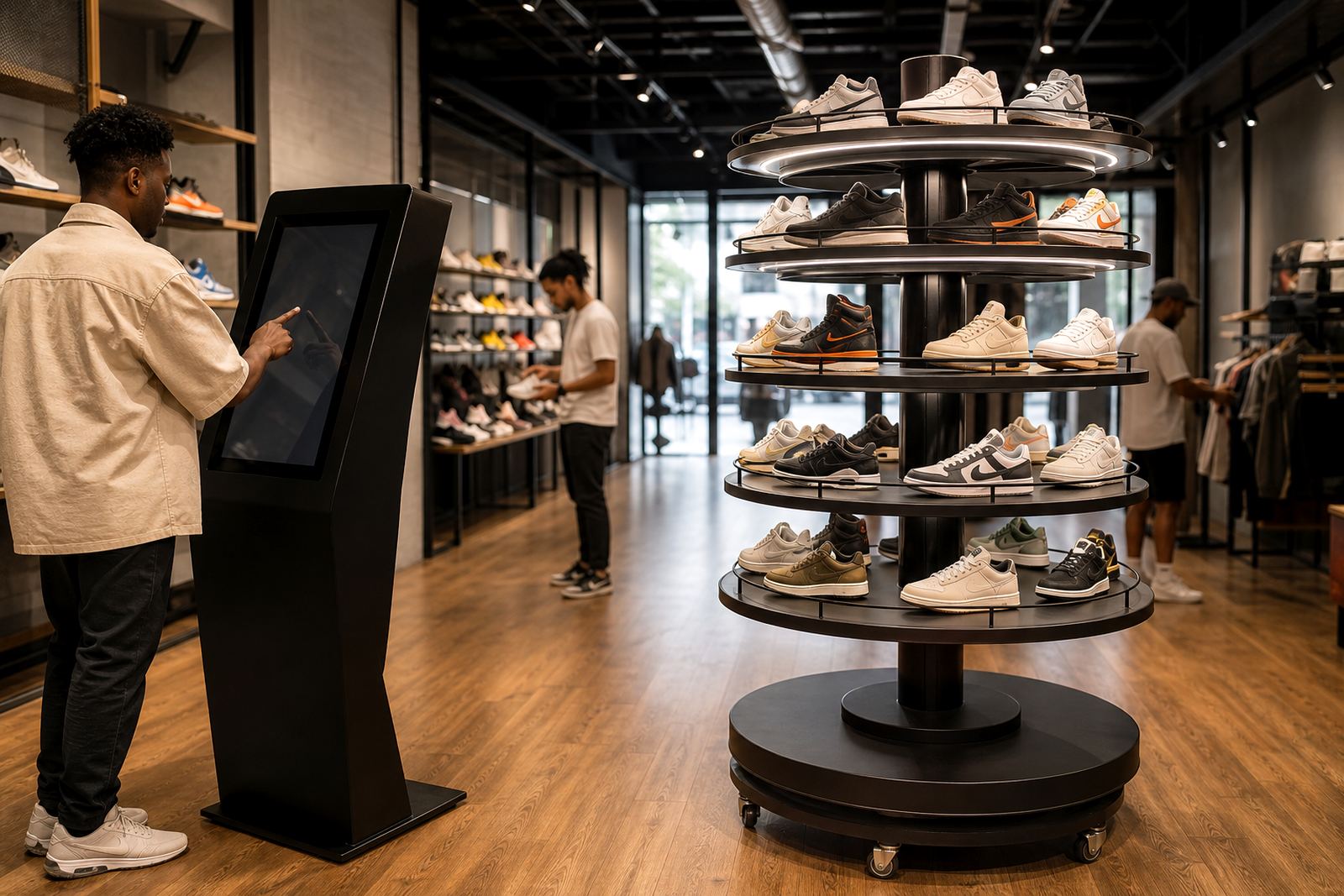
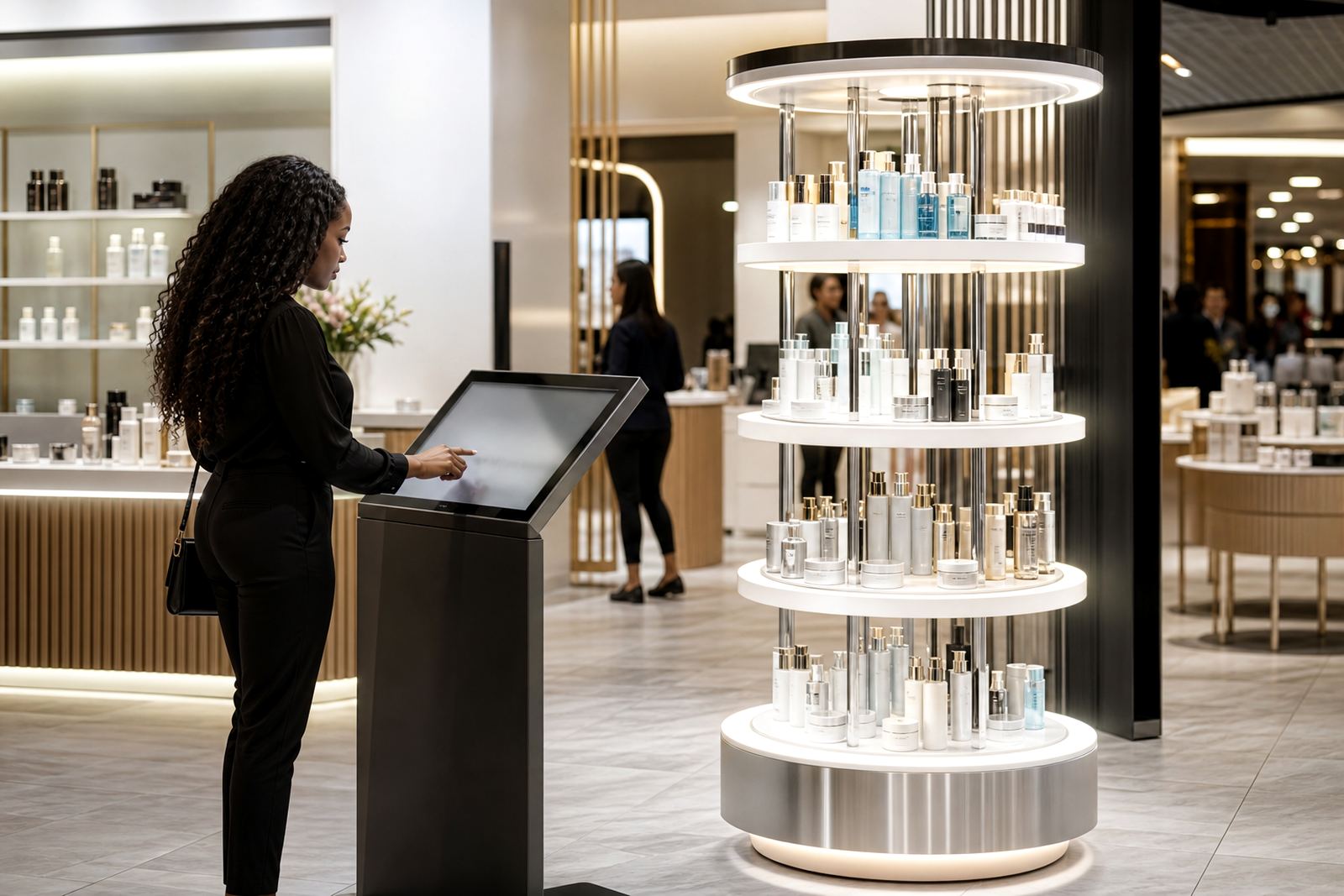
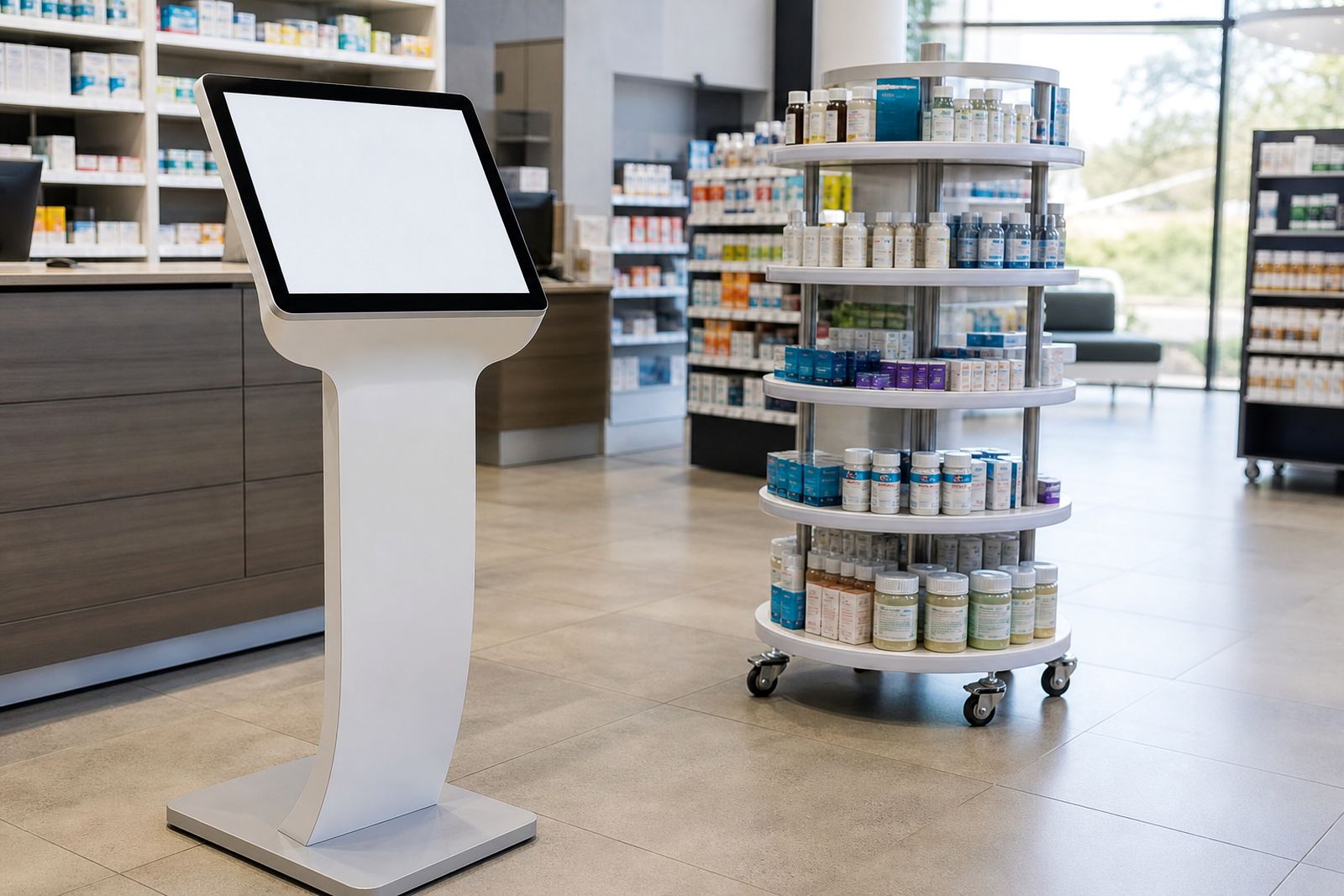
Most toy stores use a mix of touchscreen units and 360-degree display stands. The touchscreen is ideal for browsing ranges, promotions and gift ideas, while the rotating stand works well for boxed toys, collectibles and featured items that need strong shelf appeal. In stores with limited floor space, a wall-facing kiosk and a compact rotating display can cover most needs without crowding the walkway.
- Floor standing touchscreen kiosks for product search and gift guides
- Counter-top touch units for smaller branches or till areas
- 360-degree product display stands for featured toys and demo stock
- Software setup for categories, age bands, promos and store messaging
- Network integration for live content updates across branches
Units can be fitted for indoor retail use with neat cable management, lockable access panels and finishes suited to daily traffic. In coastal stores, a careful choice of materials helps reduce wear from humidity. In Gauteng, stable power backup is worth planning for because load-shedding can interrupt browsing if the kiosk is not protected.
Layout planning that keeps parents moving
Good placement makes the difference between a tool that gets used and one that gets ignored. The best position is usually close to the main entrance, new arrivals zone, or the section where parents naturally pause. The screen should not block access to aisles, and there should be enough room for a pram or trolley to turn comfortably. If the store has a birthday or gifting section, that area is often a strong fit for a second unit.
We normally advise retailers to think about the shopper journey before choosing the exact point of installation. A child may be drawn to a display stand first, but the parent usually wants pricing, age suitability and stock details before making a decision. If the store has changing promotions, the layout should allow staff to update content quickly without a complicated process.
- Keep the screen visible from the main path, but not in a bottleneck
- Place rotating displays where customers naturally slow down
- Allow space for strollers, wheelchairs and two adults to stand together
- Use lighting that reduces glare on the screen and highlights the toys
- Consider a second unit for larger stores with separate action, learning or baby ranges
Common mistakes toy stores should avoid
The most common mistake is treating the kiosk like a decoration instead of a sales tool. If the content is not current, parents will stop trusting it very quickly. Another problem is putting the unit where children can reach it but staff cannot monitor it, which can lead to fingerprints, repeated tapping and wear on the screen edge. It is better to position the equipment where it can be seen from the till or floor staff point.
Stores also under-plan for power and network issues. A toy store that relies on the screen for promotions or product browsing needs a proper backup plan for outages. We often see confusion when the content is too wordy too. Shoppers want quick answers, not long paragraphs. Clear images, simple buttons and short product details work far better on the shop floor.
Another mistake is skipping staff training. Even the best setup will underperform if the team does not know how to update stock messages or reset a frozen screen. A short handover after installation usually prevents repeated call-outs later.
Budget ranges for South African toy retailers
Budget depends on the size of the store, the screen specification, the type of stand and whether you need software, branding and installation included. A smaller touchscreen setup for a compact shop or mall kiosk can start from around R35 000 to R55 000. Mid-range floor units with custom content, branding and installation often fall between R60 000 and R95 000. Larger multi-unit rollouts for several branches can move from R120 000 upwards, depending on the number of locations and the level of integration.
For 360-degree product display stands, pricing varies by size, finish and whether the stand must carry heavier boxed stock. A simple retail display solution may start at about R18 000, while a more specialised unit with custom finishes and control features can cost more. Ongoing support retainers, servicing and parts replacement should also be included in the planning, especially for stores operating long hours in busy centres.
We usually recommend setting aside a contingency for cable work, content loading and any network adjustments. That saves delays on install day and helps the rollout stay within budget.
Support for toy shops across the country
From Midrand, we support toy retailers across South Africa with site assessments, solution design, custom branding, content loading, delivery installation, software configuration and network integration. Our team also handles preventative servicing, fault repairs, parts replacement, staff training and ongoing support retainers. That is useful for stores with more than one branch, or for retailers planning a seasonal refresh before school holidays and festive trading.
The right setup should help the store tell a better story about each product range while making the customer journey easier. For toy stores, that often means brighter engagement at the front of the shop and faster decisions at the point of sale. A simple, well planned system can do a lot without taking over the floor.
- Midrand Showroom for demonstrations and planning
- Johannesburg Supply and Pretoria Supply for Gauteng retail rollouts
- Centurion Support and Sandton Support for ongoing service
- Cape Town Supply, Durban Supply and Bloemfontein Supply for national coverage