
What beauty shoppers need to see before they buy
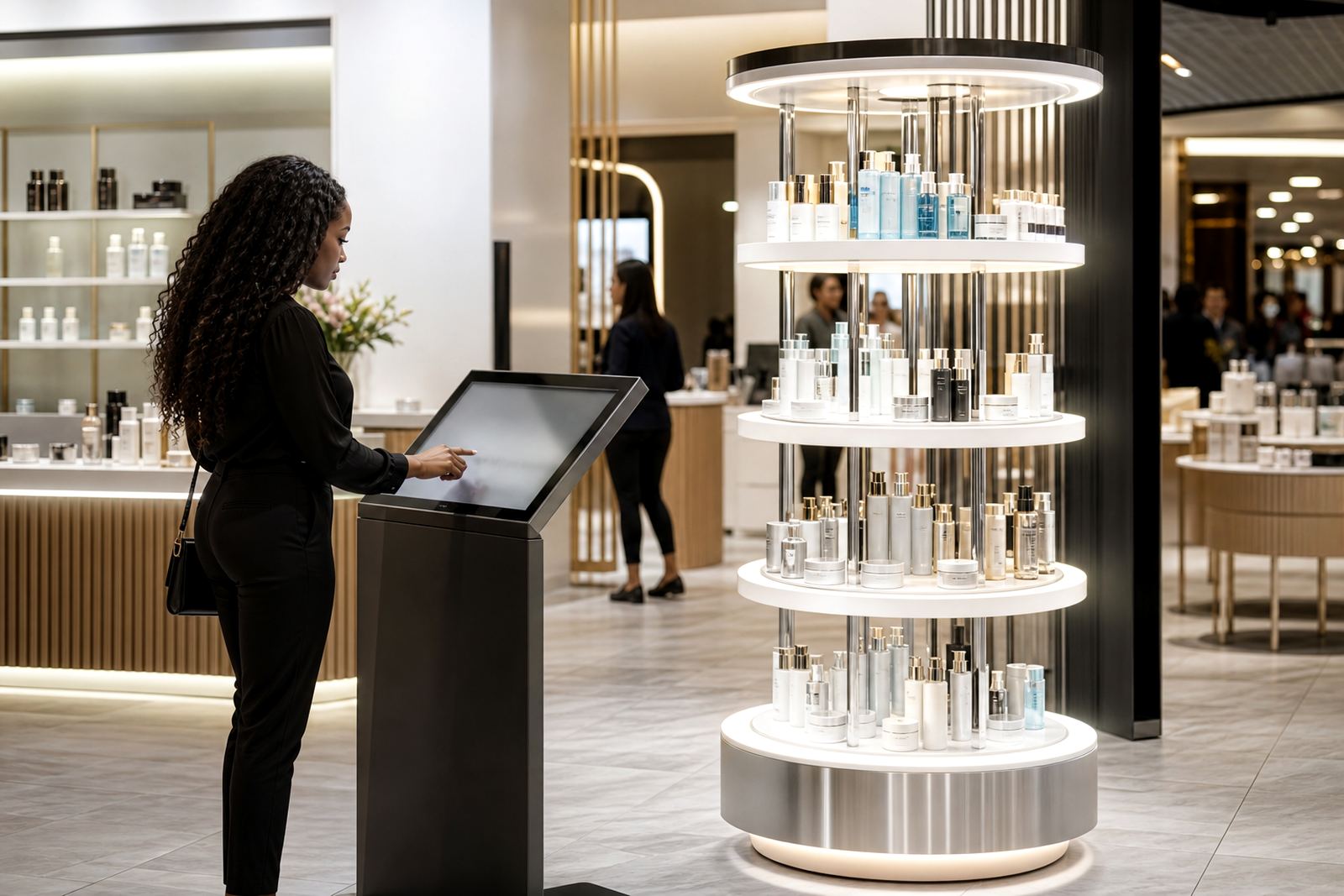
In cosmetics retail, the shopper often wants more than a price tag. They need to compare shades, understand skin types, check ingredient notes and see how a routine fits together before they commit. An interactive kiosk gives staff a practical tool for explaining cleansers, serums, moisturisers, foundation matches and gifting sets without crowding the cosmetics aisle.
For beauty counters in malls, pharmacies and speciality stores, the biggest benefit is clarity. A customer can browse step-by-step routines, view bundle options, and learn which products work together for dry skin, oily skin or sensitive skin. That helps reduce hesitation at the till and can lift basket value when used well.
In South Africa, this also helps during busy trading hours and load-shedding planning. A clear screen based setup keeps information available even when a consultant is helping another shopper. If your store serves walk-in traffic in Sandton, Menlyn, Canal Walk or Gateway, this can make the difference between a quick sale and a lost sale.
Typical equipment for a beauty cosmetics floor
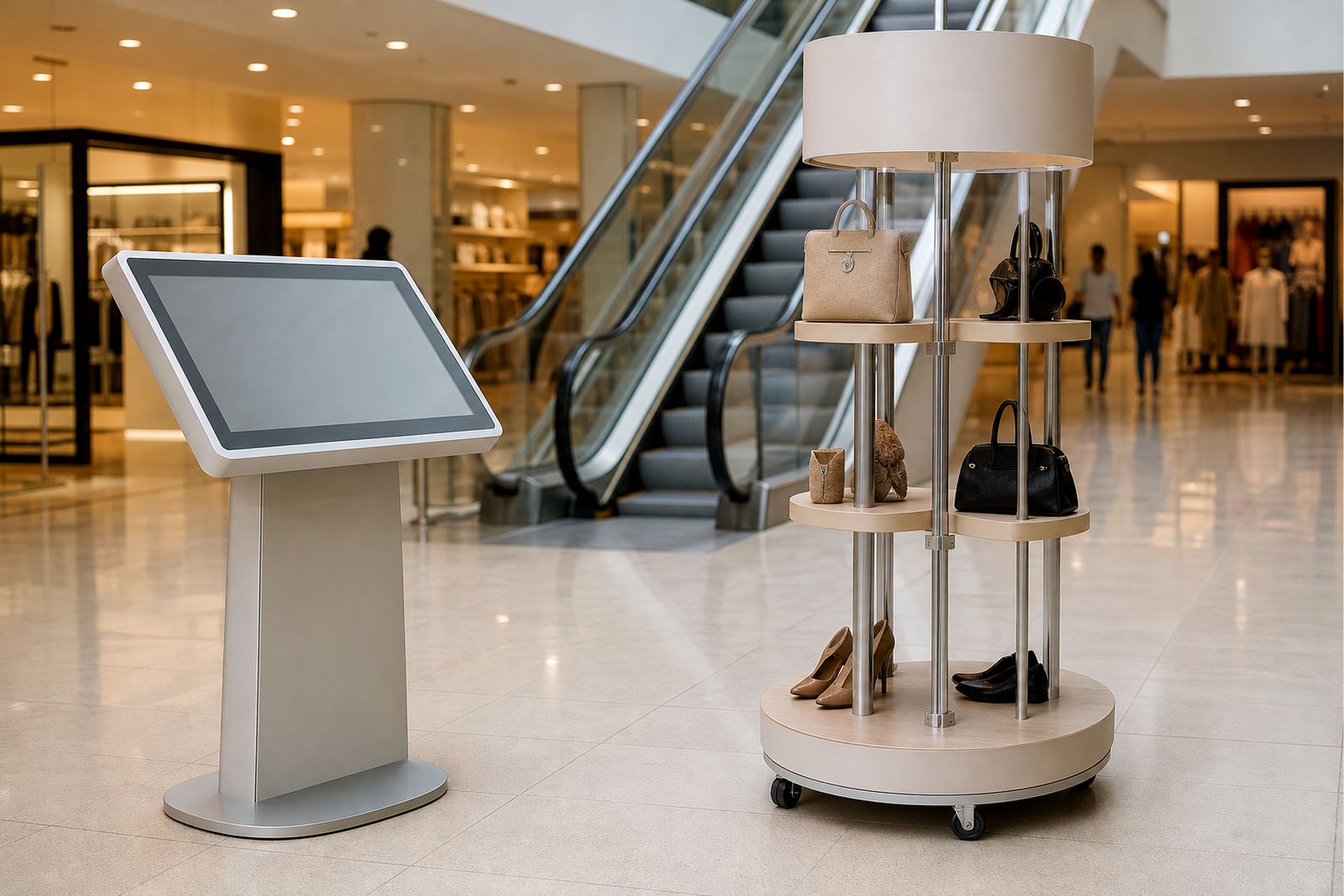
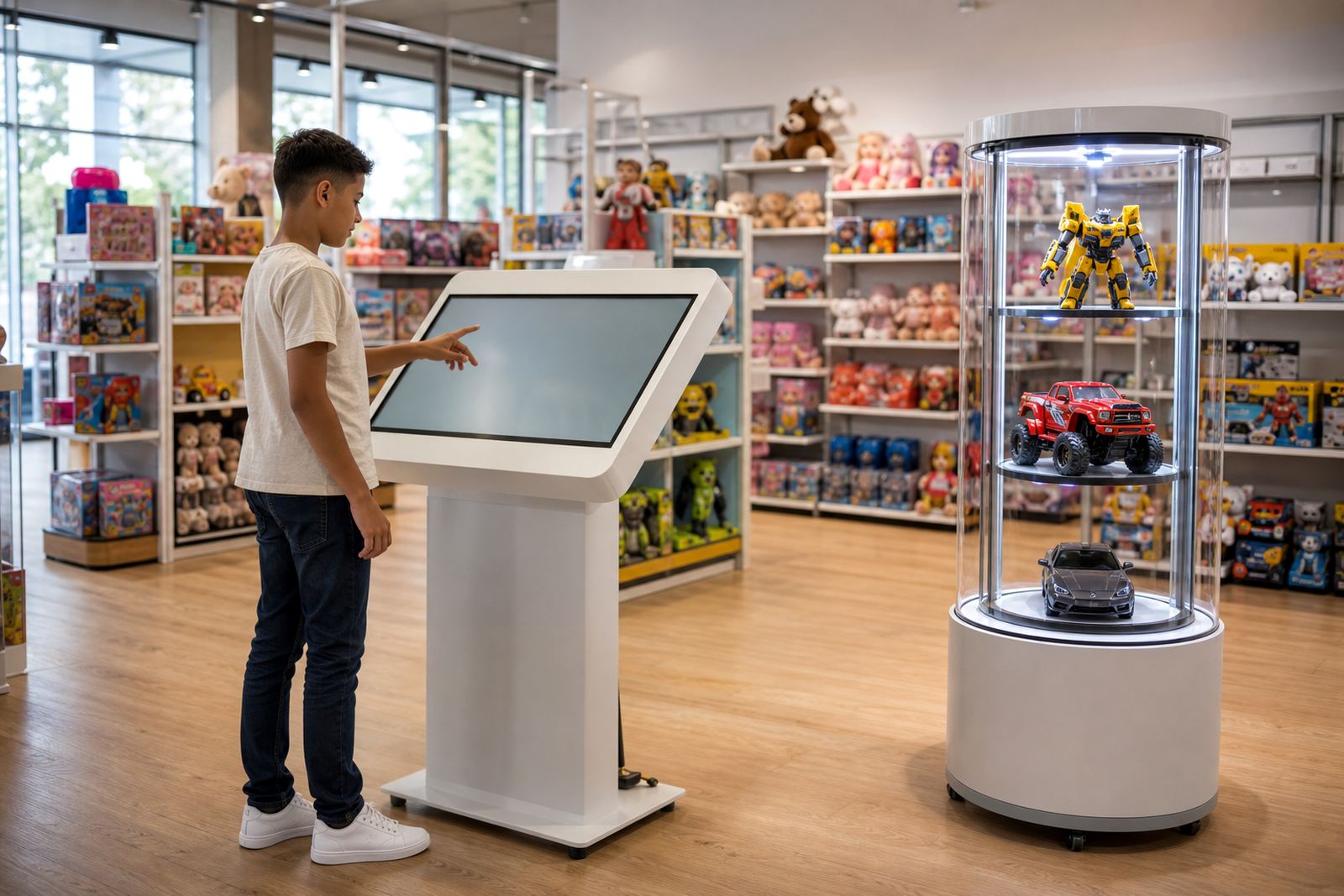
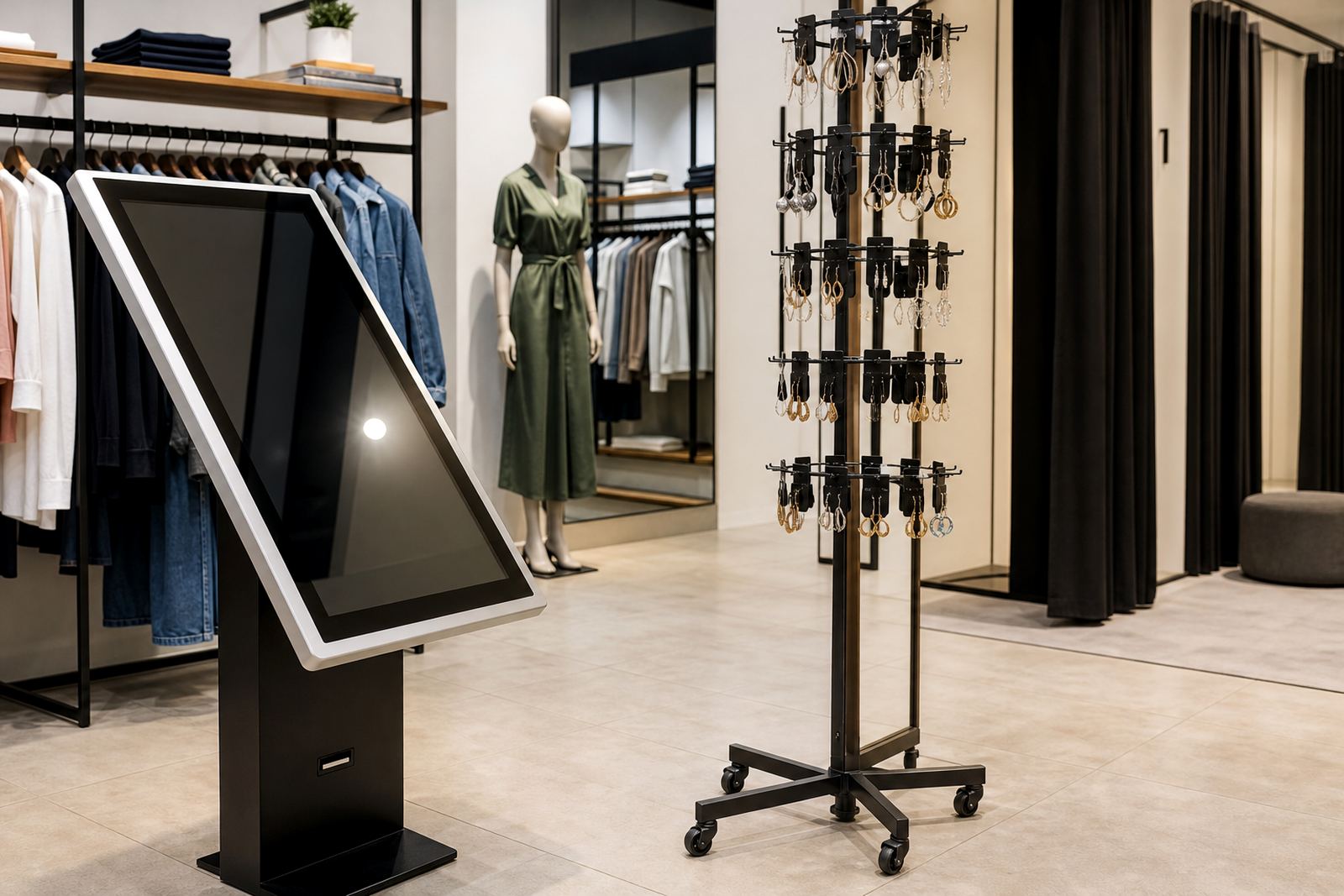
Beauty stores usually need a mix of interaction and display. The right setup depends on whether the goal is self-help information, assisted selling or featured promotions near the entrance. Most retailers start with one or two touchscreen kiosks and then add a 360-degree product display stand for new launches or seasonal ranges.
- Wall-facing or freestanding touchscreen kiosks for routine guidance and product comparisons
- 360-degree rotating stands for fragrances, gift sets, mini collections and launch items
- Lockable product holders for testers, sealed stock or high-value items
- Simple signage panels for price points, bundle offers and ingredient highlights
- Network-ready units for content updates across multiple branches
We often see a compact kiosk near the skincare section and a second unit at the colour cosmetics side. For stores with limited floor space, a slim footprint matters more than a large screen. In humid coastal areas like Durban or Cape Town, the casing and placement should also suit the environment, especially if the unit sits near a door or air-conditioning outlet.
How to plan the layout so customers actually use it
The best placement is where a shopper naturally pauses. That is usually near new arrivals, a premium display table, or the end of an aisle where they can stop without blocking traffic. In a beauty store, the kiosk should never force people to step into a narrow lane while other customers are passing with baskets and trolleys.
We recommend planning for three things first: sightline, queue flow and staff reach. The screen should be easy to see from about 2 to 4 metres away. The product stand should be within easy reach for staff who are explaining a range, but not in the path of shoppers moving between categories. If the store is in a mall, also check landlord rules for drilling, cabling and after-hours access before installation.
A sensible layout often includes a main kiosk close to high-margin categories and a smaller support point for promotions. Keep cable routes neat and protected, especially where cleaning happens daily. If the store is in Johannesburg or Pretoria and uses more than one branch, central content control can keep the same routine videos and offer messaging in place across all stores.
Common mistakes in cosmetics kiosks and display stands
One common mistake is trying to say too much on one screen. Beauty shoppers do not need every detail at once. They need short choices, clear steps and simple prompts. Too many categories can slow people down and staff end up repeating the same explanation. A second mistake is placing the stand too close to mirrors, windows or bright downlights, which can make the screen harder to read.
Another issue is poor stock discipline. If the interactive display promotes a bundle but the items are out of stock, trust drops fast. The same applies to product testers. The screen and the shelf must match what is actually available that day. We also see stores ignore basic training, so the team knows the unit is there but not how to use it during a rush.
- Using long text instead of short shopping prompts
- Placing the unit where it causes aisle congestion
- Leaving outdated offers on screen after a promotion ends
- Ignoring power backup for stores affected by load-shedding
- Skipping cleaning and care, which matters in humid or dusty conditions
For retailers in Bloemfontein, Durban or Cape Town, maintenance planning matters as much as the first install. A display that is not updated or cleaned will look tired quickly, even if the hardware itself is fine.
What a practical budget looks like in Rand
Budgets vary by screen size, enclosure, software setup and whether the unit is custom branded. As a guide, a simple entry-level kiosk for a single beauty point can start from about R35 000 to R55 000, depending on the specification and finish. A more polished branded unit with integrated content loading, installation and basic network setup can fall in the R60 000 to R95 000 range.
For larger rollouts or stores that need multiple touchpoints, the total can move higher once you add site assessments, branded graphics, delivery across provinces and staff training. A 360-degree product display stand is usually priced separately, and the final amount depends on size, materials, lockable storage and whether it must hold lightweight retail samples or heavier boxed items.
It is worth planning for ongoing costs too. Preventative servicing, fault repairs, parts replacement and support retainers are often cheaper than waiting for a breakdown. If your beauty floor trades hard and the unit is used by many shoppers each day, a small maintenance allowance is sensible. That keeps the display working during busy weekends and seasonal peaks, which is when promtional activity matters most.
Service support for stores across South Africa
Beauty retail teams need support that is practical, not complicated. iTouch 360 works from Midrand and supports retailers in Johannesburg, Pretoria, Centurion, Sandton, Cape Town, Durban and Bloemfontein. The team handles site assessments, solution design, custom branding, content loading, delivery installation, software configuration, network integration, preventative servicing, fault repairs, parts replacement, staff training and support retainers.
That matters when a store is opening a new cosmetics bay or refreshing a seasonal display. A good rollout should include planning for the store’s trading pattern, the available wall space, the power point position and how the team will update content after launch. In practice, the best results come from keeping the screen content simple, the product stand tidy and the message close to what the shopper is asking for.
If you are fitting out a beauty department in a mall or high street store, the aim is straightforward: help the shopper choose faster, help staff explain better and keep the display working under daily retail pressure. With the right setup, the floor feels easier to shop and the product story is clearer from the first glance.