
Why fashion stores use interactive displays
In a clothing store, the customer often wants three things at once: to see the full collection, check size availability and understand how a garment fits into the rest of the range. Interactive kiosks help with all three. Shoppers can browse lookbooks, colour options, product details and styling suggestions without waiting for a salesperson, which is useful on busy Saturdays and during mall peak periods in Johannesburg, Pretoria and Durban.
For stores carrying seasonal stock, these screens also help when floor space is tight. A small team can present a larger range than what is physically on rails, and that matters when you are balancing fast-moving fashion, changing promotions and limited display space. In coastal areas like Cape Town and Durban, equipment also needs to cope with humidity and frequent cleaning, so build quality and enclosure choice matter.
- Show full size runs, colourways and garment details on one screen
- Guide customers to matching items, accessories and new arrivals
- Reduce pressure on floor staff during busy trading hours
- Keep promotional content current when collections change each week
Typical equipment set for a fashion floor
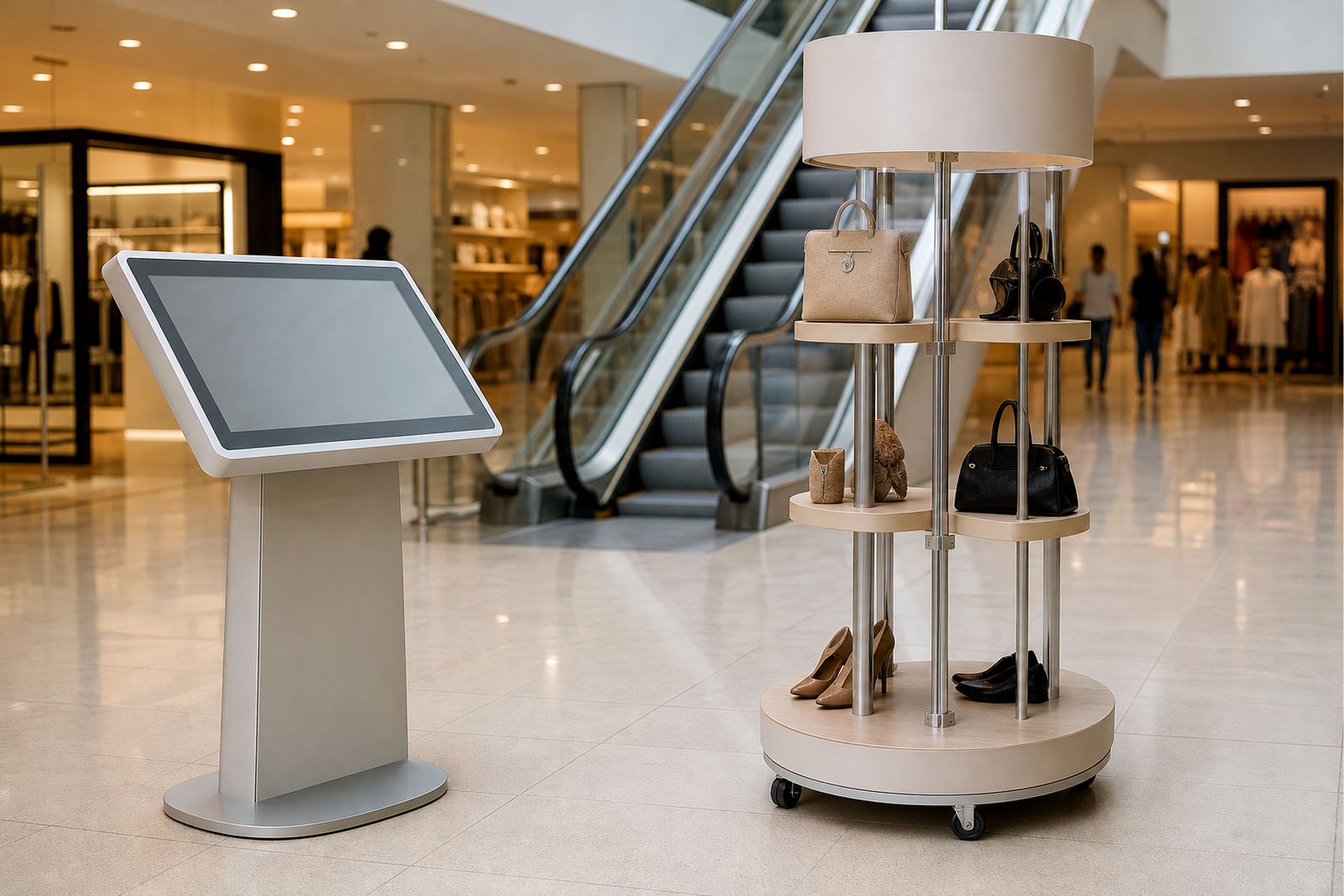
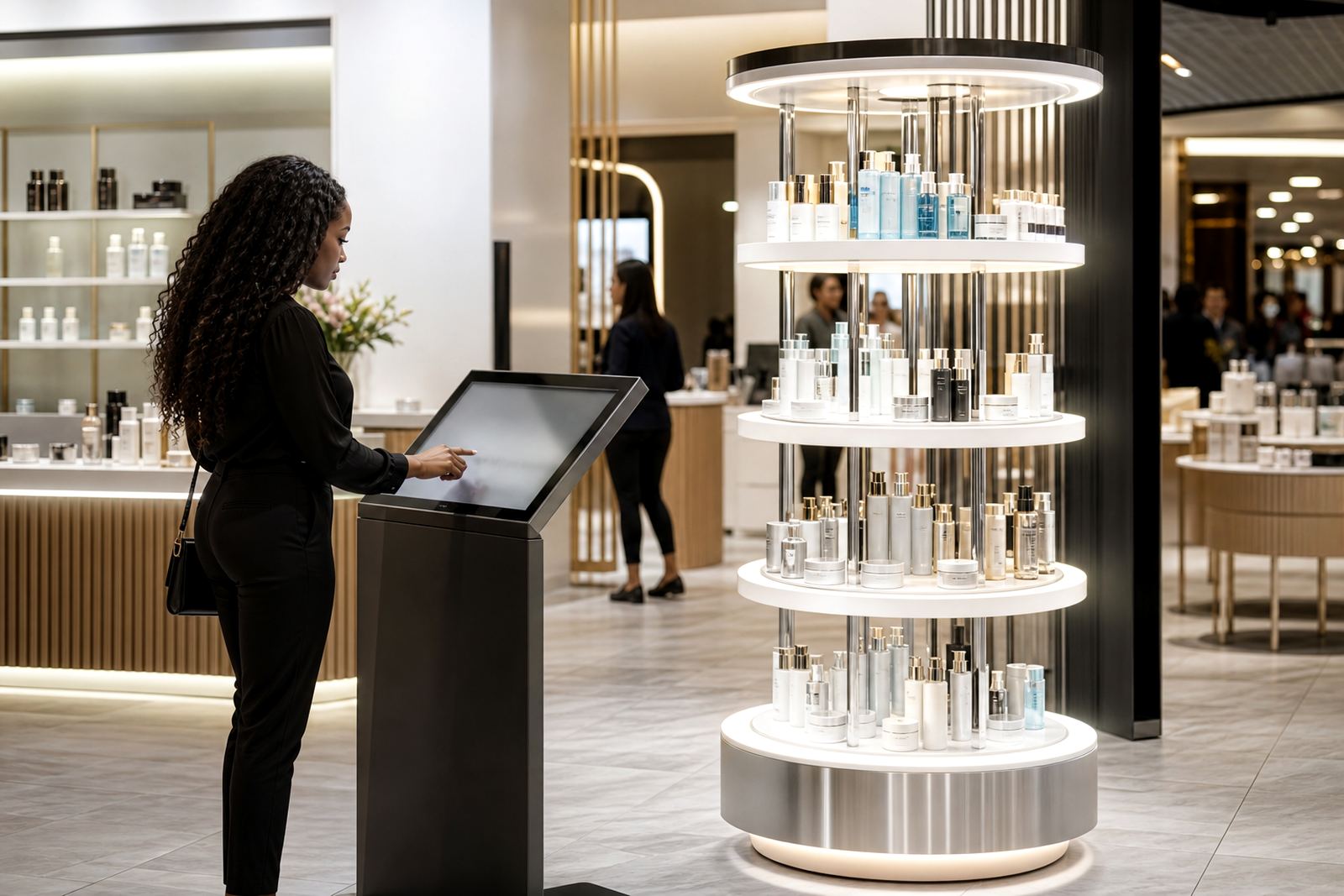
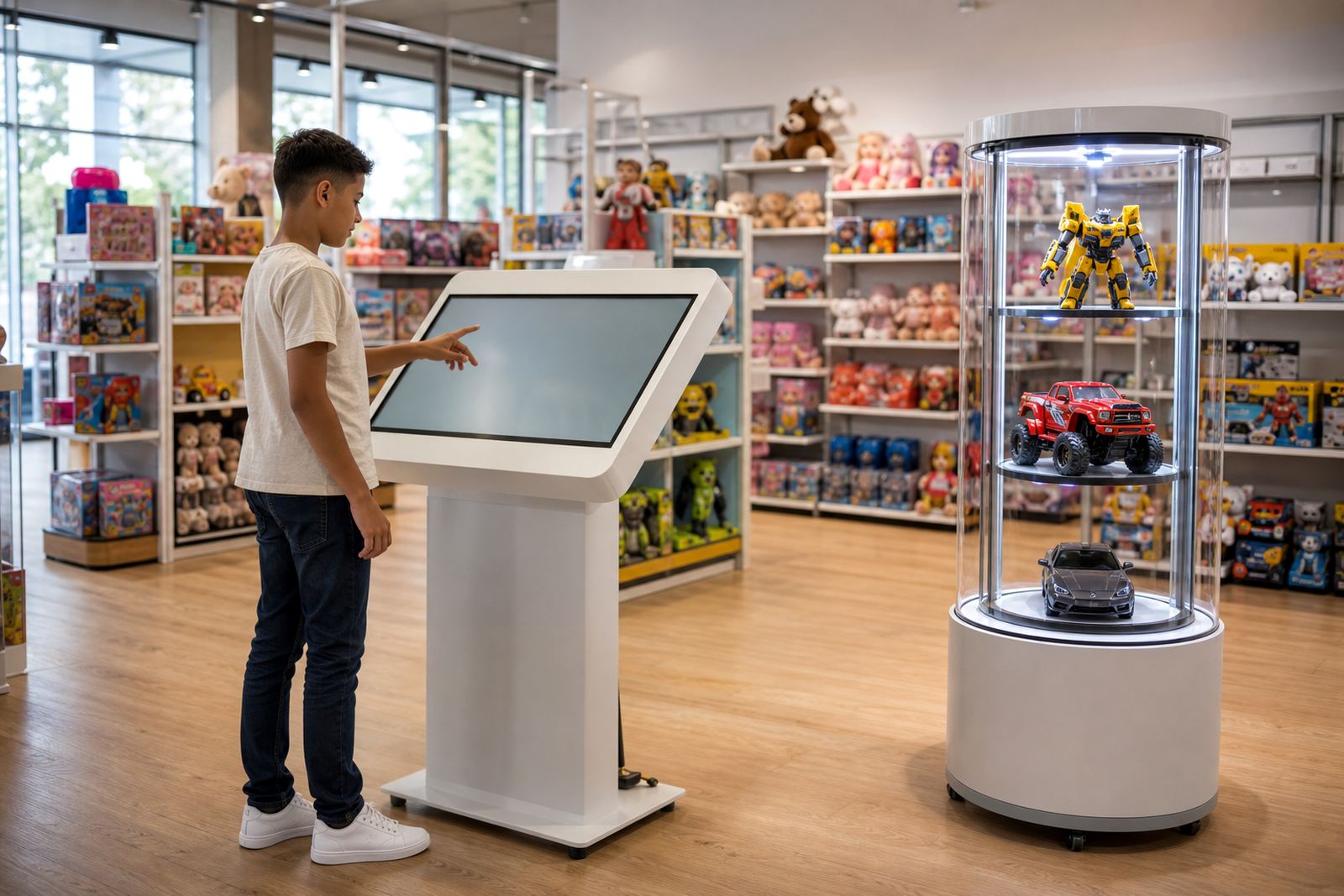
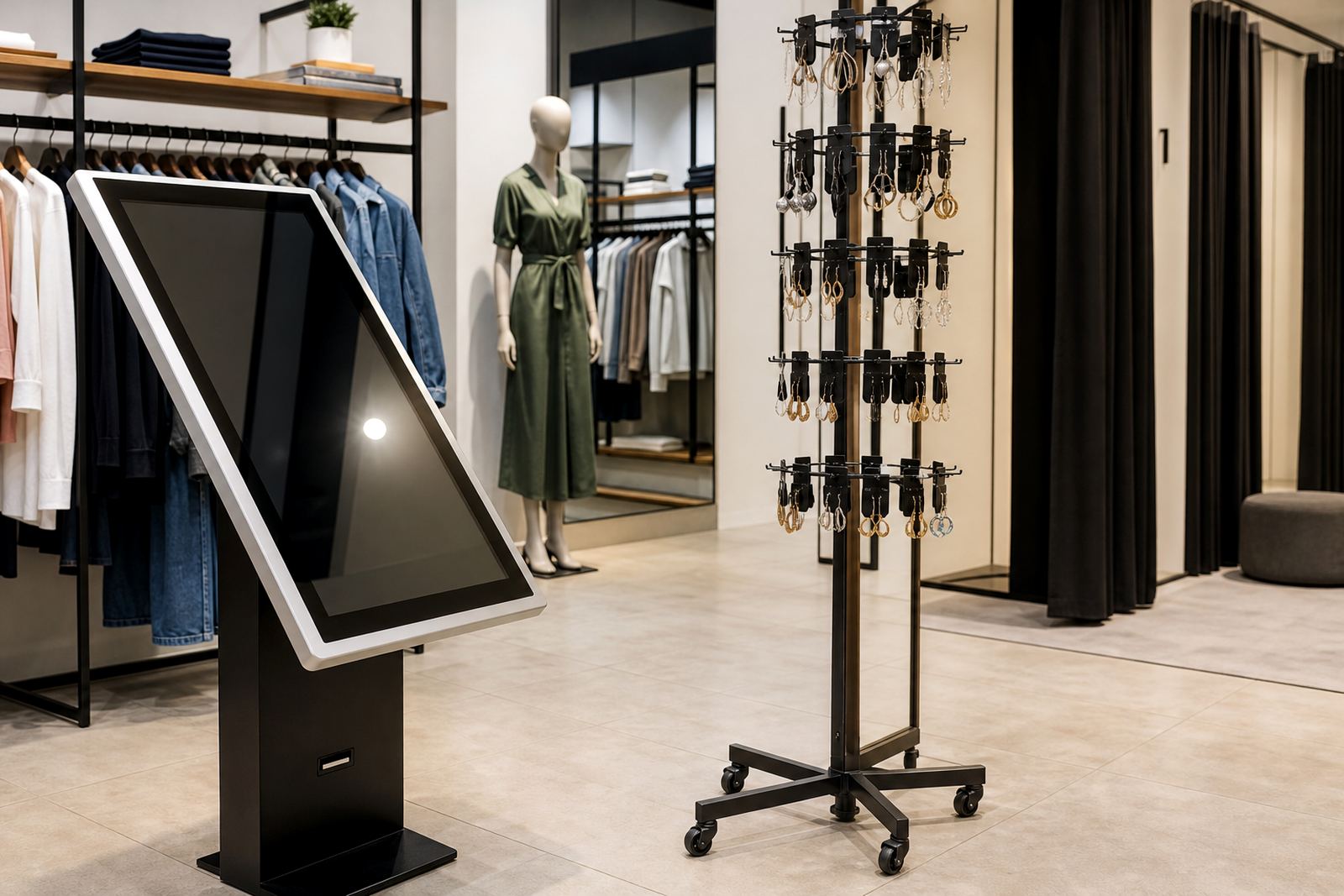
A fashion retail setup usually combines a touchscreen kiosk with one or more 360-degree product display stands. The kiosk handles browsing, product search and content, while the rotating stand gives customers a closer view of hero items, such as handbags, sneakers, jackets or premium accessories. In many stores, the stand sits near the entrance, and the kiosk is placed close to fitting rooms or the new season wall.
We normally plan for hardware that suits the traffic level and the store layout. A compact boutique in Sandton may need a single floor-standing kiosk and one display unit, while a larger store in Century City or Gateway may use two kiosks plus several product stands. If the store runs on limited power backup during load-shedding, we also look at start-up recovery, safe shutdown and network continuity so the system comes back properly when power returns. minor note: cable routes and mounting points need to be sorted before fitting day, not after.
- Floor-standing or wall-mounted touchscreen kiosk
- 360-degree rotating product stand for selected merchandise
- Content loading for lookbooks, campaigns and product details
- Network integration for live stock or promo updates where required
Layout planning that works on the shop floor
The best layout is the one that supports the customer journey. A kiosk placed at the entrance can attract attention, but if the store is narrow it may block movement and create a bottleneck. In fashion, we usually look at sight lines, fitting room traffic, cashier position and where people pause naturally. That is where a display stand or screen gets used most.
For stores with multiple departments, the content should reflect the area around it. Womenswear, menswear, childrenswear and footwear all need different messaging. If the screen is too general, it becomes background noise. If it is too close to bright window light, glare can make it hard to use. Planning also has to account for municipal compliance, fire exits and safe cable management, especially in centres with strict landlord rules.
- Place kiosks where customers already stop, not in walkways
- Keep the screen visible from 2 to 5 metres away
- Match content to the department or seasonal campaign
- Allow for cleaning access, power access and ventilation
Common mistakes in fashion retail installations
A common mistake is treating the screen like a poster. Fashion customers expect motion, clear navigation and current stock information. If the content does not change, the kiosk loses value quickly. Another issue is underestimating staff training. If the team does not know how to update a promo or restart the unit after a power interruption, the equipment ends up unused for long periods.
Stores also sometimes choose the wrong size or finish for the site. A large unit can overwhelm a boutique, while a small one can be lost in a flagship store. In humid coastal sites, the wrong enclosure or poor placement can lead to wear faster than expected. We also see stores skip preventative servicing, then call for repairs only when the touch response slows or the rotating stand becomes noisy.
- Using outdated content for weeks at a time
- Installing equipment without checking glare, traffic and clearance
- Ignoring cleaning, servicing and basic user training
- Choosing a unit that is too large or too small for the store
Budget ranges for South African fashion stores
Budgets depend on screen size, content needs, branding, installation complexity and whether the unit needs network integration. A simple single-kiosk setup for a small boutique can start from around R35 000 to R65 000. A mid-size store with a branded kiosk, a 360-degree display stand and content setup often lands between R75 000 and R140 000. Larger multi-site rollouts for chains in Johannesburg, Cape Town or Durban can run from R150 000 upward, depending on how many stores are included and whether support retainers are added.
It is worth budgeting for ongoing costs too. Preventative servicing, parts replacement and software configuration are easier to manage when they are planned from the start. If a store wants staff training, content loading before launch and fault repair cover, those items should be listed separately so there are no surprises later on.
For fashion retailers, the return is usually not just sales. It is also better product discovery, less pressure on floor staff and a cleaner way to present a wide range without adding more rail space. That is useful in stores where every square metre counts.
How iTouch 360 supports fashion retailers
iTouch 360 works from Midrand and supplies fashion retailers across South Africa, including Johannesburg, Pretoria, Cape Town, Durban and Bloemfontein. The team handles site assessments, solution design, custom branding, content loading, delivery installation and software configuration. Where needed, we also assist with network integration, staff training and support retainers so the system stays useful after launch.
The team includes Sibusiso Mthembu as Managing Director, with Lerato Khumalo overseeing operations, Johan van Wyk on technical direction, Anele Dlamini on retail solutions, Megan Naidoo coordinating projects, Thabo Molefe supervising installation and Zanele Mokoena leading client support. That mix helps when a store needs practical advice on fitting rooms, seasonal turnover, power backup or content changes across more than one branch.
If you are fitting out a new store or updating an older one, the aim is simple: make it easier for shoppers to browse, compare and buy. In fashion retail, that extra bit of guidance can make the difference between a passing look and a proper sale.