
Why footwear stores use kiosks and rotating displays
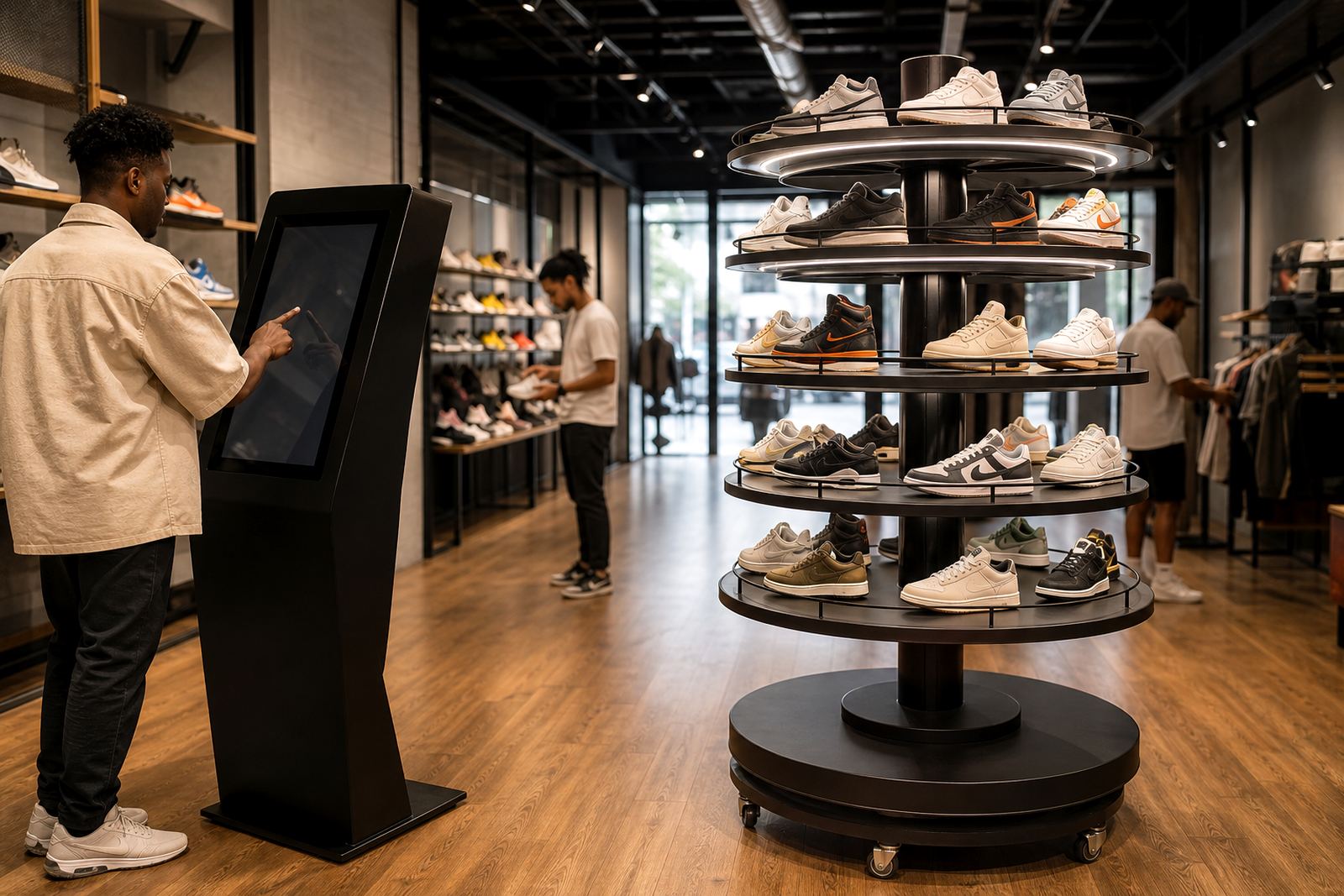
Shoes are bought with both the eye and the hand, and customers often want to check colours, sizes, materials and availability before they call a staff member. An interactive kiosk helps shoppers browse ranges, compare feature pairs and see stock information in one place, while a rotating stand gives a clearer view of uppers, soles and finish without opening every box. In a store with high foot traffic, this cuts down on repeated questions and keeps the floor moving.
For many footwear retailers, the biggest pressure is matching display space to stock depth. A compact kiosk can show the full range for school shoes, trainers, formal styles or safety footwear, even when only a few sample pairs are on the floor. That is useful in centres like Sandton and Menlyn where premium display space is costly, but it also helps in regional stores where one staff member may be helping several customers at once.
Typical equipment set for a shoe retailer
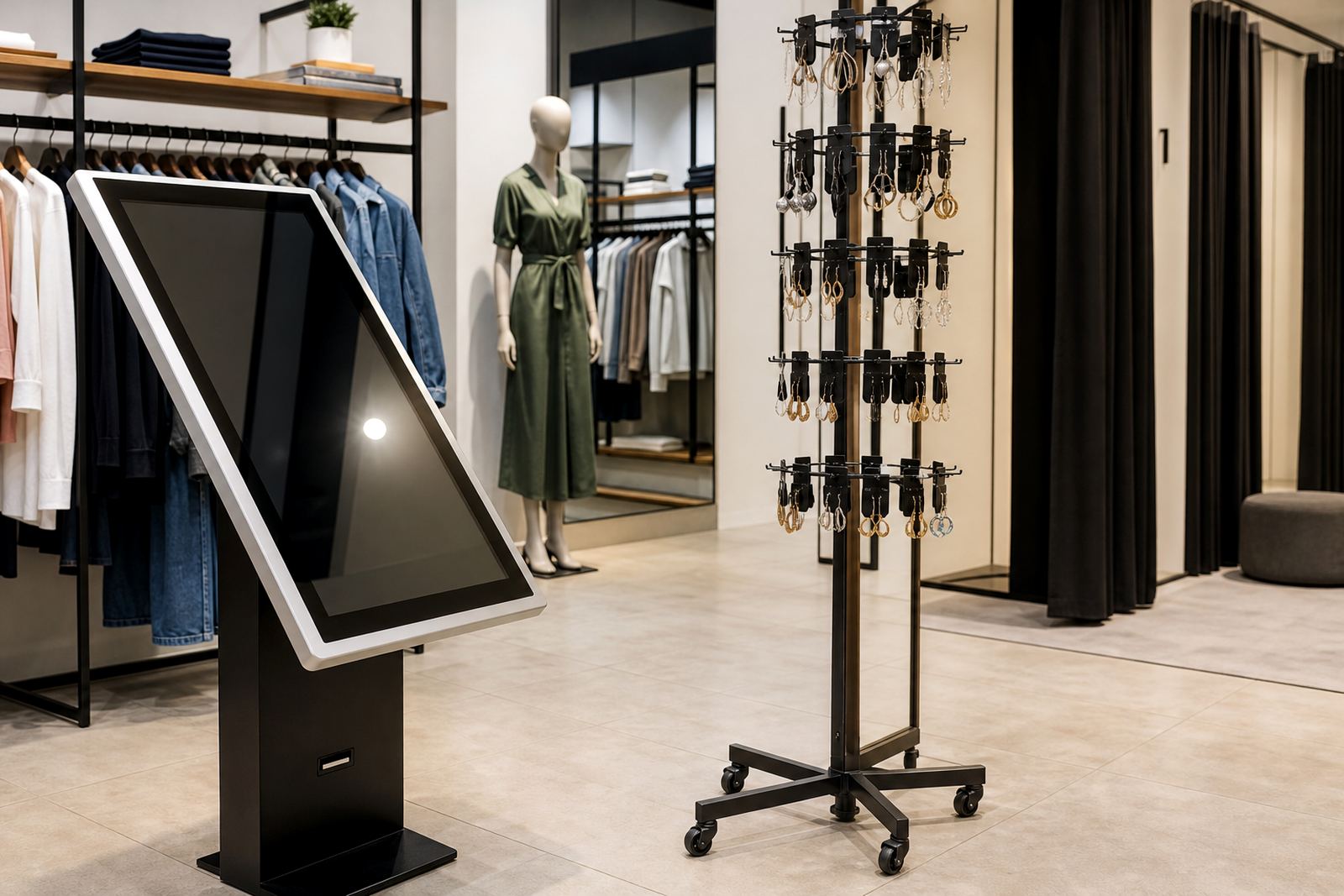
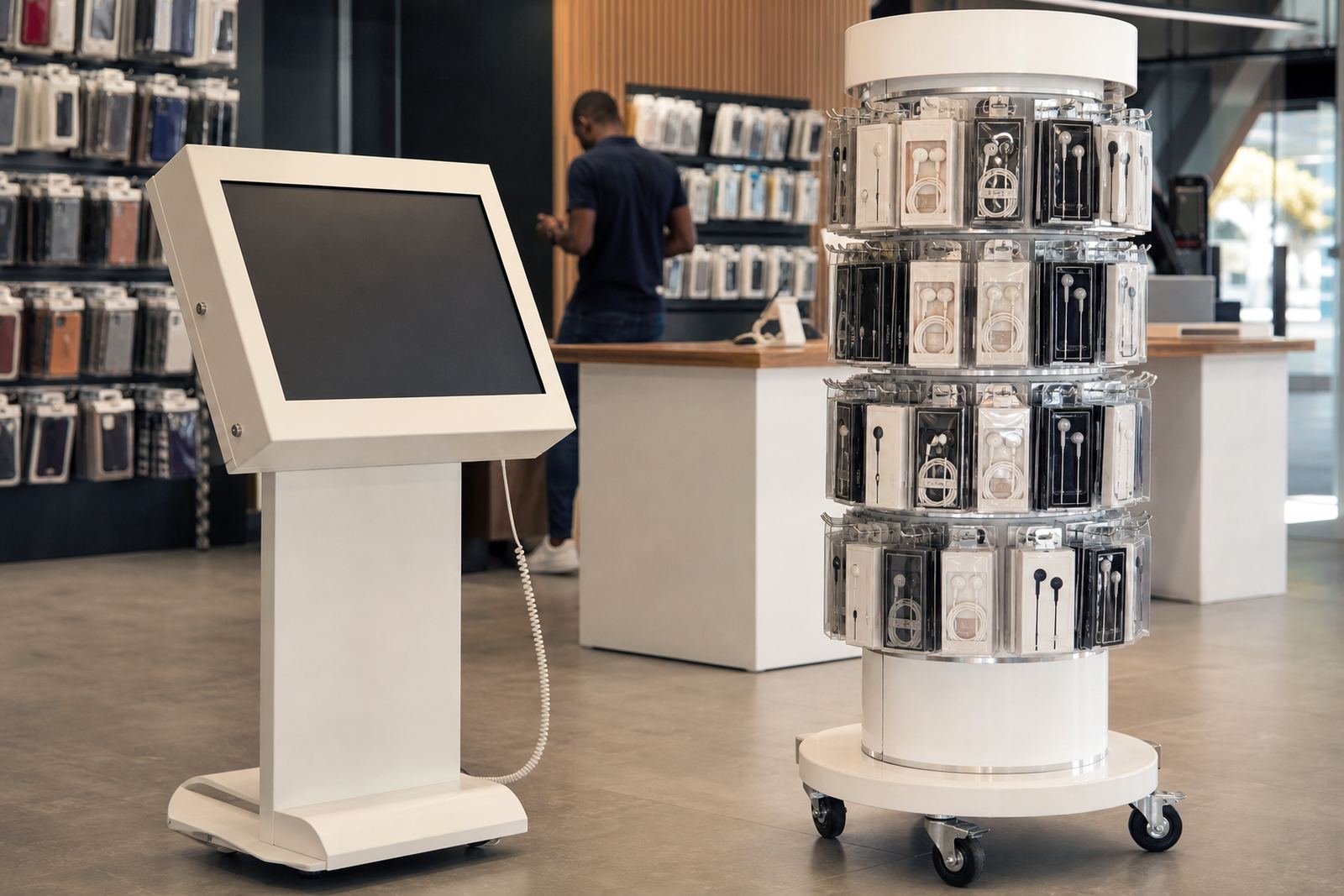
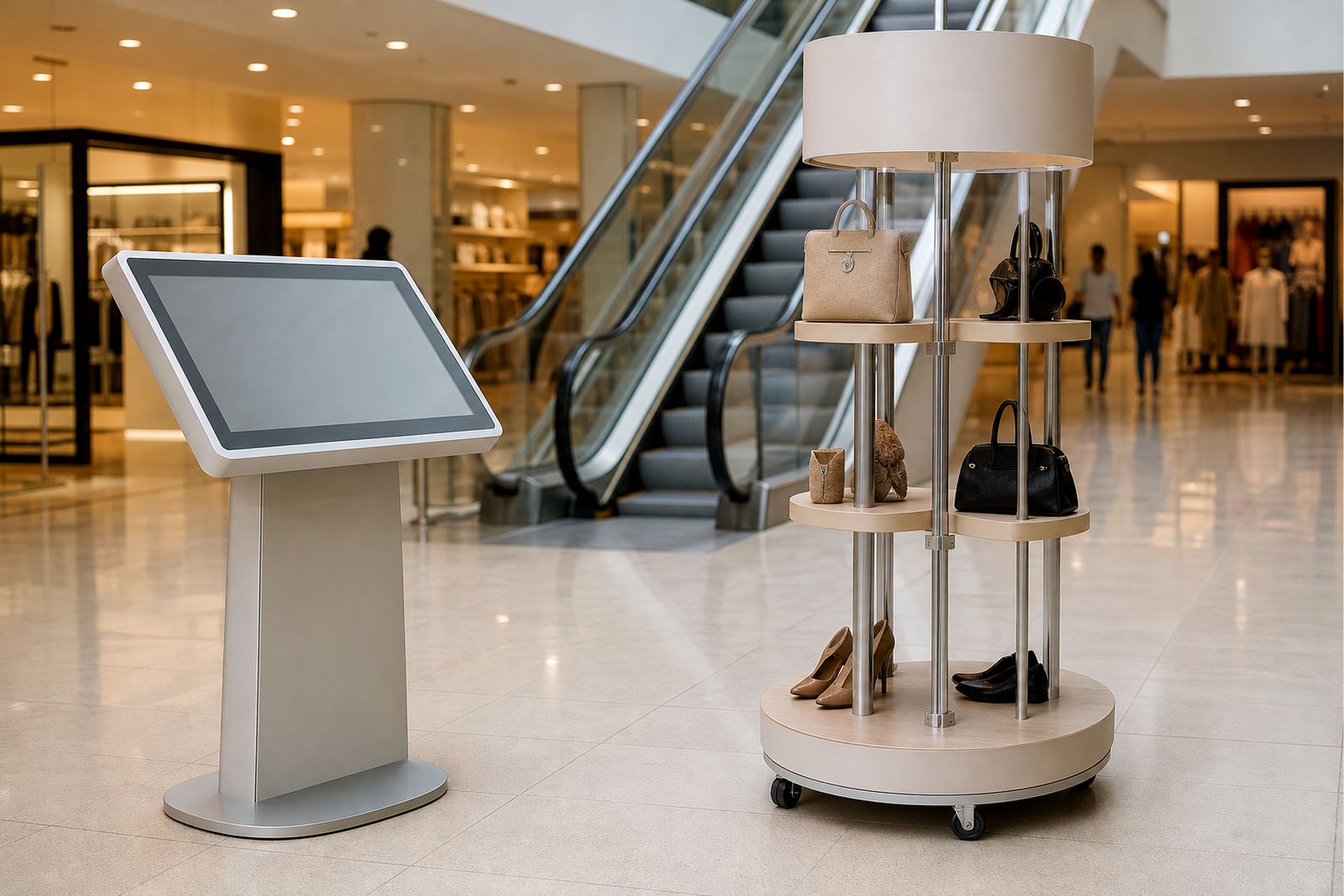
A footwear store setup usually combines a touchscreen kiosk with one or more 360-degree product display stands positioned near the entrance, feature wall or fitting area. The kiosk can present product categories, size charts, care instructions and promotional lines, while the rotating stand is ideal for hero products, new arrivals or limited seasonal ranges. Some stores add a second screen at the till point for upselling socks, polish, insoles and care kits.
- Interactive touchscreen kiosk for browsing ranges and stock checks
- 360-degree display stand for feature shoes or promotional pairs
- Simple content pages for size guides, material details and care notes
- Locked housing and cable management for busy retail floors
- Optional network connection for live stock or updated promotions
We also supply software configuration, content loading and staff training so the team can update messages without slowing down service. In stores with load-shedding risks or unstable power, the equipment setup can include planning for safe shutdowns and quick restart procedures, which matters when trading hours are tight.
Planning the layout so the floor still feels open
Good placement makes the difference between a useful retail tool and an obstacle. In footwear stores, kiosks work best where customers naturally pause, near the entrance, beside the main brand wall or close to the fitting benches. Rotating stands should not block movement to mirrors, seating or the till. If the shop carries school shoes, sneakers and formal styles in the same area, the screen can help separate the ranges without adding physical bulk.
Midrand, Pretoria and Johannesburg stores often deal with narrow walkways and heavy weekend traffic, while Cape Town and Durban retailers need to think about coastal humidity and salt air near open entrances. A proper site assessment looks at screen visibility, power points, data access and how much floor space can be used without affecting access for customers, staff and deliveries. We also check where cleaning routines happen, because dust and scuff marks build up quickly in shoe retail.
- Keep kiosks away from direct glare from shopfront windows
- Leave enough space for wheelchairs and trolleys where relevant
- Position rotating units where staff can monitor them easily
- Allow for cleaning access around bases and cable routes
Common mistakes in footwear store installs
One common mistake is treating the kiosk like a decoration instead of a sales tool. If the content only shows generic images, customers lose interest quickly. Another issue is too much information on one screen. Shoppers need clear choices, not a wall of text. In footwear retail, simple product filters by size, colour, gender, season or use case usually work better than complicated menus.
Stores also sometimes place the rotating stand too close to the entrance where it gets bumped, or too far from the main product zone where shoppers do not notice it. A third mistake is ignoring support after installation. Screens and stands need occasional servicing, content refreshes and fault repairs, especially in busy stores where handling is rough and trading hours are long.
Our team in Midrand works with retailers across Johannesburg, Pretoria, Centurion, Cape Town, Durban and Bloemfontein to avoid these issues from the start. Lerato Khumalo handles operations planning, Johan van Wyk looks after technical direction, and Thabo Molefe oversees installation so the final placement works in the real shop, not only on paper.
Budget ranges for footwear stores in Rand
Budgets depend on screen size, software features, the number of units and whether you need custom branding or live network integration. For a smaller footwear store with one kiosk and a basic rotating display, the spend may start from around R45,000 to R85,000. A mid-sized store with stronger branding, content loading and a second display point usually sits between R90,000 and R180,000.
Larger multi-branch rollouts, or stores that need software configuration, network integration, preventative servicing and support retainers, can move above R200,000 depending on scope. It is worth budgeting for installation, training and parts replacement as well, not just the hardware itself. That avoids surprises when the first seasonal changeover or repair is needed.
For retail groups in South Africa, it often makes sense to phase the rollout. Start with one flagship store in Sandton, Brooklyn or the V&A area, then refine the content and floor plan before extending to other branches. That approach keeps spend controlled and gives the team time to see what customers actually use.
Service support for store teams and branch rollouts
Footwear retail needs equipment that can handle daily use, changing promotions and constant customer contact. iTouch 360 supports site assessments, solution design, delivery installation, software configuration, fault repairs and staff training, with support retainers available for retailers that want ongoing help across several branches. If a kiosk is being used to show seasonal ranges or school shoe stock, updates can be planned around trading hours so the floor does not lose sales time.
Our base in Midrand allows us to support stores across Gauteng and beyond, including Johannesburg, Pretoria, Centurion, Cape Town, Durban and Bloemfontein. Whether the requirement is one interactive unit or a full network of displays across a chain, the aim is the same: make product discovery easier, help staff work faster and keep the store looking orderly.