
How Sports and Outdoor Shoppers Use the Display
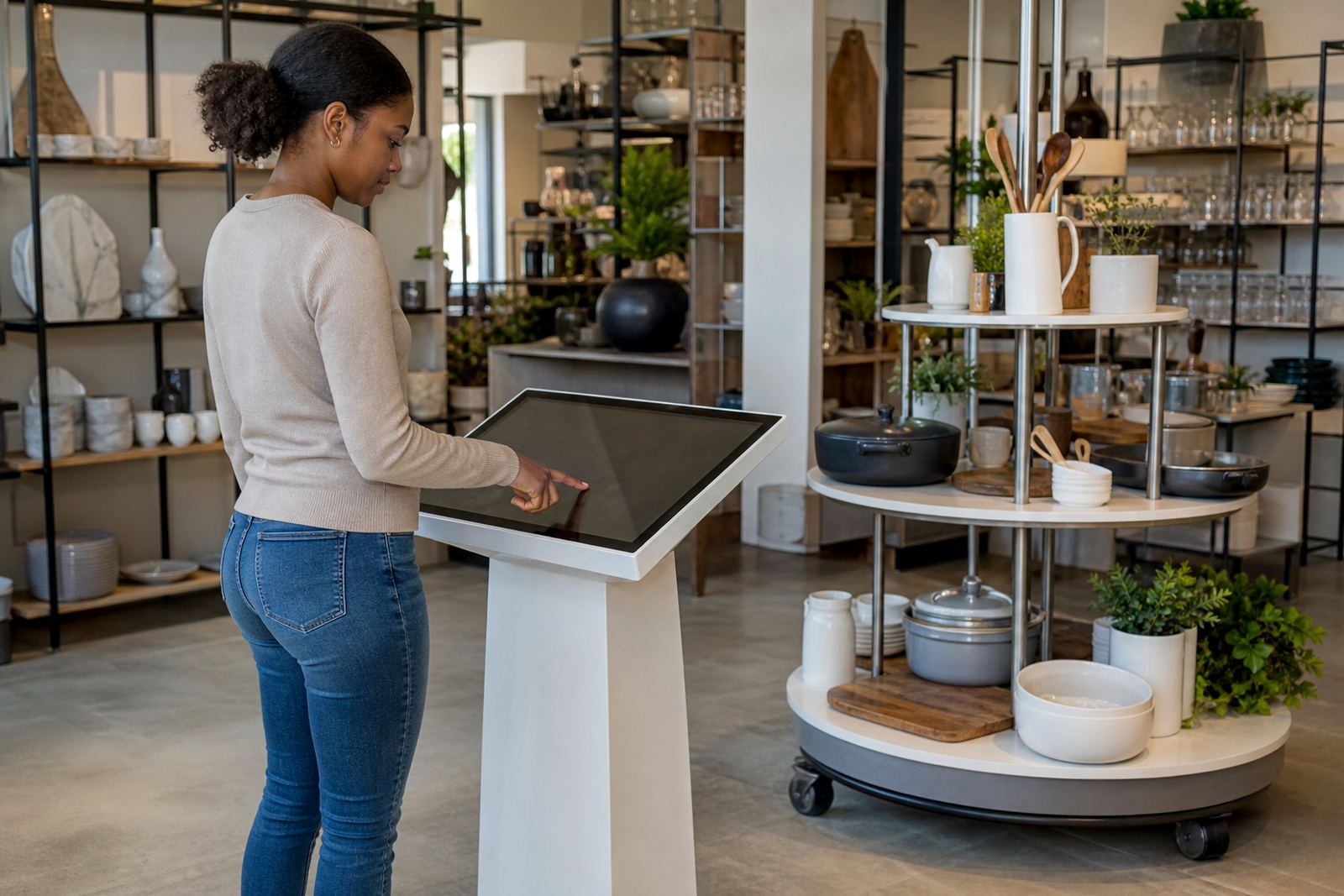
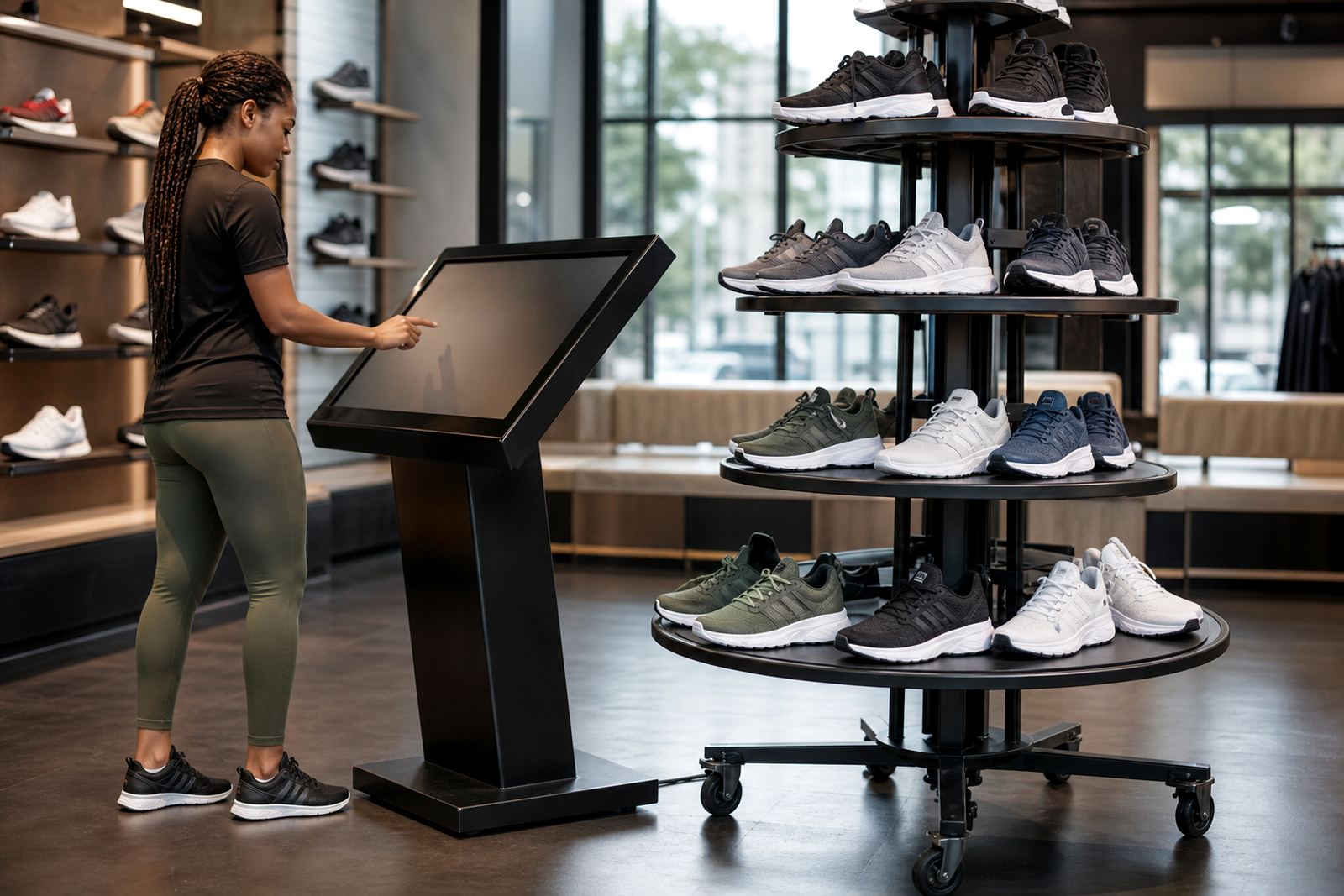
In a sports or outdoor store the customer usually arrives with a purpose. They want to know which hiking boot suits rocky terrain, whether a tent fits a family of four, or what the difference is between two packs with similar prices. An interactive touchscreen kiosk gives them the answers on the floor, without sending them to a counter for every detail. It can show product comparisons, sizing charts, care instructions and short campaign clips for summer, winter or school holiday promotions.
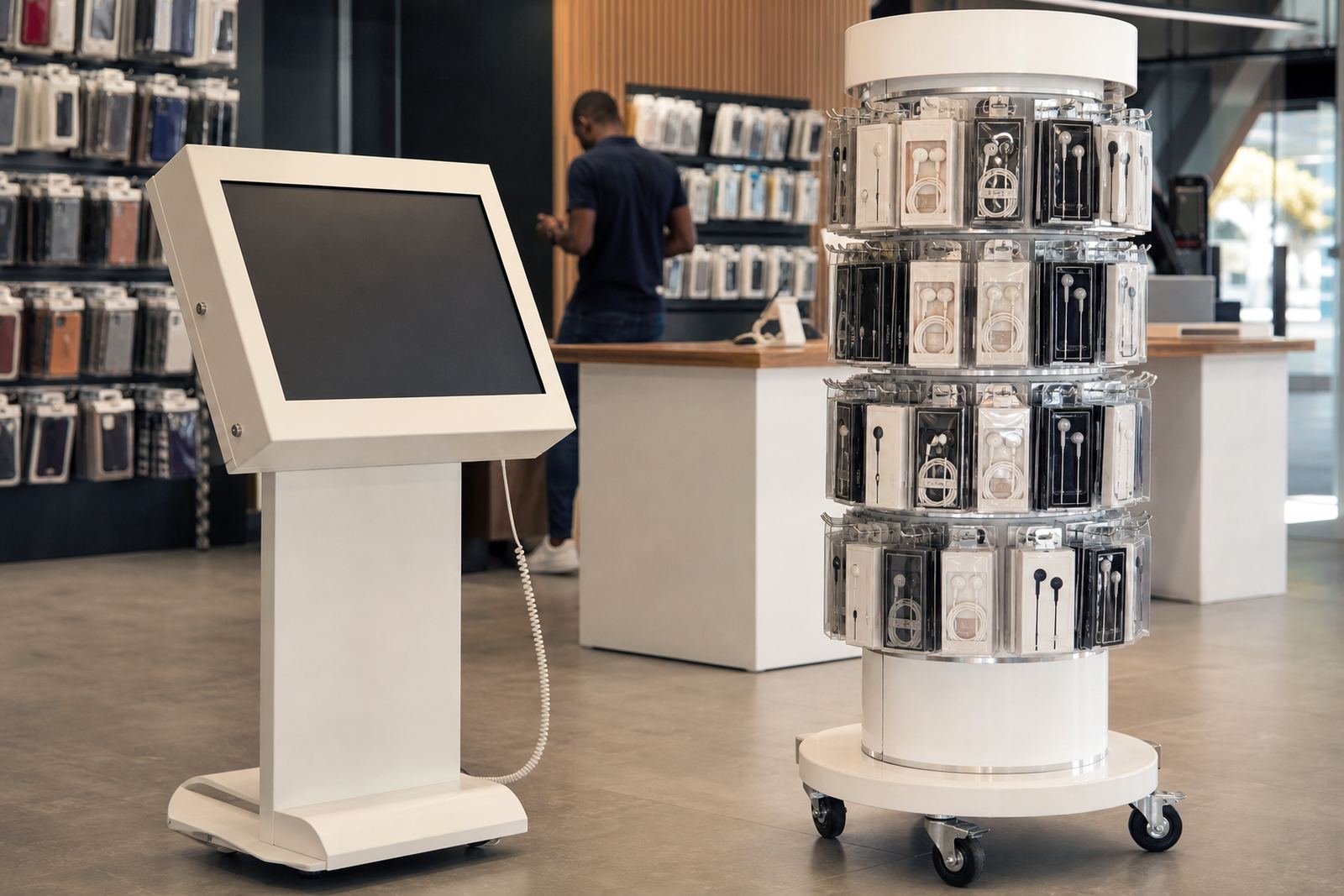
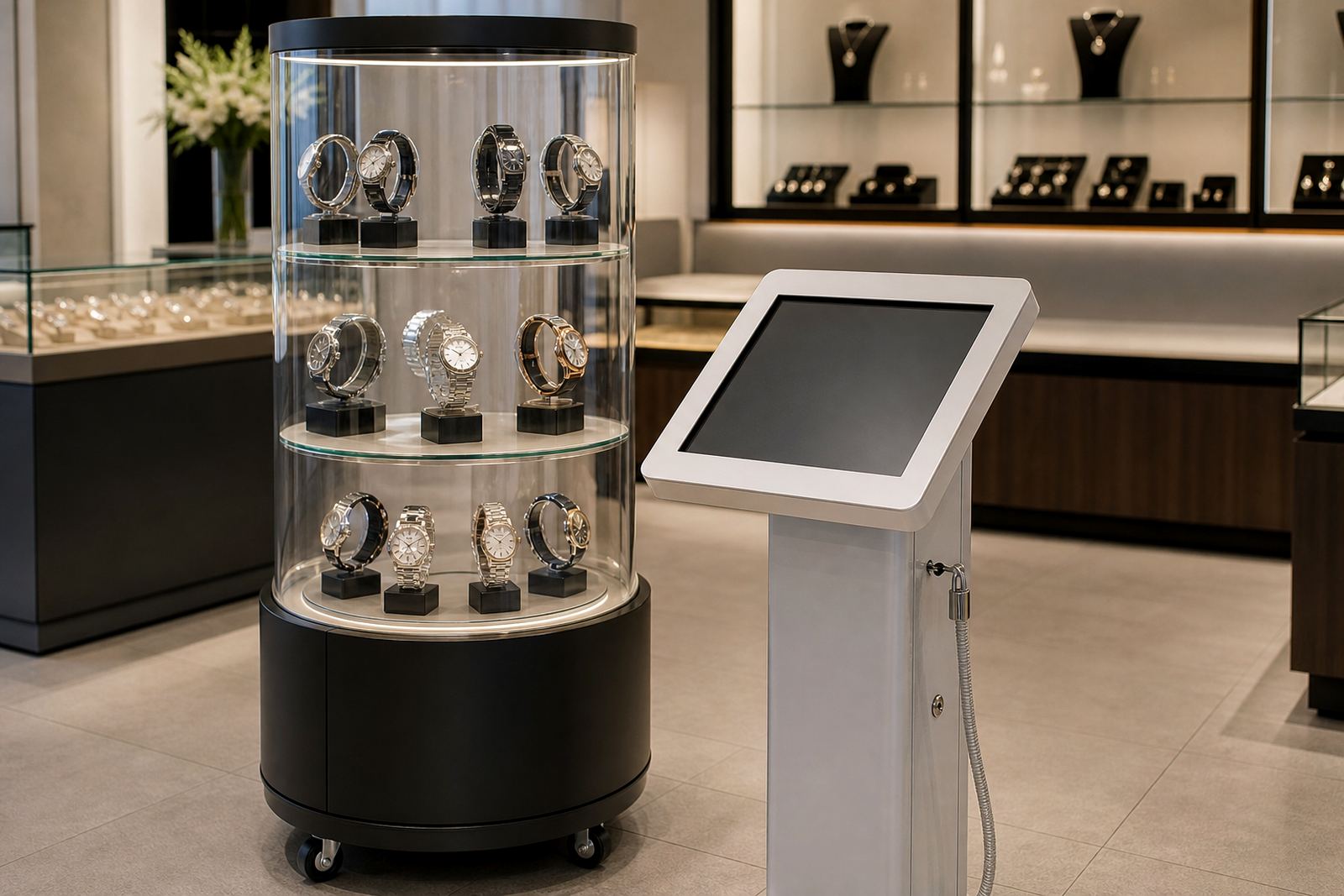
The 360-degree product display stand works well where the physical item is the selling point. Shoes, headlamps, watches, water bottles, fitness accessories and compact outdoor gear can be mounted or presented so customers can inspect the shape, finish and details from all sides. In stores with high foot traffic, this cuts down on handling by staff and keeps the display neater during busy weekends and month-end trade.
For branches in Johannesburg, Pretoria, Cape Town, Durban and Bloemfontein, the message is the same: give shoppers a fast way to compare, decide and move on. That matters in retail where load-shedding, weather swings and weekend rushes can all affect how long people stay in the aisle.
Typical Equipment for a Sports Retail Floor
The right mix depends on store size, product range and the level of self-service you want. A compact footprint near the entrance may only need one kiosk and one branded display stand. A larger flagship site can use several units across footwear, camping, training and cycle sections. The equipment is usually chosen to handle steady use, bright showroom lighting and busy family traffic.
- Touchscreen kiosk with a durable screen, secure housing and clear interface
- 360-degree product display stand with turntable or rotating mount
- Content player for product videos, range guides and campaign slides
- Network connection or offline content option for areas with unstable internet
- Lockable base, cable management and surge protection for retail floors
- Optional custom branding panels for seasonal launches and store identity
In coastal centres such as Cape Town and Durban, humidity and salt air should be considered when specifying materials and fixings. In inland stores, dust from parking areas and high daytime heat can be the main issue. Either way, a proper specification saves trouble later and helps the unit last through daily use. A unit that looks good on day one but gets scratched or sticky after a few months will cost more in the end.
Layout Advice for Busy Sports Aisles
Placement matters as much as the hardware. In a sports store the kiosk should sit where people naturally pause: near footwear, at the end of a gondola, beside a seasonal table, or close to the entrance where a promotion starts. Avoid putting it where trolleys swing around corners or where a staff queue forms. If customers need to stop and compare three products, give them enough room to stand comfortably without blocking the walkway.
The 360-degree stand should sit at eye level where possible, with good lighting and enough space for a shopper to walk around it. If the display is on a central floor feature, keep the surrounding area clear so the customer can move without bumping into stacked stock. In smaller stores, use wall adjacency for the kiosk and keep the rotating display near the product family it supports. That way shoppers do not have to guess which item belongs to which message.
Planning should also include power points, data access and security. In some centres the available power is not where you need it, so cable routes have to be mapped before installation. If the store has regular power interruptions, plan for graceful restart and content recovery so the screen does not come back blank after a cut. Also make sure cleaning staff know which surfaces need a dry cloth and which parts can be wiped properly.
Common Mistakes We See in Outdoor and Sporting Stores
One common mistake is trying to do too much on a single screen. If the content is crowded, the customer will walk away. Keep the first screen simple: one clear product promise, one comparison path and one action button. Another issue is using videos that are too long for the floor. A shopper in a rush will not watch a two minute clip when they only need the weight of a backpack or the sole type on a trail shoe.
- Placing the screen too high or too low for comfortable use
- Using bright animations that fight with store lighting
- Leaving the display near water, dust or direct sun
- Mixing outdated prices with current promotional stock
- Failing to train staff on basic use and troubleshooting
- Ignoring security when the unit is placed in a public area
Another mistake is not updating seasonal content. Sports and outdoor retail moves fast between winter jackets, summer hydration, camping gear and back-to-school items. If the display still pushes last season’s range, it weakens trust. A small typo in a product comparison can do the same, so content checks matter before the first day of trade.
Budget Ranges for South African Retail Rollouts
Budgets vary by screen size, stand finish, software requirements and installation scope. A basic single kiosk for a compact retail floor may start from around R45,000 to R70,000 depending on specification. A more complete sports retail setup with custom branding, network integration and content loading can move into the R85,000 to R150,000 range per site. Larger rollouts with multiple branches, support retainers and ongoing content changes should be costed as a programme, not as one-off hardware purchases.
For rotating product stands, pricing depends on the load rating, finish and whether the display is manual or powered. A simple branded rotating stand might be within the R12,000 to R25,000 range, while a more specialised unit with stronger construction and controlled movement will cost more. Delivery to Johannesburg or Pretoria is usually straightforward, while Cape Town, Durban and Bloemfontein may need added logistics planning for lead times and site access.
It helps to budget for servicing, spare parts and staff training from the start. That is especially important in stores with long trading hours or multiple branches. A lower upfront quote can become expensive if the unit is difficult to maintain. Good planning keeps the floor moving, keeps the display working and avoids panic when the next campaign is due.
What a Practical Rollout Looks Like
A sensible rollout starts with a site assessment. That means measuring the available floor space, checking power and network points, assessing foot traffic and deciding which product lines should be featured first. From there, the solution design can map the screen content, the stand position and the support process. If the branch is part of a larger retail group, the same layout can be adapted for different floor sizes without changing the customer experience too much.
Once the unit is installed, content loading and software configuration should be completed before the store goes live. After that, staff training makes a real difference because the team needs to know how to switch campaigns, restart the system and report faults properly. With preventative servicing and support retainers, retailers can keep the display useful through peak seasons, school holidays and the end-of-year rush.
For sports and outdoor retailers, the goal is simple: let the customer understand the product faster and choose with confidence. If the display is clear, well placed and kept up to date, it becomes part of the sales floor rather than a gadget that gets ignored.