
A rotating fashion display for tighter retail spaces
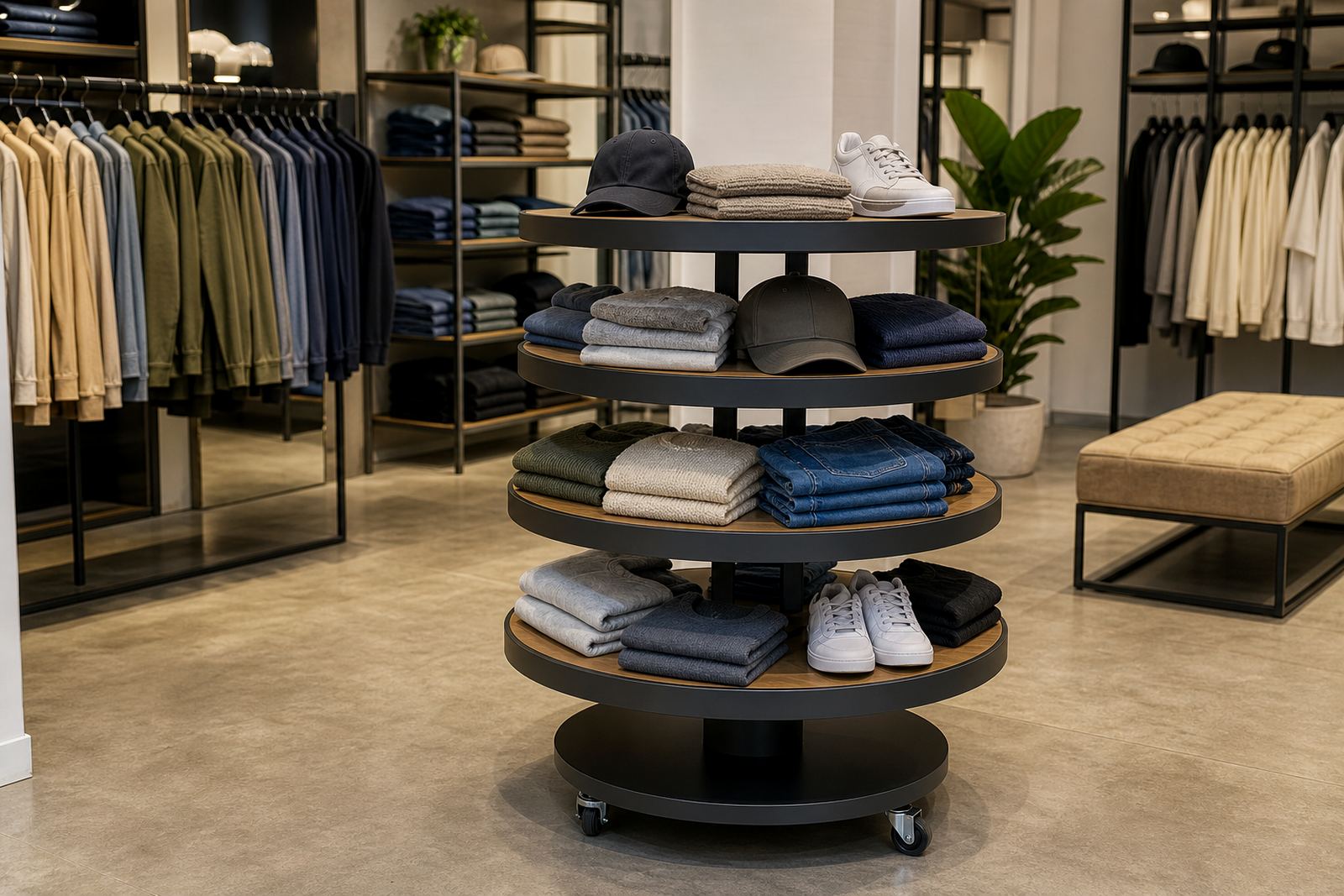
The Apparel 360 Stand is made for stores that need to show more stock without crowding the floor. It turns slowly so shoppers can view folded jerseys, caps, scarves, socks, handbags and promo packs from all sides, which is useful when you are working with limited metreage in a mall kiosk or a compact shop in Johannesburg, Pretoria or Cape Town. It also helps with product grouping, so one stand can carry a colour story or a single seasonal range without needing a full gondola bay.
The stand is usually used near entrances, fitting room routes or at the front of a clothing department where people naturally pause. Because the display can keep moving during trading hours it attracts attention without needing staff to stand beside it all day. That makes it practical for retail teams who are juggling busy weekends, school holiday trade and load-shedding schedules. The motion is steady, not jerky, so garments stay neat and the presentation looks organised.
Sizes, load capacity and display options
Different stores need different footprints, so the Apparel 360 Stand can be specified in a compact floor unit or a larger multi-tier display. Typical widths range from 600 mm to 1200 mm, with a height of about 1200 mm to 1800 mm depending on the model and the number of display levels. Standard rotation speed is set for retail viewing, usually around 1 to 3 revolutions per minute, though that can be adjusted for calmer or faster visual effect. The drive system is sized for continuous shop use and the base is weighted for stability.
Options can include adjustable shelves, hanging rails, acrylic trays, branding panels and lockable castor wheels for moving the unit before opening. In coastal towns like Durban, the finish can be selected for higher humidity so the frame stays in good condition. For stores in dusty areas or near entrances with open doors, smooth surfaces are easier to wipe down and keep tidy. Some retailers also ask for a stop button or timer setting so the stand can run only during peak foot traffic.
- Single-tier or multi-tier display layouts
- Custom branding panels for promotions and campaigns
- Adjustable shelf spacing for folded garments and accessories
- Weighted base for stability on tiled or polished floors
- Lockable wheels for easy repositioning during merchandising changes
Where the stand works best in South African retail
This display suits fashion chains, independent boutiques, department stores, sportswear shops, gift sections and temporary promotional spaces. It works well where a retailer wants to group small to medium items in a way that feels active and easy to browse. Stores in Sandton, Centurion and the Cape Town CBD often use this type of stand to catch passing trade in malls, while regional stores in Bloemfontein and Durban can use it for seasonal launches or end-of-line clearances.
The stand is also a good choice for brand activations, expos and in-store pop-ups where the product range changes often. If you sell folded knitwear, accessories or packaged fashion goods, the rotating format makes stock feel more complete and helps customers notice items they may not have stopped for otherwise. It suits sales floors where staff need displays that do not block walkways or interfere with fire routes, which is important in centres that enforce municipal and mall compliance checks.
- Fashion departments with frequent range changes
- Promotional zones near tills or store entrances
- Temporary activations in malls and event spaces
- Compact stores where aisle width is limited
- Seasonal collections that need grouped presentation
Installation, power and site requirements
Installation is straightforward, but the site still needs checking before the unit is placed on floor. The stand must sit on level flooring with enough clearance for rotation and customer access. If the model uses a motorised drive, it normally needs a standard mains power point nearby, and the cable route should be planned so it does not create a trip risk. For stores affected by load-shedding, it is worth confirming whether the display should pause during outages or restart automatically when power returns. In some sites, the answer depends on how the floor staff manage opening hours and security after dark.
For new store fit-outs or refits, a site assessment helps confirm the best location, cable path and traffic flow around the display. If the unit is being used near glass fronts, the installer should check sunlight, heat build-up and floor reflection because these can affect visibility. No gas supply is needed for the Apparel 360 Stand. The main requirements are stable power, enough floor space, and a position that does not clash with shelving, alarms or emergency exits. A small typo in planning can cost time later, so getting the measurements right at the start matter.
Care, servicing and long-term use
Routine care is simple if the stand is used in a busy store. Wipe the frame with a soft cloth and mild cleaner, and keep liquids away from the motor housing and cable connections. Do not overload the shelves or hang more weight than specified, because extra strain can shorten the life of the drive system. In high-traffic stores, staff should check that garments are neatly folded and that nothing is caught in the rotating section before the store opens. This keeps the display safe and presentable, especialy on days when the floor is crowded.
Preventative servicing can include motor checks, tightening fittings, cleaning the drive area and checking wear on moving parts. If the stand is in a coastal environment or near an open mall entrance, regular inspections are more important because humidity and dust can work into components over time. When a part needs replacing, it is better to deal with it early than wait for a stoppage during trading hours. A support retainer can also help stores that use the stand for campaigns throughout the year and need predictable maintenance planning.
What to confirm before ordering
Before placing an order, make sure you know exactly what the stand will carry and where it will stand. Folded T-shirts, scarves and socks need different shelf heights from handbags or boxed accessories. You should also confirm whether you need a single-sided or 360 degree layout, whether branding panels are included, and whether the unit must fit through a storeroom door, lift or service corridor. For multi-site rollouts across Johannesburg, Pretoria, Cape Town, Durban and Bloemfontein, consistency matters so every branch presents the range the same way.
It is also worth checking the power point position, floor finish, and whether the site manager needs installation after trading hours. Ask about content loading if the stand is part of a wider campaign, and confirm whether the product artwork, pricing cards or branding boards need to be supplied by your team. If you need staff training, make sure it covers loading limits, daily checks and basic fault reporting. When those points are clear, the stand can go in without delay and with fewer surprises later on.
- Product type and approximate weight per shelf
- Required footprint, height and access path
- Power point position and cable route
- Branding, colours and promotional messaging
- Installation timing and staff training needs
Key facts
| Product type | Rotating retail display stand for folded garments and accessories |
|---|---|
| Footprint | Approx. 600 mm to 1200 mm wide, depending on model |
| Height | Approx. 1200 mm to 1800 mm, depending on configuration |
| Rotation | Slow continuous rotation, typically 1 to 3 rpm |
| Power | Standard mains power required for motorised models |
| Finish options | Powder-coated metal, branded panels, adjustable shelves and lockable castors |