
What the 360 Rotating Stand does on the shop floor
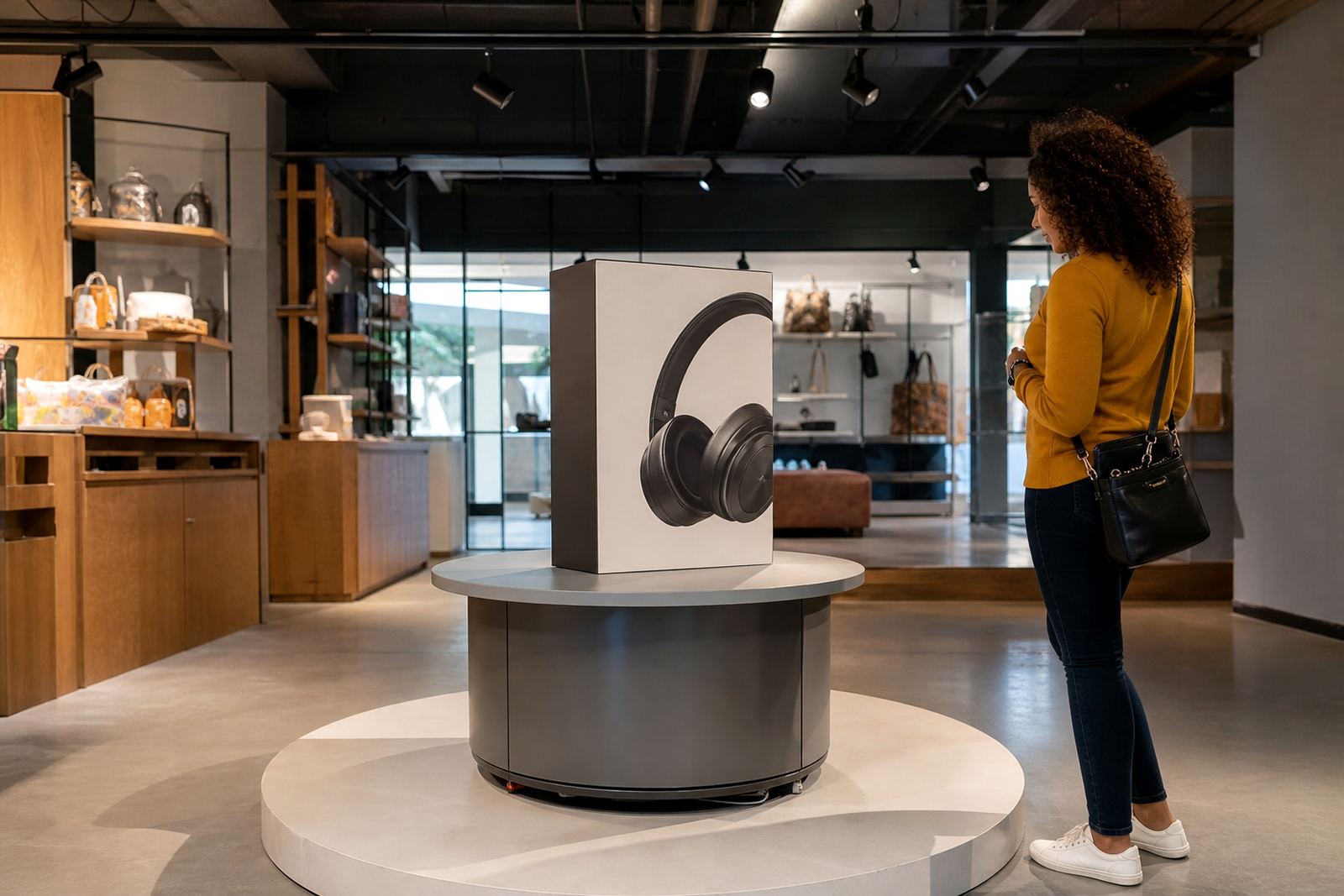
The 360 Rotating Stand is made for products that need to be seen from every angle. Instead of leaving an item static on a shelf, the stand rotates it smoothly so shoppers can inspect shape, finish, details and packaging in one place. That works well for premium items, limited ranges, seasonal products and launches where first impressions matter.
In retail settings from Midrand to Cape Town, the stand helps keep attention on the product without needing staff to keep repositioning it. The rotation is steady rather than fast, so customers can read labels and compare details without feeling rushed. It also suits stores where floor space is limited, because the display creates movement without taking up much room.
The unit is suited to indoor use in malls, showrooms and branded retail environments. It can be used on its own or as part of a larger product launch setup. For stores in coastal areas like Durban or Cape Town, the frame and moving parts should be kept clean and dry, especially where humidity and salt air can affect exposed metal over time.
Sizes, load limits and finish options to consider
We supply 360 Rotating Stand options in different diameters and load ratings, depending on the product weight and the footprint you have available. Smaller units suit cosmetics, gift items, electronics, accessories and boxed stock. Larger platforms are better for footwear, appliances, mannequins, décor pieces or bundled product sets. If you need a stand for a heavier item, the motor and base need to be matched properly so the turn remains even and the unit does not strain under load.
Common size choices include compact units for counter-top display and larger floor-standing models for anchor points in a store entrance or aisle end. The finish can be selected to suit the shop interior, with neat powder-coated metal, acrylic top plates or a branded wrap where required. For stores in Johannesburg and Pretoria that run frequent promotions, a neutral finish usually gives the most flexibility. For Sandton showrooms or high-end fashion retail, a custom branded face plate can help the stand sit more comfortably with the rest of the display.
When you are comparing options, think about the actual product dimensions, the weight once packaging is added, and whether shoppers will view it from one side or all around. A stand that is too small can make a display feel cramped, while one that is too large may waste valuable floor space and block sight lines.
- Available in compact counter-top and larger floor-standing formats
- Load capacity must match the item, including packaging and fixtures
- Finish options can include plain, branded or colour-matched surfaces
- Best results come from matching the stand size to the retail area and product type
Where the rotating stand suits best in retail
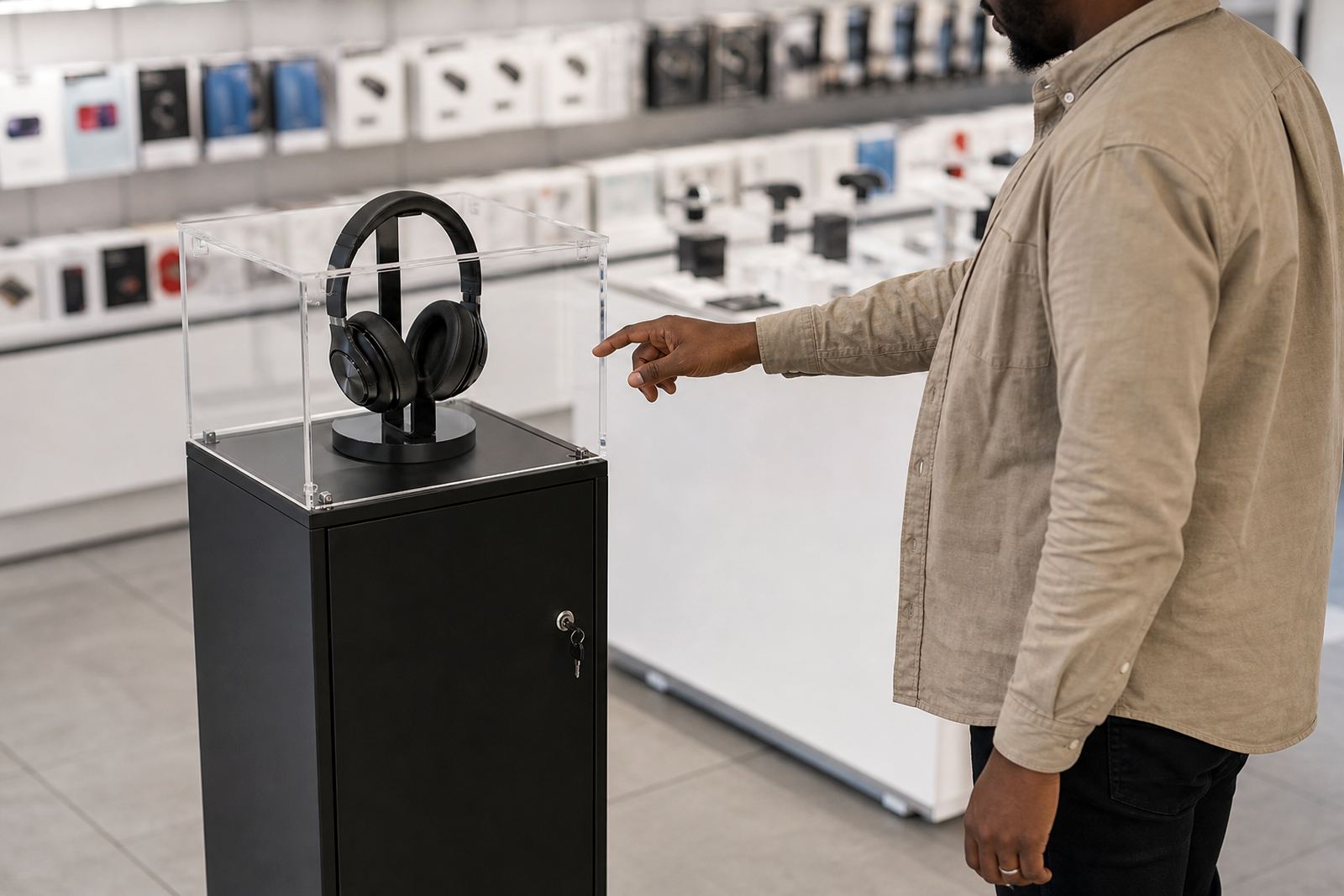
This display solution is useful wherever staff need to make a product easy to see without handling it every few minutes. It works well in electronics stores, homeware departments, cosmetics counters, gift shops, fashion outlets and promotional zones. It can also help with catalogue-style displays where the same item must be viewed repeatedly throughout the day.
Retailers in busy centres like Johannesburg, Pretoria and Durban often use rotating stands near entrances or till points, where passing traffic is highest. In Cape Town and Bloemfontein, it can help smaller stores make a feature of a single item range instead of spreading stock across too many shelves. The movement draws the eye, which is useful during launches, trade promotions and end-of-season clearances.
Because the stand is motorised, it should be placed where it is visible but not in a high-traffic bottleneck. Staff should still be able to access the product for cleaning, restocking and removal after trading hours. If the unit is part of a full promotional bay, good lighting matters as much as the rotation itself.
- Suitable for malls, showrooms, pop-up retail and in-store feature areas
- Works well near entrances, tills and branded display zones
- Useful for single-item focus displays and product launch tables
- Needs clear viewing space around the base for safe customer flow
Installation, power and practical setup needs
Installation is straightforward, but the stand still needs the right site conditions. The unit must sit on a level surface so the rotation remains even and the motor does not work harder than it should. For floor-standing units, enough clearance is needed around the base and top so stock, signage and nearby fixtures do not interfere with movement. If the item to be displayed is top-heavy or has an uneven shape, the mounting point should be checked carefully before use.
The stand is powered by electricity and should be connected to a suitable outlet as planned during the site assessment. In many South African stores, load-shedding and backup power planning matter, so it helps to confirm how the stand will run during outages or when the shop is on generator or inverter supply. Low power draw is useful, but the installation still needs to be checked against the rest of the store’s electrical load. No gas connection is required.
Our team can assist with delivery installation, software configuration where needed, and basic staff training so the store knows how to start, stop and clean the unit correctly. For branches in Midrand, Sandton, Centurion and Johannesburg, this can be coordinated alongside wider retail support work. If the display is being used in a mall, check any centre rules about power leads, public access and trading hours before the stand goes live.
- Needs a level surface and enough clearance for safe rotation
- Requires a suitable electrical outlet, no gas connection needed
- Should be planned with load-shedding or backup power in mind
- Can be installed with delivery, configuration and staff training support
Care, servicing and daily use over time
A rotating stand works best when it is kept clean and inspected regularly. Dust can collect on the platform edges and around the moving parts, especially in stores with open doors or nearby foot traffic. Wipe the unit with a dry or lightly damp cloth, then keep liquids away from the motor housing and controls. If the stand is used in a coastal environment, a more frequent clean helps reduce corrosion risk on exposed fittings.
Routine servicing should include checking the motor sound, the smoothness of the rotation and the stability of the mounted product. If the motion starts to feel uneven or noisy, the unit should be taken out of service before it causes wear to the drive system. Preventative servicing and fault repairs are recommended for stores that use the stand daily or for long trading hours. A small issue caught early is usually easier and cheaper to handle than a full breakdown later on.
Staff should be shown not to overload the platform and not to push the display by hand while it is running. That kind of pressure can damage the drive mechanism. A quick daily check is usually enough, but busy branches may need a more regular inspection schedule, especially where children or heavy shopper traffic are part of the retail mix.
What to confirm before you place an order
Before ordering a 360 Rotating Stand, it helps to confirm exactly what will be displayed. Measure the item height, width and weight, then think about whether it will be displayed loose, boxed or with branded signage attached. If the product has a wide base, delicate parts or a strong top weight, the stand may need a larger platform or a different mounting approach. This is often overlooked, and it can affect the final fit.
You should also decide how much visual movement you want. Some retailers want a slow, continuous turn to keep the product in view all day. Others prefer a display that pauses between movements, which can help shoppers focus on specific details. Think too about where the stand will sit in the store and whether it needs custom branding, a protective cover or content loading if it forms part of a digital display. If the display is going into a branch with limited floor space, send through the measurements early so the right size can be selected first time.
When the order is being finalised, make sure you have checked power access, delivery routes, after-hours installation rules and any mall or municipal access limits that may affect work on site. That saves time and avoids awkward delays at handover. A clear brief also helps us match the right stand to the right retail use, rather than trying to make one standard unit fit everything.
- Confirm product weight, dimensions and mounting style before ordering
- Decide on rotation speed, branding and display layout
- Check power access, delivery access and site rules in advance
- Send store measurements early if floor space is tight
Key facts
| Product type | Motorised rotating retail display stand |
|---|---|
| Use area | Indoor retail, showroom and promotional display |
| Power | Electric drive, standard outlet required |
| Rotation | Smooth continuous rotation at controlled speed |
| Load range | Sized to suit light to medium display items and selected heavier products |
| Finish options | Plain, branded or colour-matched display surfaces |