What The Soweto Store Needed
The store was serving a busy township customer base with limited floor space, high foot traffic and frequent questions about product features, prices and compatibility. Staff were spending too much time repeating the same details, while some accessories were getting handled more than they should. The owner wanted a setup that would keep the showroom tidy and help shoppers make decisions faster.
The brief was simple on paper but quite specific in practice. The store needed secure units for high value items, a way to present product ranges clearly, and a system that could still work during load-shedding and local network dropouts. It also had to fit a narrow layout with a front entrance that gets busy on weekends, so the footprint had to stay compact and easy to manage.
Project Constraints In A Busy Retail Space
Because this was an operating store in Soweto, work had to happen around trading hours and not disrupt sales. Access at the front counter was tight, and the client could not afford a long shutdown. We also had to plan for municipal and building rules on electrical routing, safe cable runs and clear walkways for customers.
There were a few practical constraints worth noting:
- Limited floor area, with no room for bulky display furniture
- Mixed lighting inside the store, which meant screens had to remain readable in bright afternoon light
- Power interruptions, so equipment had to restart cleanly after outages
- High handling risk on small accessories and demo devices
- Need for quick staff training, because the team had to keep serving customers on the same day
We measured the site first, checked the wall and floor points, then planned a layout that did not block the till area or the main customer path. That step saved time later and avoided last-minute changes.
What We Supplied And Installed
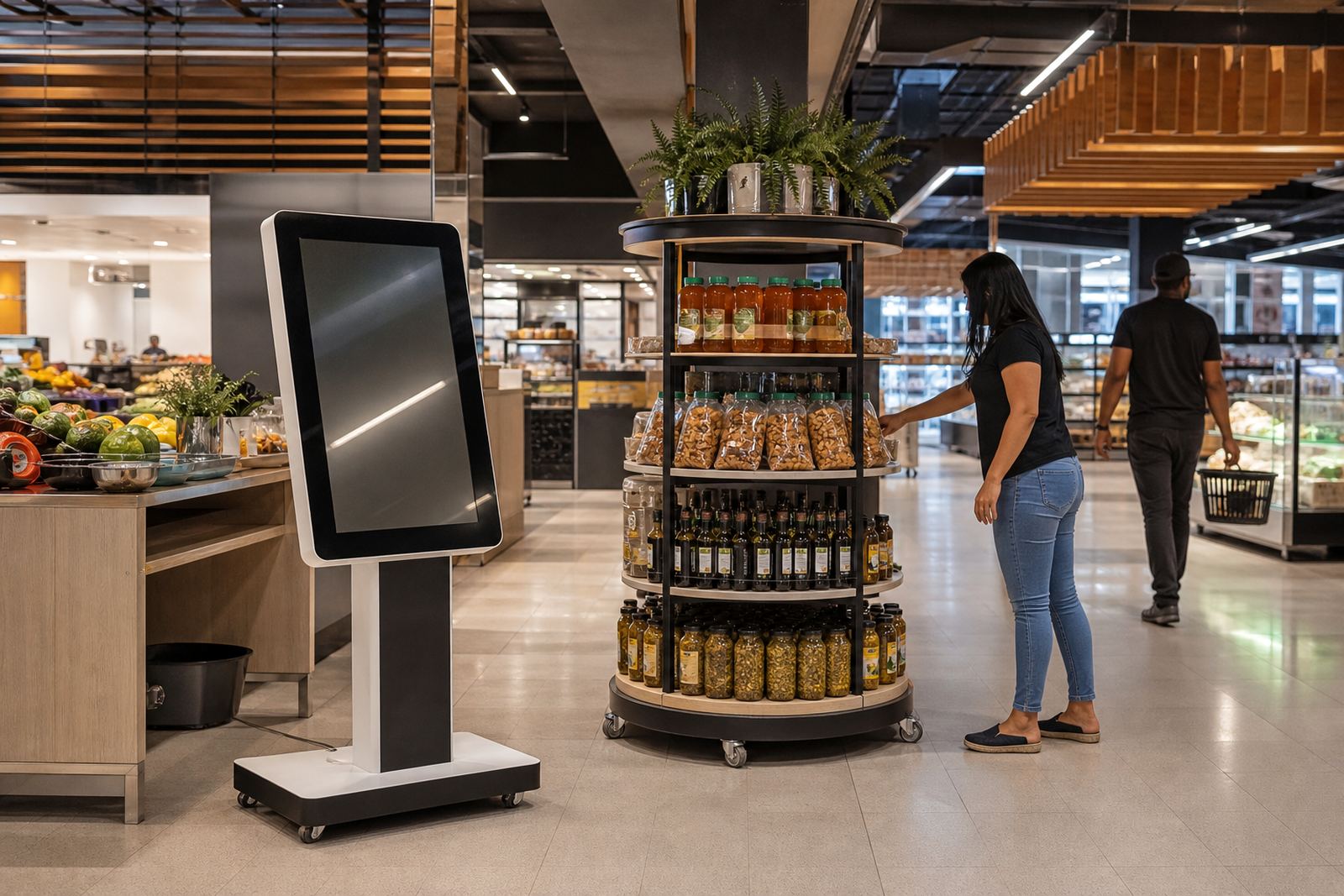
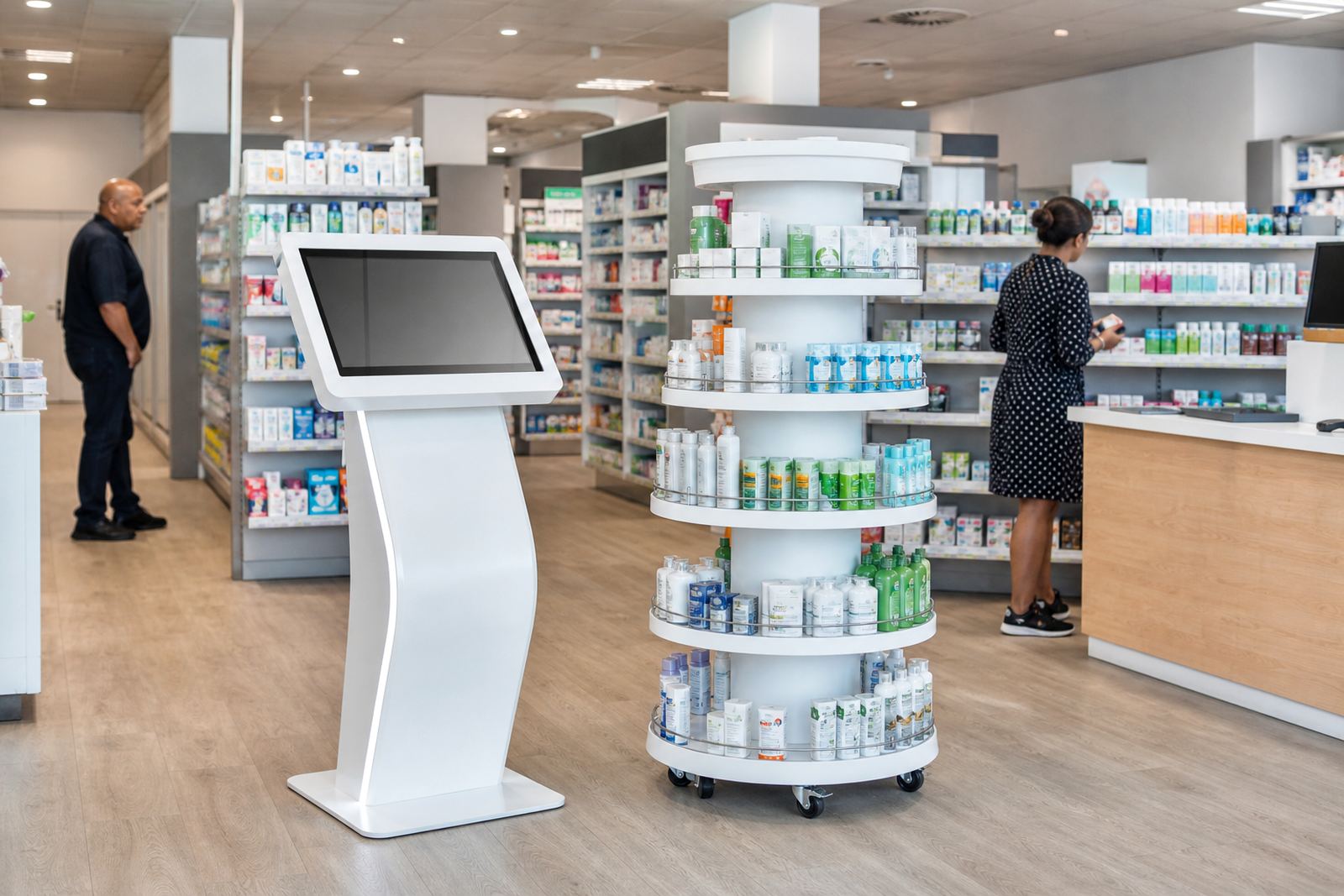
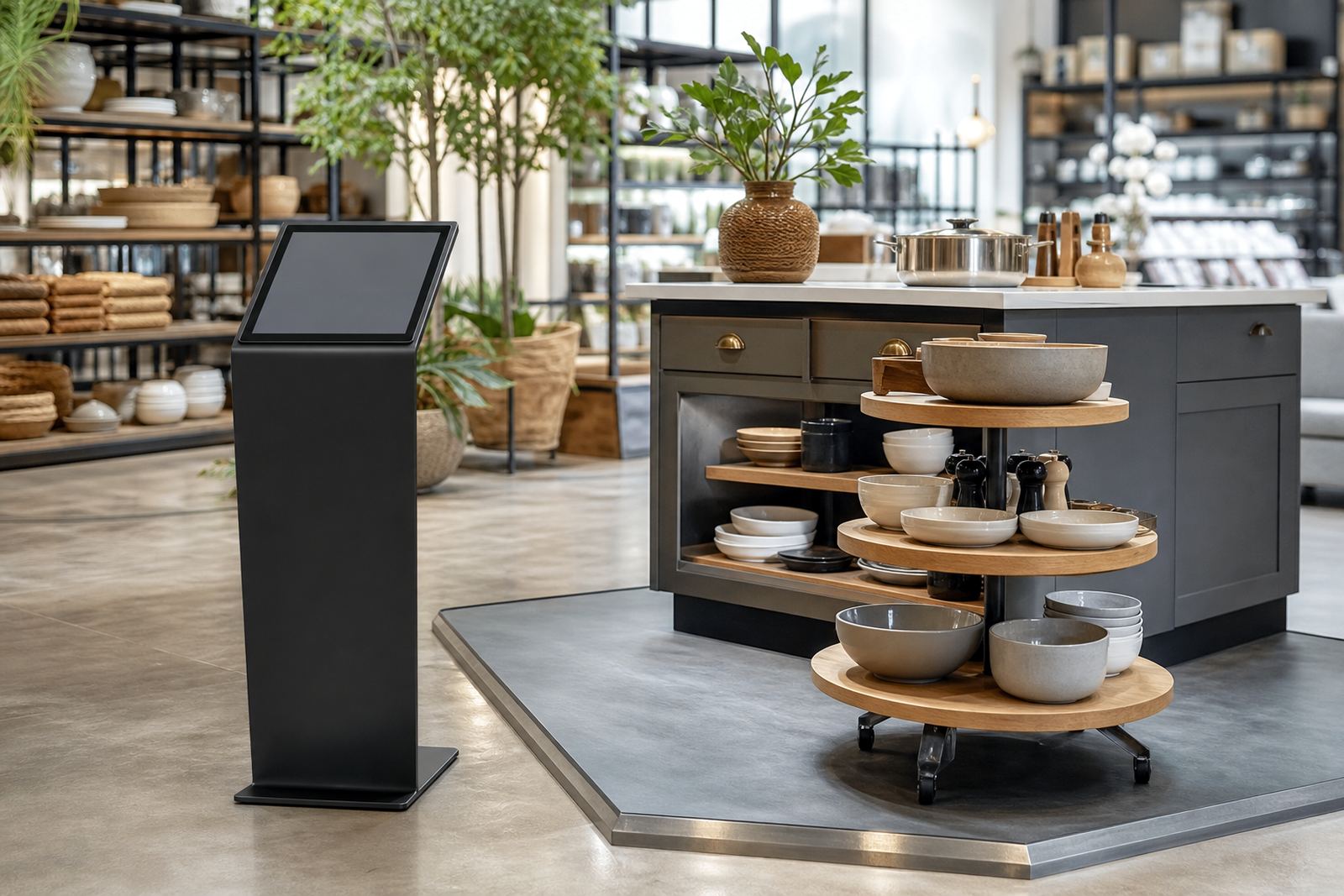
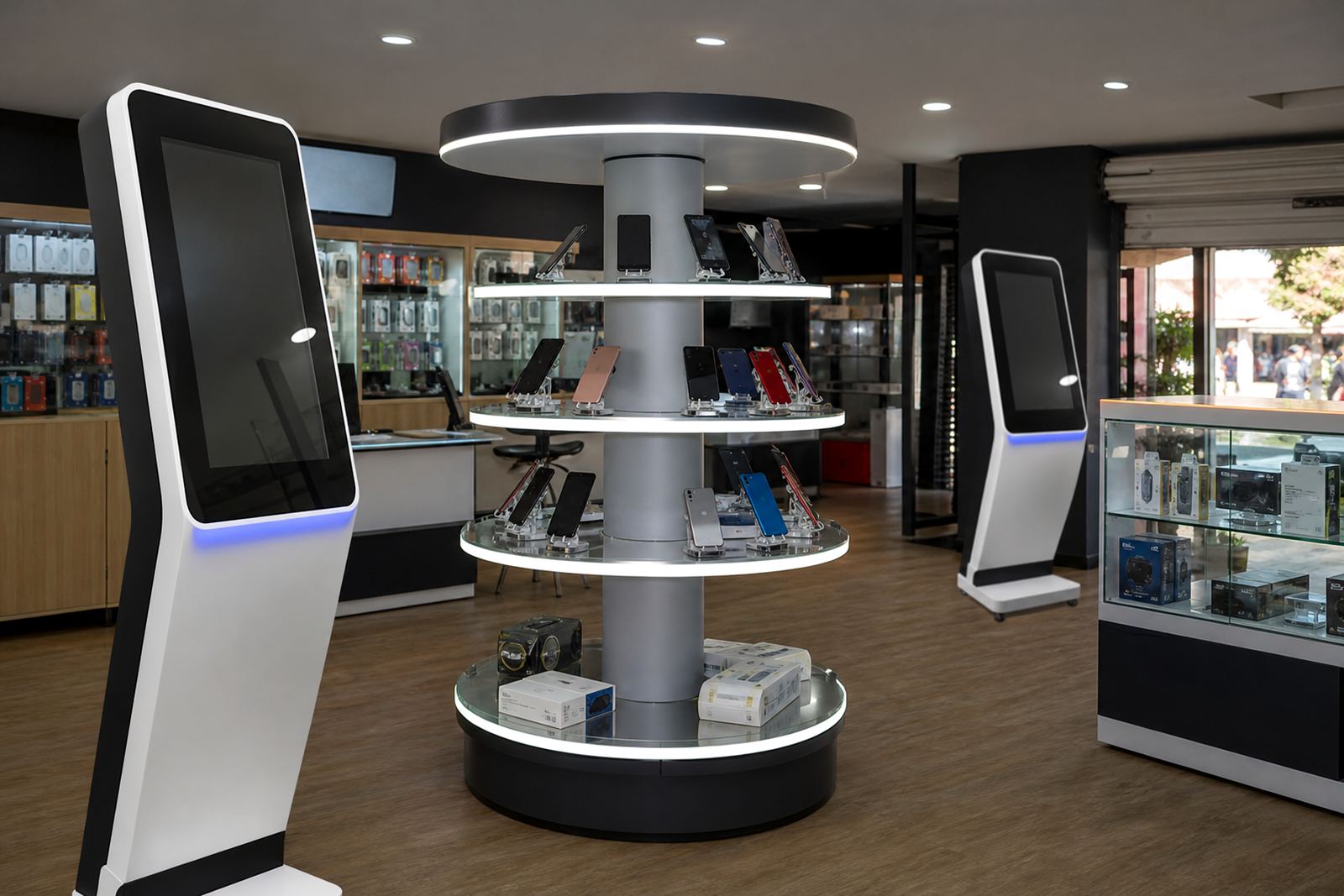
For this project, we supplied a combination of secure interactive touchscreen kiosks and 360-degree product display stands. The kiosks were used for product browsing, featured offers and guided comparisons. The display stands were used to show phone accessories and boxed products in a way that let customers view them from all sides without opening packaging.
Each kiosk was configured for easy use by store staff, with a simple menu structure, large touch targets and clear product categories. The units were fitted with lockable access panels, internal cable management and a stable base suited to retail use. We also added content loading and software configuration so the store could update promotions and product information without calling in outside help for every small change.
The 360-degree stands were built for steady rotation and daily use. They were sized for compact retail aisles, and the finish was chosen to cope with dust, fingerprints and regular cleaning. In Soweto, where some stores have to deal with busy pavements, constant opening and closing of doors and a bit of winter dust, that kind of practical detail matters a lot.
- Secure touchscreen kiosks for guided product selection
- Rotating product stands for 360-degree viewing
- Content loading for product details and specials
- Software configuration for smooth daily use
- Network integration so staff could manage updates from the store side
- Delivery installation with cable routing and final testing
Installation Timeline And Working Method
The full job ran over three weeks from site visit to handover. Week one covered the assessment, measurements and layout plan. Week two was used for unit preparation, branding alignment and software setup. Week three covered delivery, installation, testing and staff training.
We kept the process tight because the client needed a quick turnaround. The installation team arrived with the equipment pre-checked, which reduced downtime on site. Thabo Molefe supervised the fitting, while Johan van Wyk handled the technical side of screen setup and network configuration. Lerato Khumalo coordinated operations and Megan Naidoo kept the schedule moving so the store could reopen without delay.
Once the units were in place, we tested power recovery, screen response, menu flow and lock access. We also checked that staff could operate the kiosk without a long learning curve. A few minor adjustments were made to screen angles and sign placement, and the result was cleaner than the original floor set-up, which had been a bit cramped.
Results On The Shop Floor
After the upgrade, the store had a clearer customer journey and a more professional presentation of products. Customers could browse key information without waiting for a staff member every time, which reduced queue pressure at busy periods. The store also reported better control over demo items and fewer cases of products being moved around the floor.
The owner noticed three immediate gains. First, shoppers spent more time interacting with the display. Second, staff had more time for upselling and fitting advice instead of repeating basic spec details. Third, the counters stayed cleaner because promotional leaflets and loose sample items were no longer spread across the whole shop. In a mobile accessories outlet, that tidy look goes a long way.
- Clearer product display in a small retail footprint
- Better control over high-value items and demo stock
- Faster customer self-service for common product questions
- Improved store presentation during busy trading hours
- More practical handling during load-shedding and power recovery
What We Would Repeat For Similar Stores
If we were doing the same type of project again, we would keep the same approach: site assessment first, then a compact layout plan, then pre-configuration before installation. That sequence saves time and avoids unnecessary disruption for a store that cannot close for long.
We would also recommend the same mix of secure kiosks and rotating product stands for other mobile retail outlets in Soweto, Johannesburg or Pretoria, especially where floor space is limited and product handling needs to be controlled. For coastal towns like Durban or Cape Town, we would also pay extra attention to cleaning access and humidity protection for the screen housings. Small details like that keep the equipment working properly over time.
The main lesson from this project was straightforward: when a store can let customers see, compare and understand products more easily, the entire sales process becomes smoother. The kiosk and display combination did exactly that, and the store team can now manage it day to day without fuss.
Key facts
| Project town | Soweto, Gauteng |
|---|---|
| Client type | Mobile accessories outlet |
| Timeline | 3 weeks |
| Main equipment | Secure interactive touchscreen kiosks and 360-degree product display stands |
| Key functions | Product browsing, specials, content loading, software configuration and secure display |
| Installation details | Delivery installation, cable routing, network integration and staff training |