
What the showroom needed in Centurion
The client was a homeware retailer in Centurion with a showroom floor that had plenty of product variety but not enough space for every range to be displayed at once. Staff were spending too much time answering the same questions about colours, finishes and available sizes, while promotions were getting missed because printed material was placed too far from the point of sale.
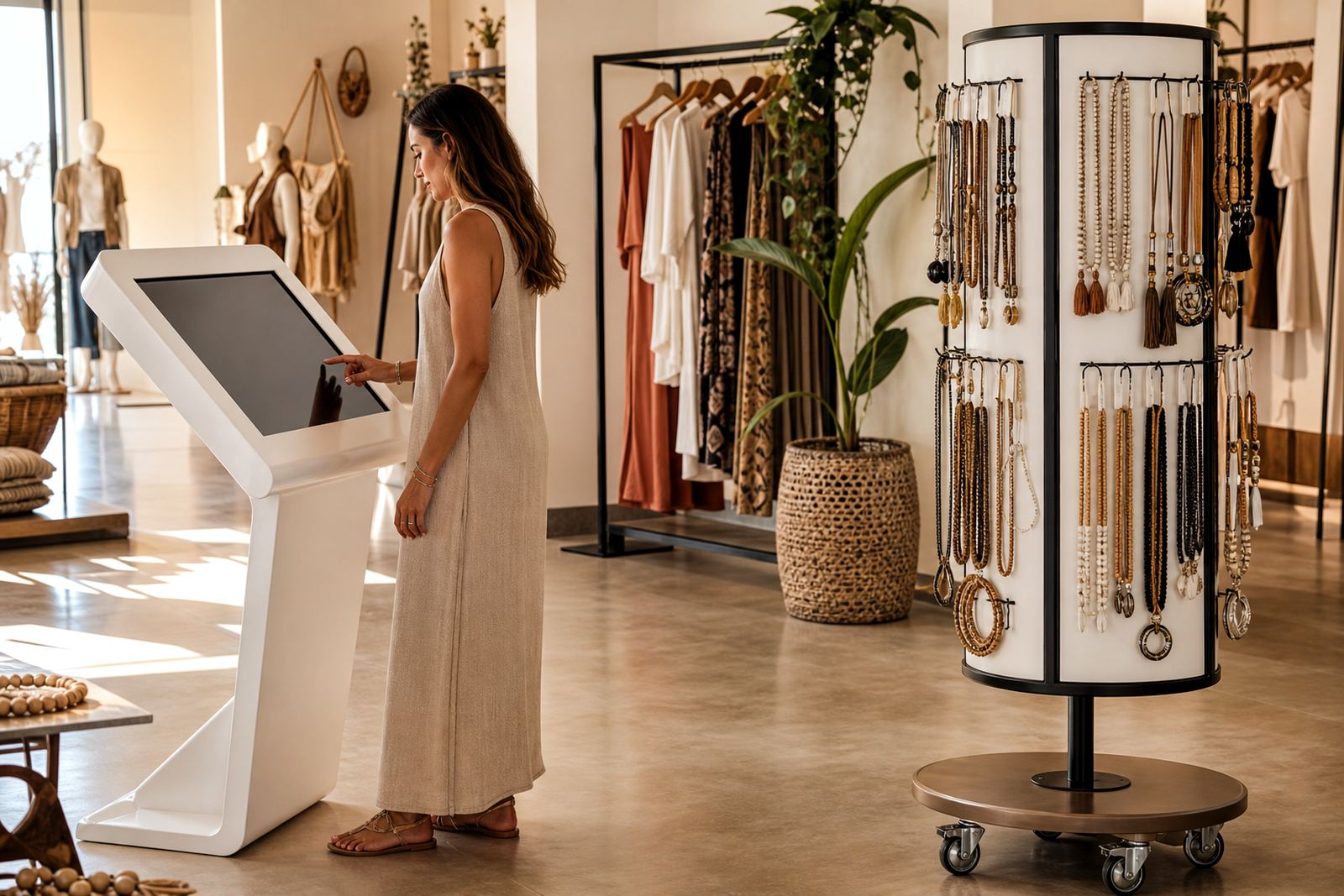
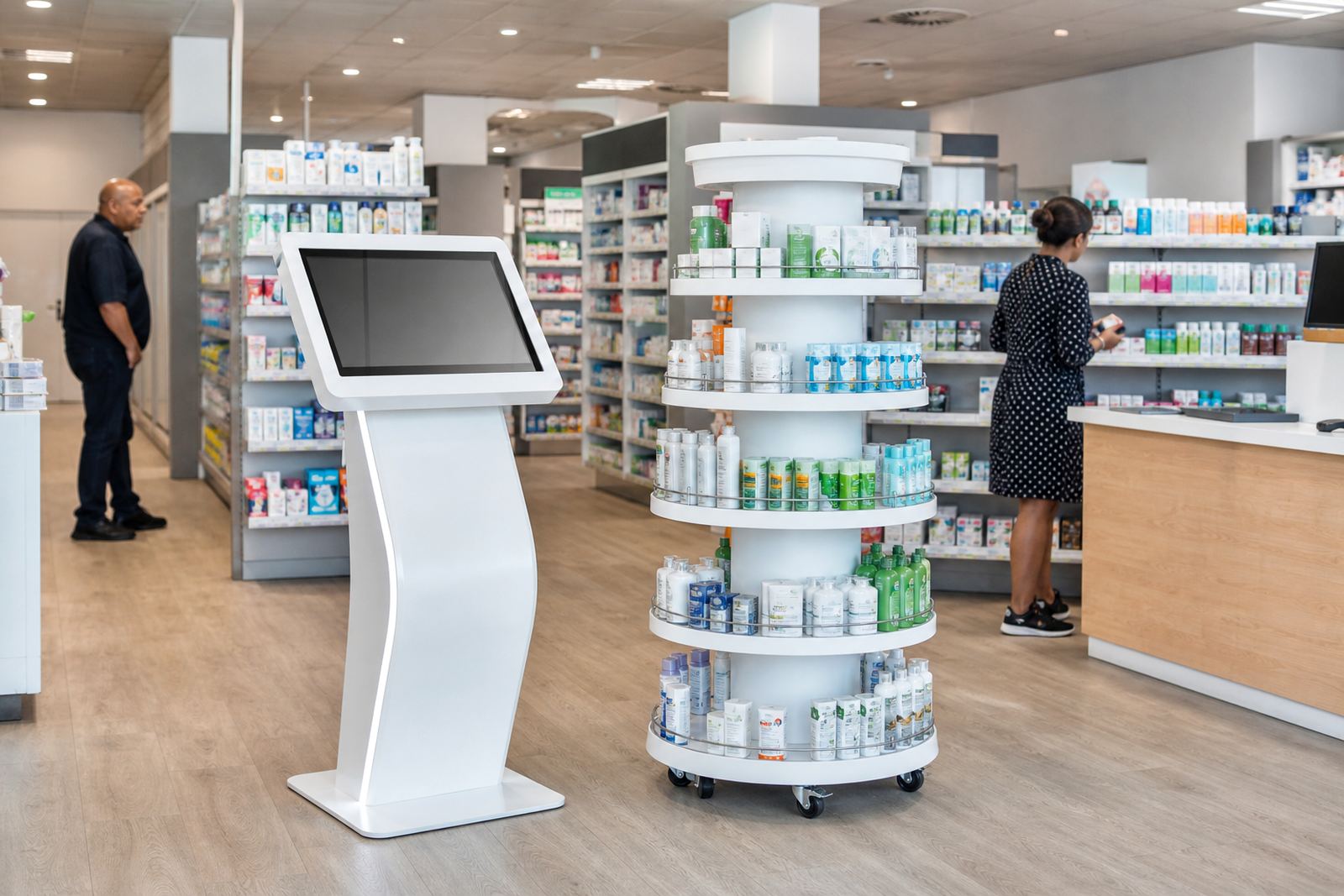
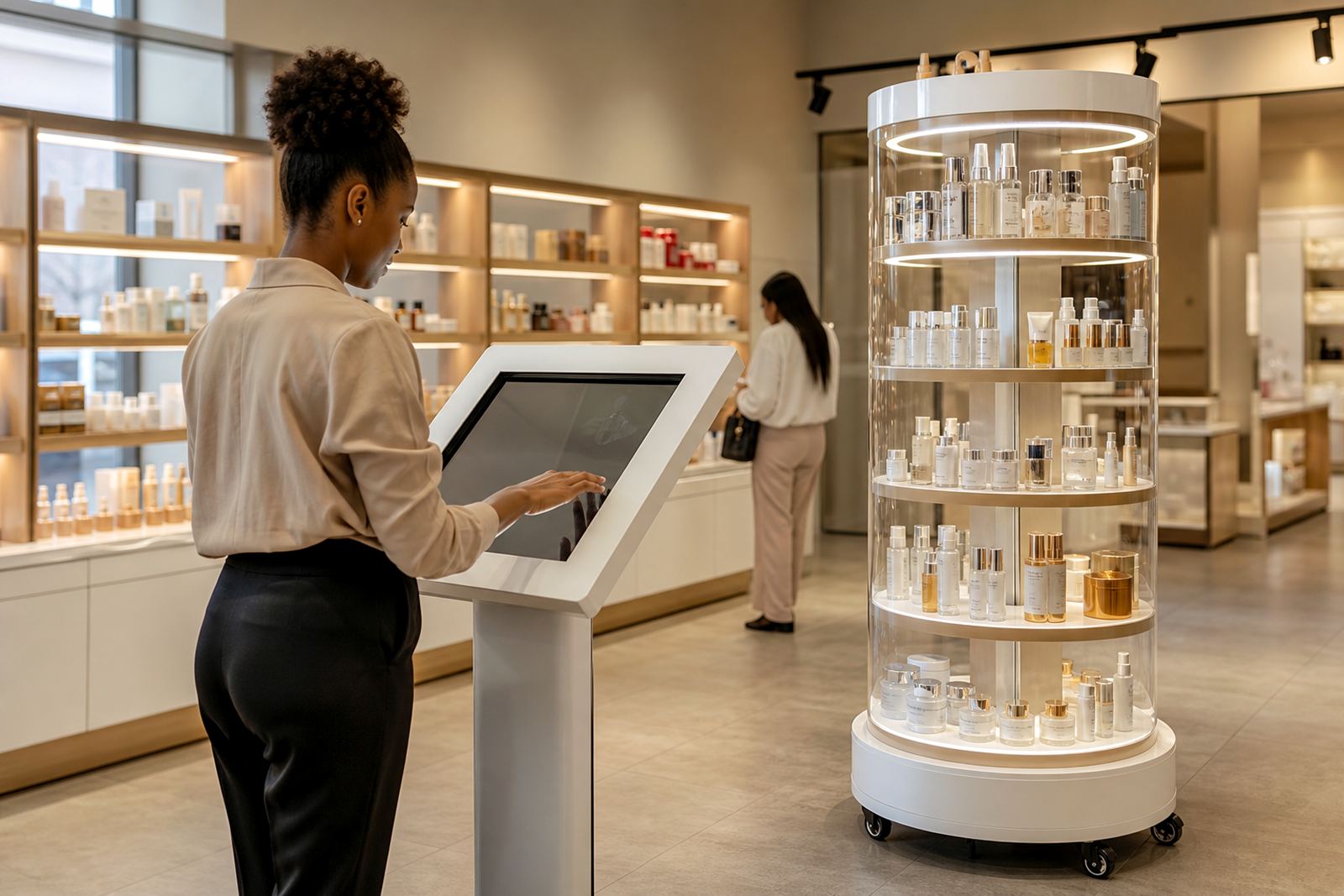
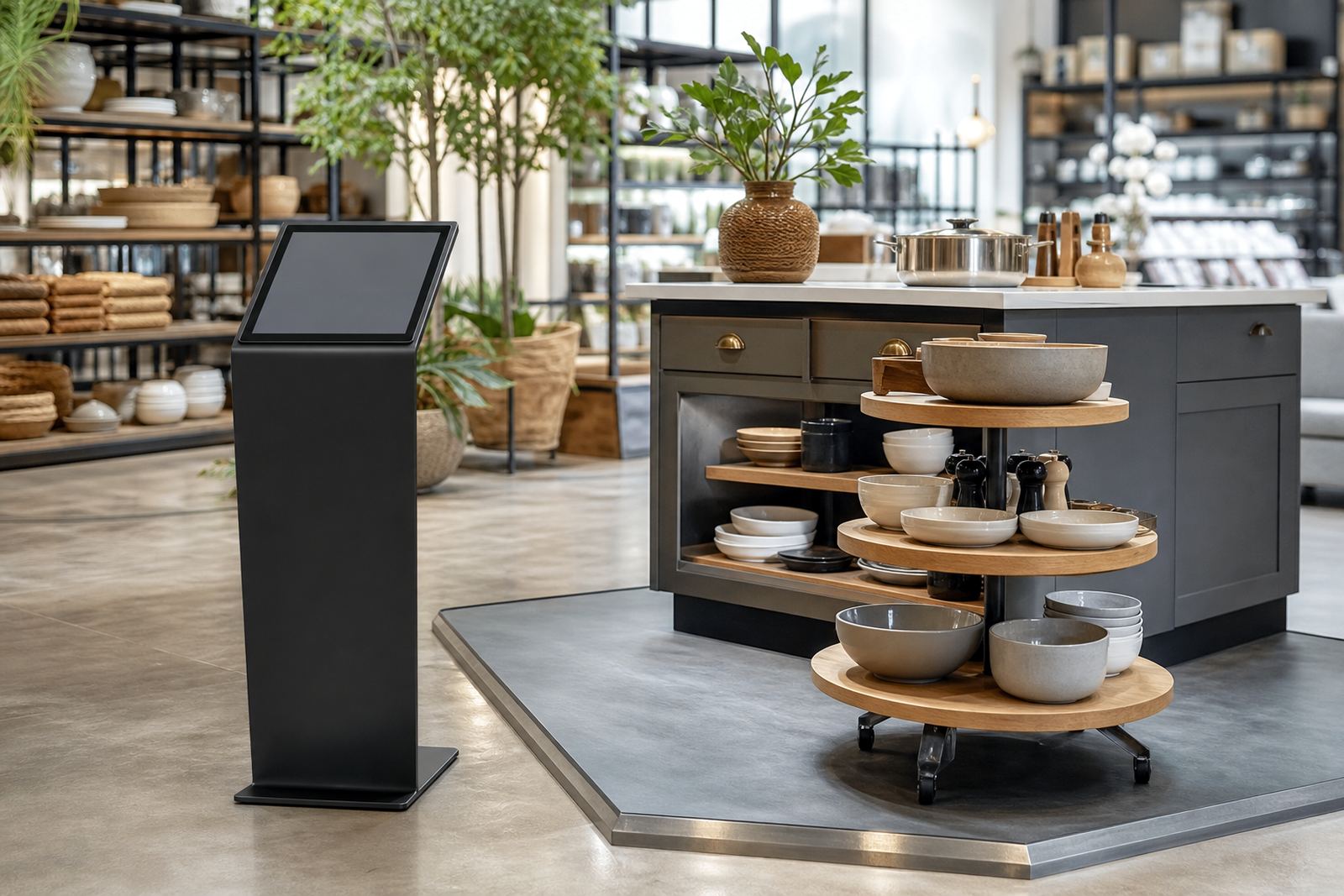
The brief was to bring the product range closer to the customer without crowding the floor. The store wanted touch catalogue access for browsing and two campaign podiums for seasonal ranges, clear pricing and featured lines. It also needed equipment that would keep working through load-shedding and handle dust from regular foot traffic, with no fuss for the sales team.
Our scope and the equipment we supplied
We carried out a site assessment, measured the traffic flow and checked where the best viewing points were for both browsing and promotions. From there we recommended a compact touch catalogue setup paired with freestanding display podiums that could sit in the main showroom aisles without blocking movement. The installation was planned around the store layout, lighting and the need for simple staff use.
What we supplied and completed on site:
- 2 interactive touch catalogue kiosks with commercial-grade touch screens
- 2 campaign display podiums for featured homeware ranges
- Custom branding panels for the showroom environment
- Content loading for product categories, campaign pages and store information
- Software configuration for easy navigation and fast page switching
- Power and network planning to suit the store's existing setup
The kiosks were set up with a locked operating mode so customers could browse without changing settings. Screen brightness was adjusted for the showroom lights, and the cabinetry was finished in a neutral tone to match the floor stock rather than fight with it.
Constraints on a live retail floor
This was not a closed-off fitout, so we had to work around trading hours and keep disruption to a minimum. The floor already had merchandise, seasonal stands and staff movement, so the challenge was finding positions that supported browsing without creating bottlenecks. Centurion winters can be dry and dusty, which meant we also had to choose placement and cable routing carefully so the units stayed neat and easy to clean.
We also had to allow for electrical stability. Like many retail sites in Gauteng, the store wanted a setup that could recover cleanly after outages. The equipment was configured to restart properly after power interruptions, and the software was tested to make sure the touch catalogue came back ready for use without staff having to reset everything by hand.
- Work was scheduled in phases to avoid interrupting trading
- Units were positioned for clear visibility from the main walkway
- Cable runs were kept tidy and out of customer reach
- Content was loaded before handover so the team could start using it immediately
Timeline from first visit to handover
The project ran over three weeks from site visit to handover. Week one covered the assessment, measurements and layout planning. Week two was used for branding, content setup and technical preparation. Week three covered delivery, installation, testing and staff training.
That schedule suited the client because it gave the team time to check campaigns and product information before the equipment went live. It also allowed us to coordinate with the store manager around delivery times and keep the showroom open for normal trading where possible. The final check included touch response, screen calibration and a full walk-through with the floor team, which kept confusion to a minimum. There was a minor delay on a power point location, but it was sorted on site with no impact to the launch.
Results on the showroom floor
Once the kiosks and podiums were in place, shoppers had a direct way to browse categories without waiting for a staff member to fetch a catalogue or search a storeroom. The store could point customers to the right ranges faster, especially when comparing finishes, sets and seasonal items. Campaign visibility also improved because the podiums sat where customers naturally paused, not tucked away at the edge of the floor.
The client reported three practical gains:
- Less time spent on basic product queries at the counter
- Better visibility for featured homeware campaigns
- A tidier showroom layout with fewer loose printed signs
For a retailer selling a wide mix of homeware, that meant the floor worked harder without needing more square metres. It also made the showroom feel more organised for customers who wanted to browse at their own pace.
What we would repeat for another homeware store
We would take the same approach again for any homeware retailer that needs customer engagement without clutter. Start with a proper site assessment, map the customer path, then place the touch points where shoppers naturally stop. That gives the store a better return from the equipment and keeps the floor practical for staff.
For a similar project, we would recommend the same mix of touch catalogue access, campaign podiums and staff training, with content planned around real stock movement rather than generic promotion pages. It makes day-to-day use easier and helps the store update campaigns quickly when ranges change, especially during busy retail periods and end-of-season clearances.
Key facts
| Project type | Homeware showroom installation |
|---|---|
| Town | Centurion, Gauteng |
| Timeline | 3 weeks from assessment to handover |
| Core solution | 2 touch catalogue kiosks and 2 campaign display podiums |
| Support included | Content loading, software configuration, staff training |
| Operating environment | Indoor retail floor with load-shedding readiness and dust control |