
A Durban floor with fast-moving traffic and a technical range
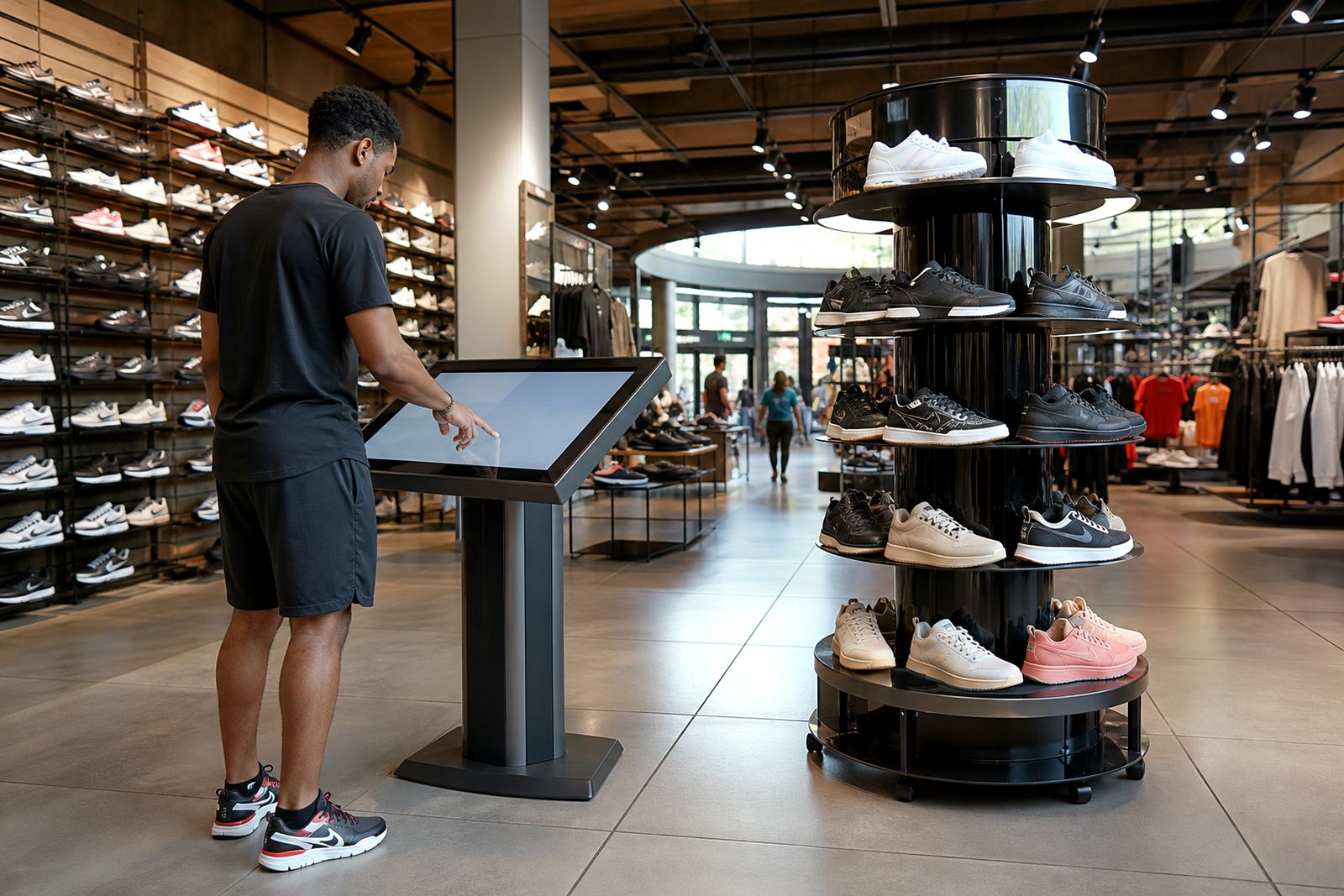
This project was for a high-traffic sports store in Durban, where customers move quickly between footwear, apparel, training gear and specialist equipment. The brief was clear: give shoppers a faster way to compare products without tying up staff on every query, and create campaign areas that would work during weekend trade and seasonal promotions.
The store wanted a practical setup that could handle heavy daily use, coastal humidity and the kind of power interruptions that still affect parts of KwaZulu-Natal. The units also had to fit cleanly into an active retail layout with narrow aisles, strong aisle lighting and enough space for trolley movement. The result needed to look sharp, but more importantly it had to perform every day without becoming a maintenance burden.
We worked with the store team to map the busiest decision points on the floor, then identified where product comparison screens would shorten the buying process. A second requirement was to create a high-impact display zone for new arrivals and campaign stock, especially around peak sporting seasons and school holiday trading. That meant balancing display value with clear sightlines, safe cable routing and simple staff access for updates.
- Client type: independent sports retailer
- Location: Durban, KwaZulu-Natal
- Store focus: footwear, apparel and training equipment
- Main need: better product comparison and campaign visibility
What the store needed from the installation
The store did not want a generic screen wall. They needed a sales tool that would let customers compare product features, see campaign messaging and move from browsing to purchasing with less hesitation. The kiosk content had to be easy for staff to update, and the physical stands had to support rotating product selections without looking cluttered.
We planned for a mixed setup with touchscreen kiosks and 360 degree display stands positioned in two key zones. One zone supported comparison and product education, while the other carried featured items and launch stock. Because the shop traded through long hours and regular load-shedding was a concern, the system had to recover cleanly after outages and return to its configured state without manual rework every time.
Durban’s coastal conditions were another factor. We specified materials and finishes suited to humid air and frequent cleaning, with hardware that could cope with daily handling. The store also asked for a solution that would not block customer movement or create trip hazards. That influenced the footprint of the stands, the placement of power points and the way cables were managed across the install area.
- Touchpoints needed to support side-by-side product comparison
- Display stands had to rotate stock and carry campaign messaging
- All cabling had to stay out of customer walkways
- System behaviour had to remain stable after power interruptions
The equipment and configuration we supplied
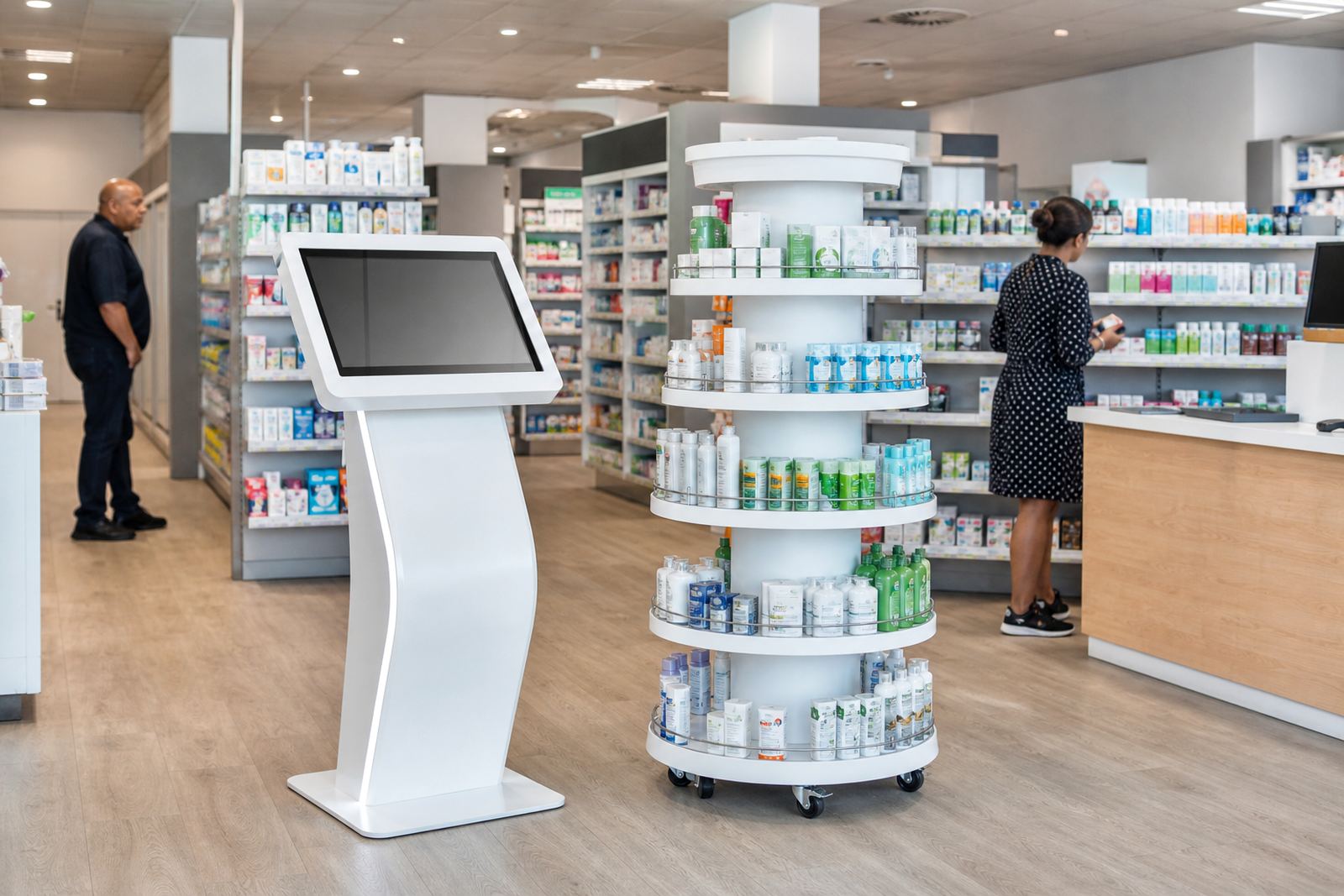
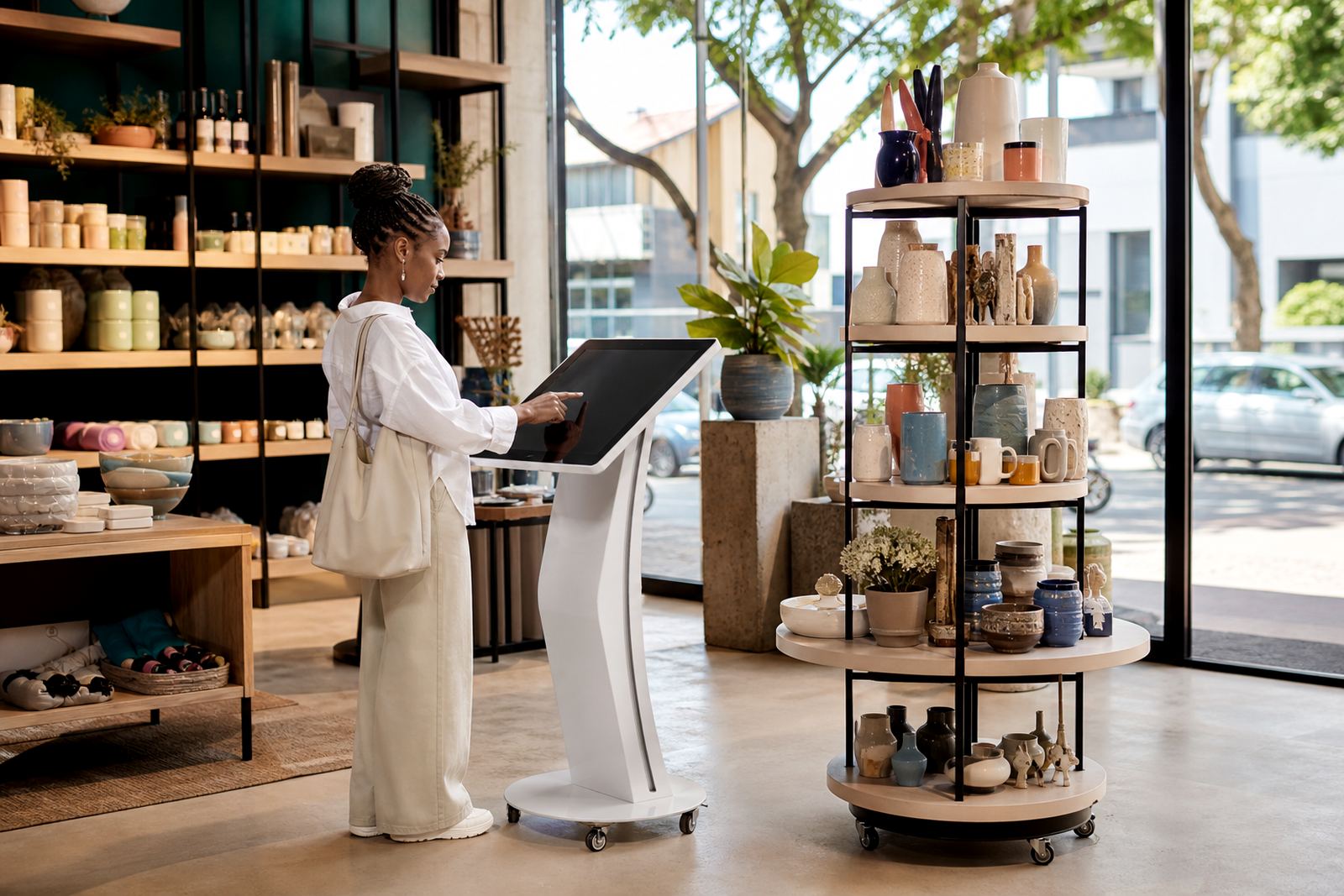
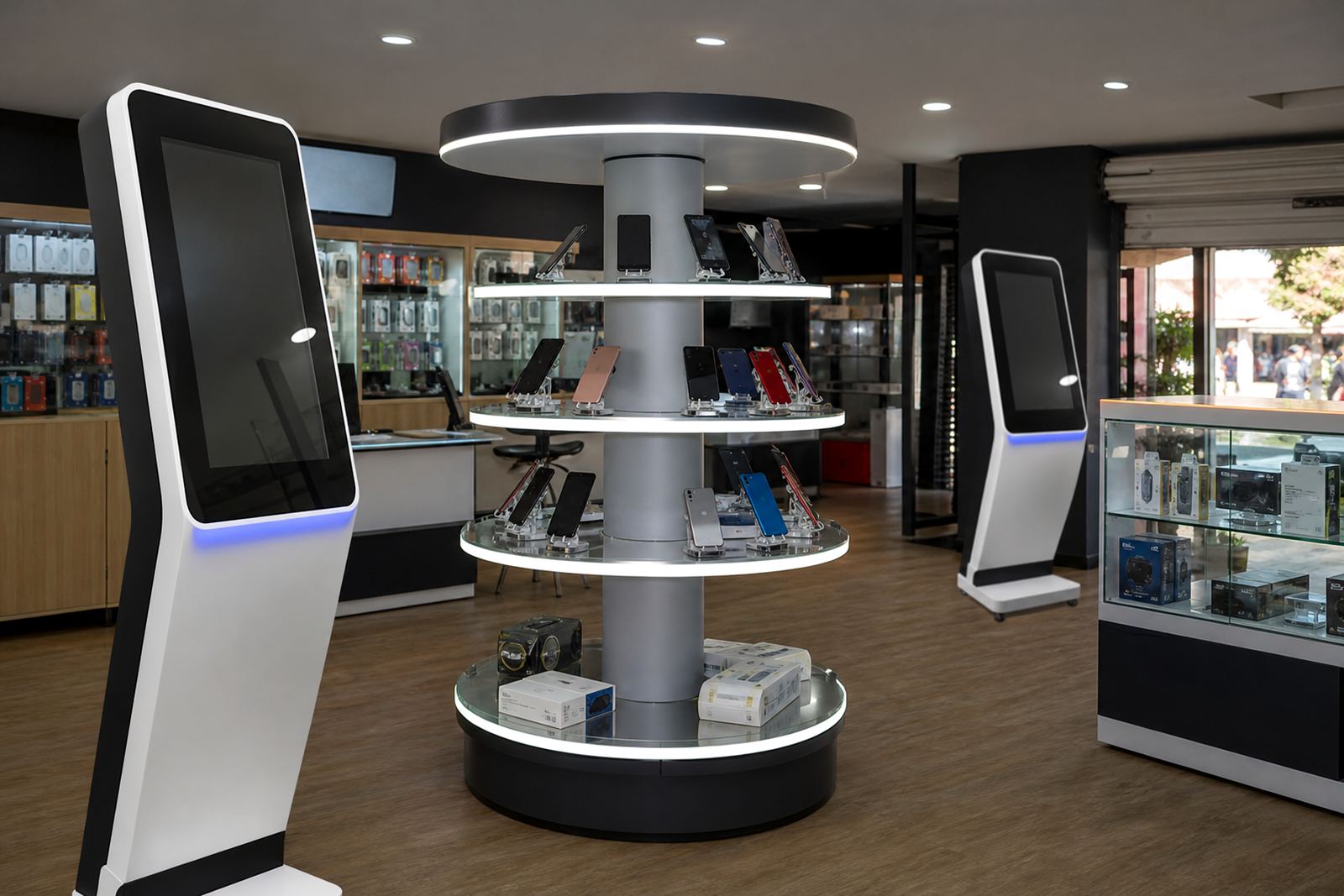
We supplied interactive touchscreen kiosks with retail-ready enclosures, reinforced mounting and commercial-grade display hardware suited to continuous floor use. The kiosks were configured for product browsing, comparison prompts and promotional content, with a simple interface that store staff could manage without special technical training. Each unit was set up for quick access to the retailer’s approved content set and aligned to the store’s preferred customer journey.
For the campaign area, we installed 360 degree product display stands designed for visible rotation and balanced presentation. The stands were sized to suit mid-floor positioning and were finished to match the store’s modern interior. They provided enough space for featured products, supporting graphics and small promotional headers, while still letting customers view items from all sides.
Where required, we handled software configuration, content loading and network integration so that the kiosks could run on the store’s in-house connection. We also prepared the units for clean restart procedures after outages, which is a practical detail but it saves a lot of time on the floor. The store team was shown how to update basic content, and we left them with a clear process for daily use and monthly checks.
- Commercial touchscreen kiosks for product comparison and browsing
- 360 degree display stands for campaign and featured stock
- Configured content flow for quick shopper decisions
- Network-ready setup with restart recovery after outages
Installation in two weeks with minimal floor disruption
The full project ran over two weeks from site assessment to handover. In week one we completed the site assessment, confirmed measurements and reviewed the store layout with the client team. We then finalised the placement plan, checked available power points and confirmed the best route for cabling and data connections. This stage also included a final review of the campaign area so that the new units would not interfere with existing gondolas or till traffic.
Week two covered delivery, installation, software configuration and testing. Our installation supervisor coordinated the physical setup while the technical team checked screen response, content loading and network stability. We staged the work to avoid peak customer periods where possible, which helped the store keep trading while the job was being completed. The floor team appreciated that there was no extended shutdown and no need to move large sections of stock more than once.
After installation, we stayed on site long enough to confirm that the comparison screens and display stands were working as intended. Staff training was completed before handover so the team could manage everyday updates themselves. There were a few small adjustments to content order and screen timing, but those were done quickly and the store was trading with the new setup by the end of the second week.
What changed on the sales floor
The most immediate change was that customers spent less time asking for basic product comparisons and more time interacting with the range themselves. Staff could focus on fitting advice, stock availability and upselling where it mattered, rather than repeating the same feature explanation throughout the day. That made the floor feel more organised and less rushed during busy trading periods.
The campaign stands also gave the store a stronger promotional presence. Featured products were easier to spot from the aisle, and the rotating presentation helped new arrivals feel more considered instead of just stacked on the floor. In a sports retail setting, that matters because shoppers often compare performance details before they buy. The new setup made that process faster and more visible.
From the client’s side, the biggest value was consistency. Once the system was configured, the team could keep the same customer journey across weekday trade, Saturday peaks and holiday traffic. The equipment also held up well in a coastal environment, which was one of the key concerns from the start.
- Shorter product explanation time at the point of sale
- Better visibility for campaign and new release stock
- Cleaner floor presentation during peak trade
- More consistent shopper engagement across the week
What we would repeat on another sports store project
We would use the same approach again for another Durban or coastal sports retailer: begin with the floor flow, then place the technology where it supports a real sales decision. That means less emphasis on decoration and more focus on useful touchpoints, product access and simple maintenance. It also means planning for local conditions from day one, including humidity, cleaning routines and load-shedding recovery.
For a similar store, we would keep the installation split into comparison and campaign zones, because that combination worked well here. We would also insist on clear content ownership from the retailer so the displays stay current after launch. When the product story is updated regularly the system keeps paying for itself, but if the content goes stale fast the benefit drops off just as quickly.
This Durban sports store project showed how a practical retail technology setup can support both customer engagement and day-to-day operations. It was not about adding screens for the sake of it. It was about giving the team a better tool for selling, and giving shoppers a clearer way to choose the right product. That balance is what we aim for on every retail installation.
Key facts
| Project type | Sports retail touchscreen and display installation |
|---|---|
| Location | Durban, KwaZulu-Natal |
| Timeline | 2 weeks |
| Core equipment | Interactive touchscreen kiosks and 360 degree product display stands |
| Services used | Site assessment, solution design, content loading, installation, software configuration, training |
| Environment | High footfall retail floor with coastal humidity and load-shedding considerations |