
Start With the Campaign Length, Not the Product
The first question is simple: how long must the display stay on the floor? A short promotion for a new range, seasonal special, or one-off launch usually suits a temporary unit. If the objective is to support ongoing product education, pricing queries, or self-service ordering, a permanent display makes more sense. Many stores get this wrong by buying for the product instead of the timeline, then they end up moving equipment around too often.
Temporary displays are easier to place near entrances, end caps, or promo islands where attention is highest. Permanent displays work better where shoppers need repeat access, such as near assisted selling areas or in a high-turnover category. The decision should be based on the lifespan of the message, not just the cost on day one.
- Use temporary displays for launches, holidays, roadshows, and price-led campaigns.
- Use permanent displays for core categories, product education, loyalty sign-ups, or self-service browsing.
- If the same message will change every few weeks, a flexible permanent unit is often the smarter choice.
Temporary Displays That Work Hard for a Few Weeks
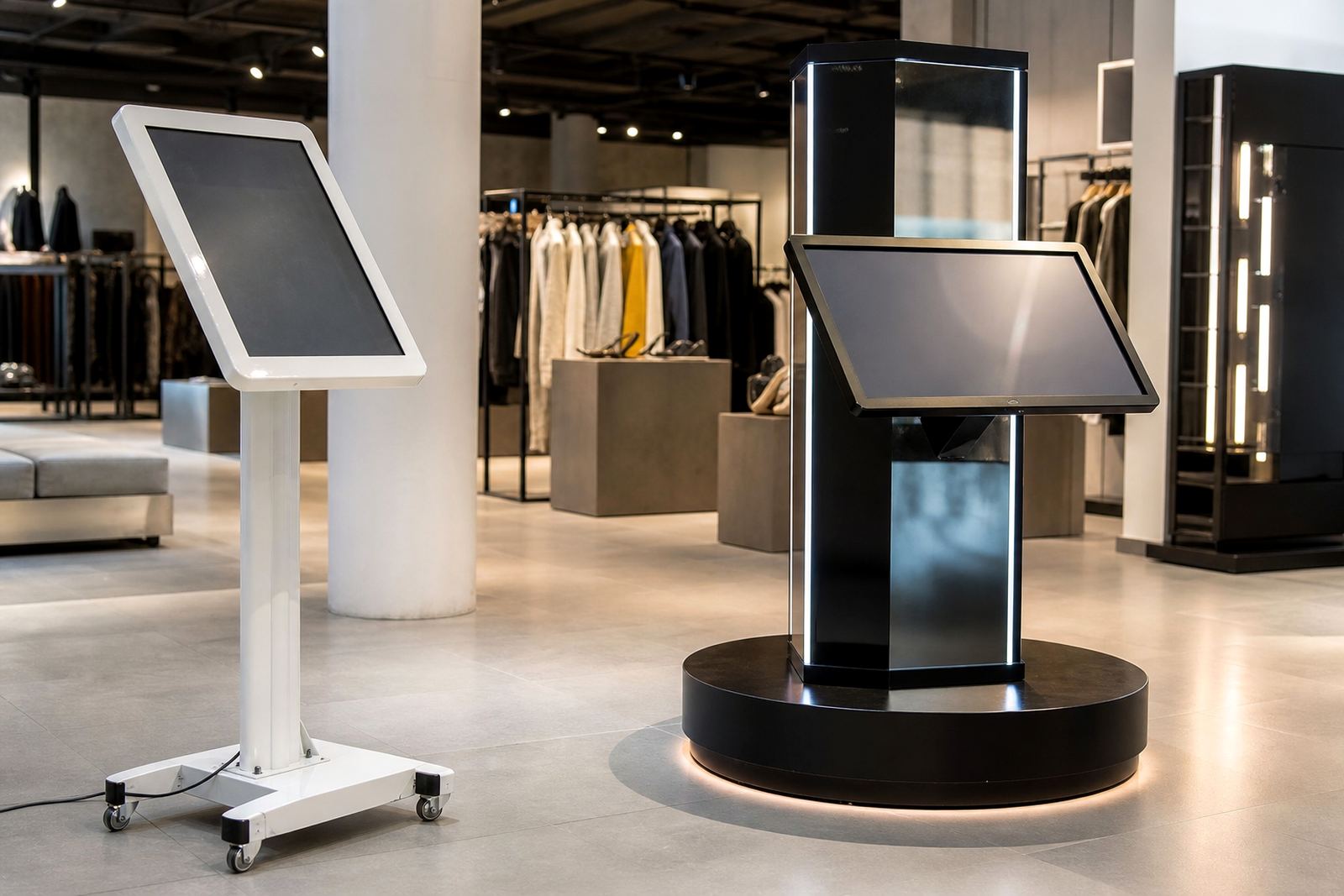
Temporary units are designed for short bursts of activity. They are useful when you need speed, lower upfront spend, or a display that can be packed away after the campaign. Retailers in Johannesburg and Pretoria often use them for mall activations, while stores in Durban and Cape Town may prefer them for summer or holiday promotions where the floor plan changes quickly.
These displays must still be practical. A light unit that wobbles, overheats or struggles in a busy store creates more problems than it solves. If there is a chance of power cuts, the display should handle safe shutdowns and quick restart without losing the content setup. In coastal areas, the casing and fittings should also cope with humidity and salty air, which can shorten the life of cheaper hardware.
- Best for 2 to 12 week campaigns.
- Easier to relocate between branches or events.
- Lower upfront spend, but may need more frequent replacement.
- Good for trialing a concept before committing to a full rollout.
Permanent Displays for Daily Store Use
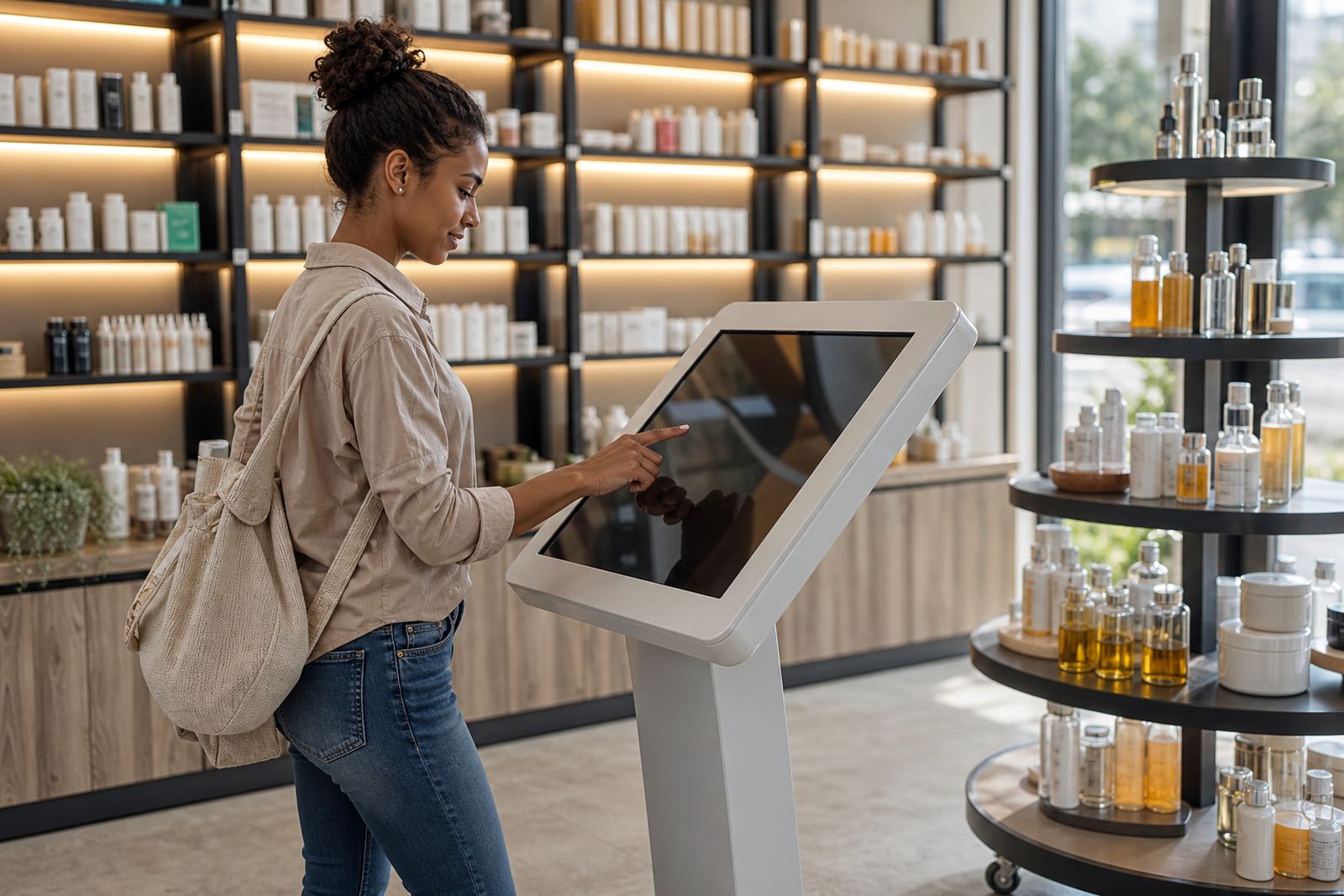
Permanent displays suit stores that want a fixed point of interaction for months or years. They are better for high footfall retail, where shoppers expect clear product information and quick assistance. In busy centres like Sandton or Centurion, a permanent kiosk can help staff manage questions without pulling them away from till points or stock areas.
A permanent display should be specified for daily wear. That means sturdy construction, safe cable management, proper ventilation, and software that can be updated remotely. If the store layout is tight, the footprint matters as much as the screen size. A unit that blocks sight lines or creates bottlenecks will frustrate customers and staff alike.
For stores with regular promotional changes, permanent does not have to mean static. Content can be updated, branding can be refreshed and software can be configured for different user journeys. The hardware stays in place, while the message changes as needed.
What Store Layout Tells You Before You Buy
Every store has its own pressure points. A narrow aisle in Bloemfontein will not behave like a wide-format showroom in Midrand. Before choosing temporary or permanent, look at where people pause, where queues form, and where staff naturally gather. The best placement is usually where the shopper is already slowing down, not where the display has been forced into a gap.
Site assessment helps avoid expensive mistakes. We often see displays placed too close to reflected light, air-conditioning vents, or entry doors that create dust build-up. In stores with strong security rules, a unit may also need to be fixed down or positioned where it can be monitored easily.
- Check walking routes from entrance to till points.
- Measure available floor space in metres, including clearance for wheelchairs and trolleys.
- Consider visibility from multiple angles, not only the front.
- Plan for cabling, power points, and network access before installation.
Where 360-Degree Product Stands Make More Sense
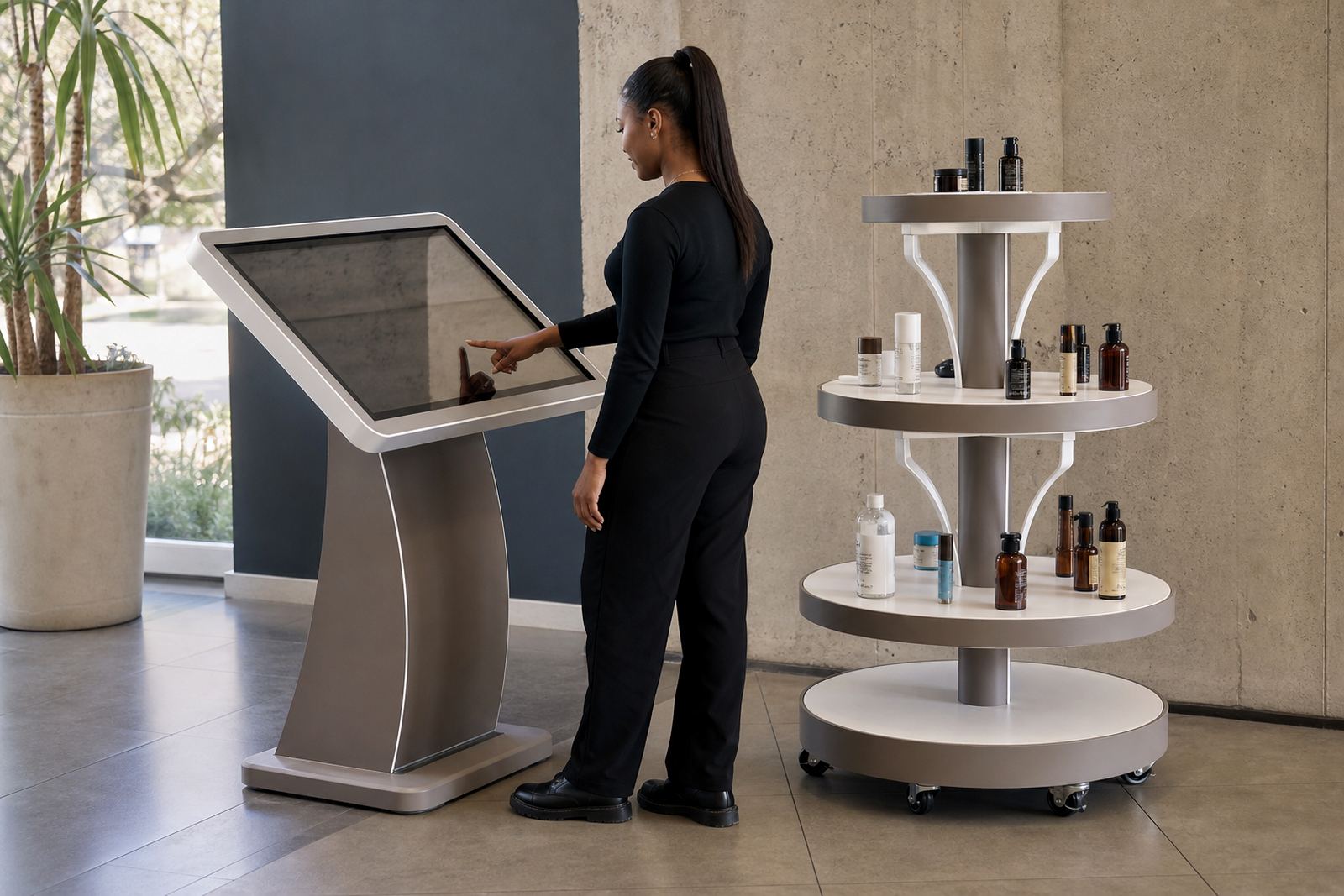
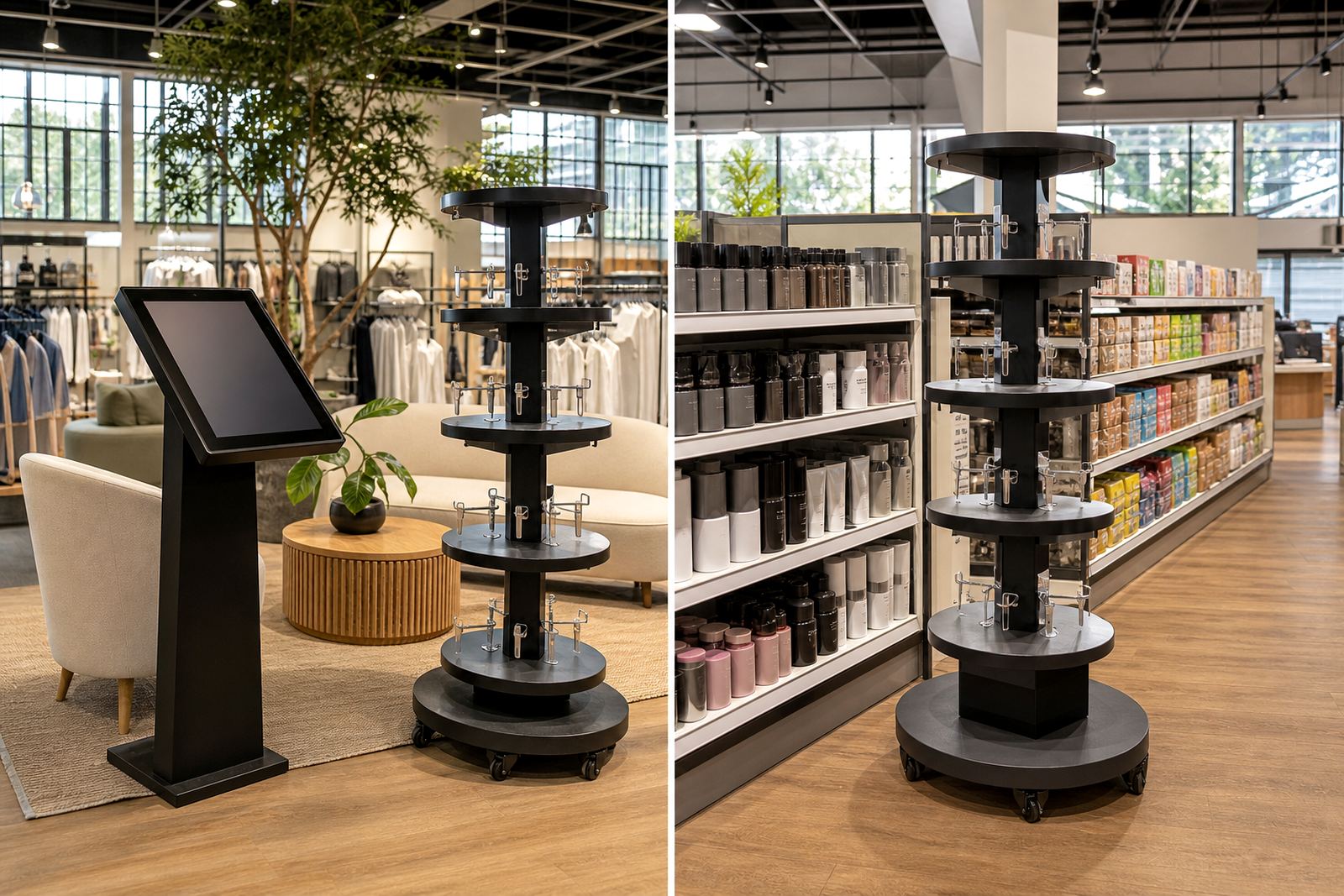
360-degree product display stands are not just for show. They are useful when the customer needs to view packaging, finishes, details or labels from every side. In a temporary setup, these stands work well for limited promotions or product launches. In a permanent setup, they are ideal for core ranges where shoppers compare variants before asking for help.
For example, a retailer in Midrand might use a temporary stand for a new appliance range during a three-week campaign, then move the same unit to another branch once the promotion ends. A permanent stand makes more sense for a best-selling category that needs daily interaction and repeat viewing. The choice depends on how much handling the product receives and how often the range changes.
- Choose temporary stands for launches, trade events and short promotions.
- Choose permanent stands for ongoing category support and repeat browsing.
- Use lockable or controlled access features when products are small, valuable or easily removed.
Budget, Maintenance and the Cost of Doing It Twice
Price should not be judged only on the quote. A cheaper temporary display can become expensive if it fails early, needs repeated transport, or cannot be reused. A permanent display may cost more upfront but save money if it lasts through multiple campaigns and reduces staff time. The real question is how many cycles the unit must handle before it pays for itself.
Maintenance is part of the decision too. Temporary displays usually need less scheduled servicing, but they can suffer damage during repeated setup and removal. Permanent displays need preventative servicing, software checks and occasional parts replacement. If a site has frequent load-shedding or unstable network conditions, plan for safe recovery and support after power comes back on. That small detail saves a lot of frustration.
For multi-branch retailers, the smarter option is often a mixed approach. Use permanent units in flagship stores and temporary units for smaller branches, roadshows or trial locations. It gives you control over spend without forcing every store into the same model.
A Practical Rule for South African Retail Teams
If the message is short-term, choose temporary. If the use is daily and recurring, choose permanent. If the store is busy, the layout is tight, or the product needs hands-on interaction, lean towards a permanent solution with proper servicing. If you only need attention for a limited period, a temporary unit is easier to justify and easier to move.
In practice, the best results come from matching the display to the pressure on the store. A campaign in Cape Town may need weather-resistant materials, while a branch in Durban may need extra protection against humidity. A Pretoria store with steady foot traffic may benefit from a fixed unit near customer service. The right answer is never one-size-fits-all, and that is usually where retailers save money over time.
At iTouch 360, we help retailers assess the site, design the solution, load the content, and handle installation and support across South Africa. If the project needs to work for six weeks or six years, the display should fit the job, not the other way round.