
What Our Delivery Installation Covers
Our delivery installation service is built for retail sites that need equipment moved in safely, assembled correctly and handed over with minimal disruption to trading. We work with interactive touchscreen kiosks and 360-degree product display stands, including units that need power, data cabling, software checks and final positioning on the shop floor. For stores in busy centres, loading bays, malls and standalone premises, we plan the access route first so there are no surprises on the day.
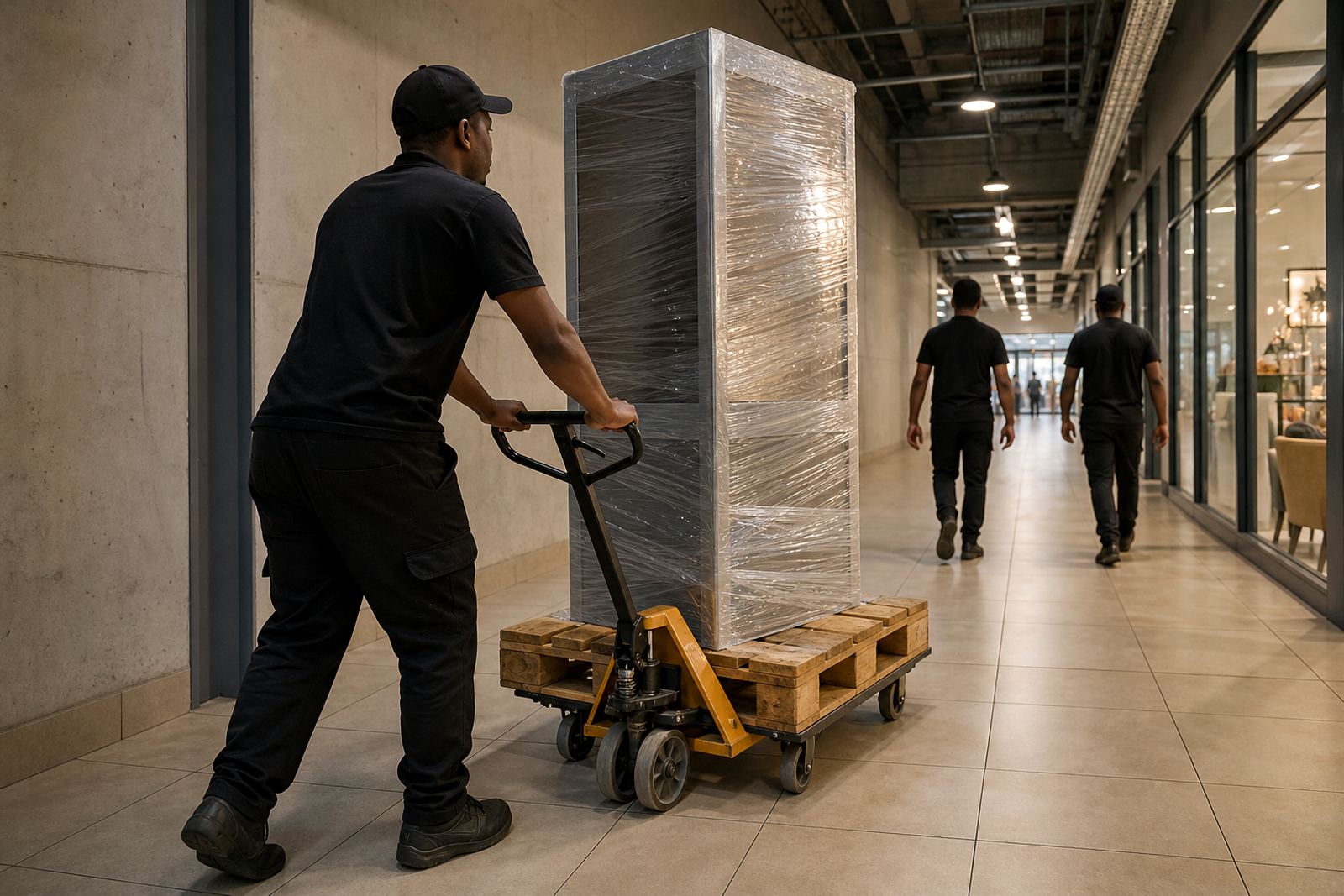
The service includes transport from our Midrand base, offloading, on-site assembly, levelling, fixing of panels and hardware, basic cable management, startup checks and a practical handover for your team. If the unit is going into a high foot-traffic area, we also take care with placement to avoid blocking customer flow or fire exits. In coastal locations like Cape Town and Durban, we pay attention to moisture, corrosion risk and ventilation around the unit.
- Transport and offloading for single units or multi-site rollouts
- On-site assembly and placement to the agreed layout
- Power-up checks, content loading checks and network handshakes
- Clean handover with packaging removal where site rules allow
How We Prepare Before The Truck Leaves
Good installation starts before the vehicle leaves Midrand. We confirm site access, loading bay height, lift availability, after-hours rules and any mall security requirements. For larger kiosks and display stands, we check doorway widths, lift dimensions and the final position in store so the unit can move through the site without damage. If a retail site has municipal noise or trading restrictions, we work within those windows and keep the visit short and organised.
We also confirm what the unit needs on arrival. Some installations need a dedicated 220V supply, while others need network access, a specific mounting point or a level floor. For touchscreen kiosks, a stable power feed and reliable connectivity are important, especially where the store depends on live product information or promotional content. If there are shelves, brand panels or special fixtures to fit, we plan that into the visit from the start. That saves time and keeps the site team from having to chase bits and pieces later.
- Site assessment notes reviewed before dispatch
- Access, lift and loading restrictions confirmed in advance
- Power, data and floor conditions checked against the unit spec
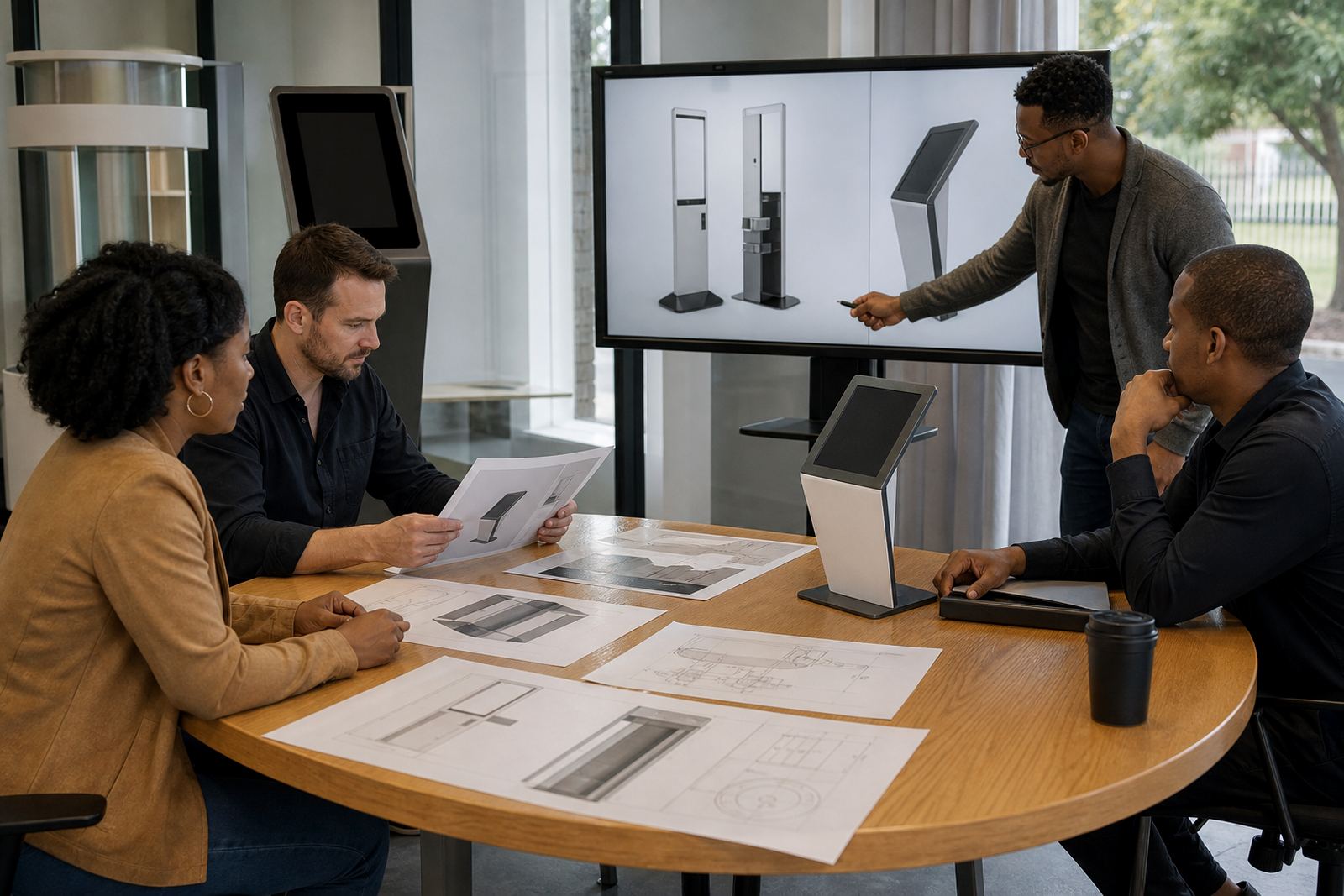
- Installation sequence agreed with the store or project manager
On-Site Assembly, Positioning And Commissioning
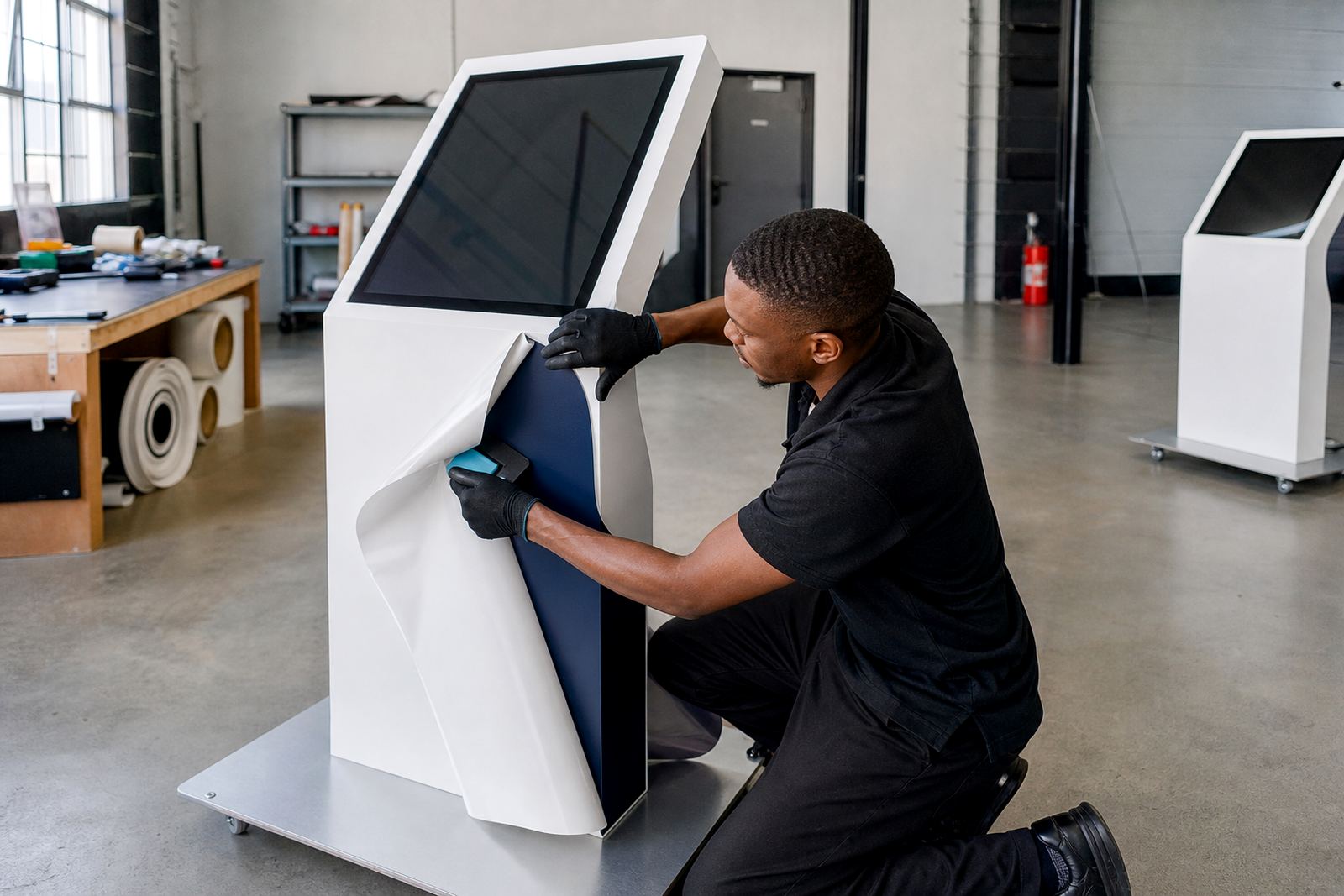
Once on site, our installation team assembles the unit carefully, checks alignment and secures every visible and load-bearing part. We work neatly and keep the sales floor as clear as possible while the installation is in progress. For touchscreen kiosks, we fit the display housing, base and internal components, then test the screen response, brightness and menu navigation. For 360-degree product display stands, we make sure the rotation is smooth, stable and correctly balanced for the product weight.
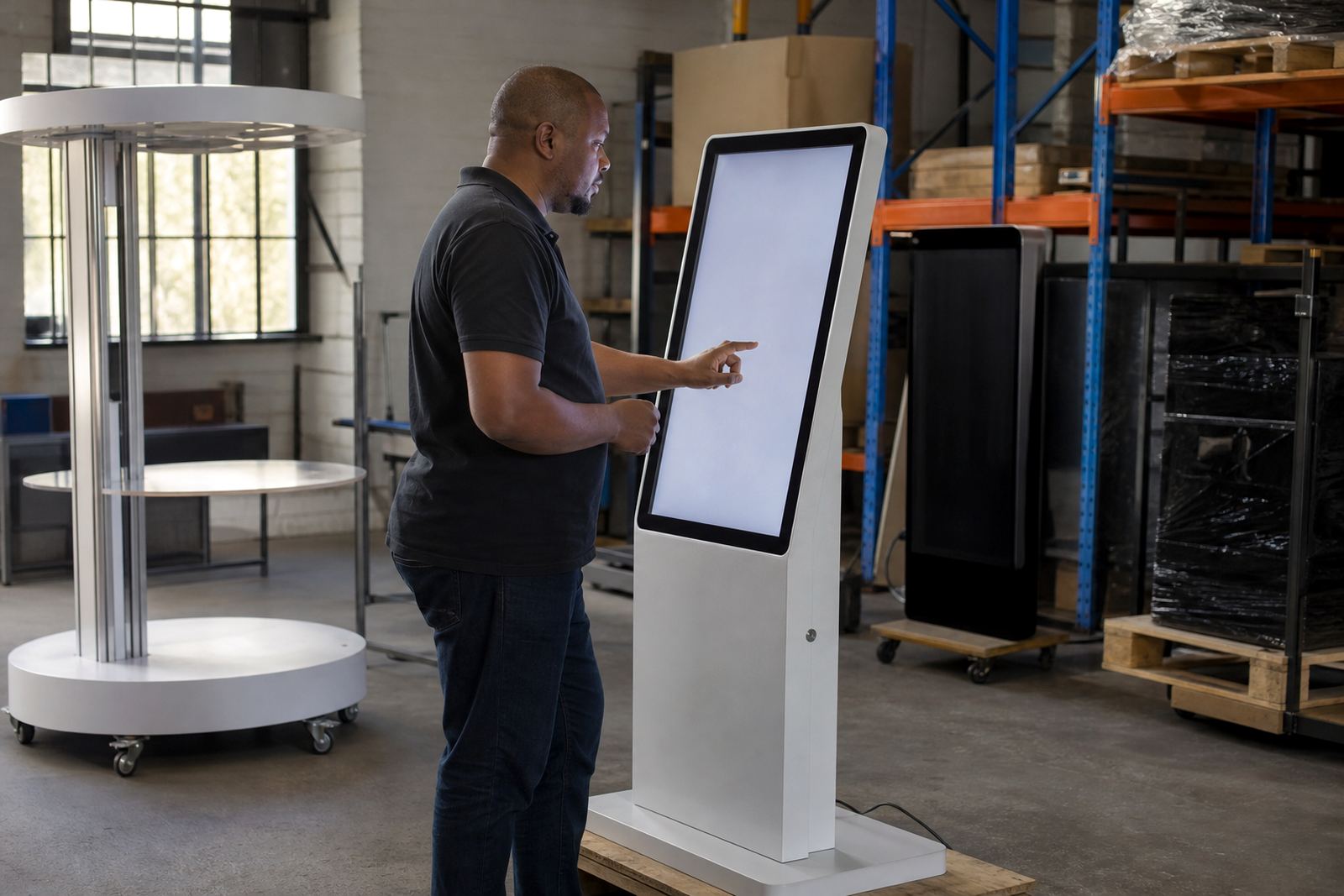
Commissioning is a practical step, not a quick flick of a switch. We check that the unit powers up cleanly, that the software loads correctly, and that any integrated lighting or movement functions are operating as intended. If the kiosk is linked to a store network, we confirm the connection and basic data flow. If the store requires branded content or product messaging to be loaded on arrival, we can take care of that during the handover, provided the files and instructions have been supplied in advance. Small site issues get sorted then and there, not left for later.
- Assembly of kiosk body, screen housing and supporting structure
- Levelling and positioning for safe customer use
- Rotation, touch and display checks where applicable
- Basic network and power verification on site
Turnaround Times For Retail Projects
Turnaround depends on the size of the order, the city, the site access and whether the installation needs after-hours work. A single unit in Johannesburg or Pretoria can often be delivered and installed quickly once everything is confirmed. Larger rollouts across multiple stores in Gauteng, the Western Cape, KZN or the Free State need more coordination, especially when each branch has different trading times or mall procedures. We aim to keep the process tight and practical, with clear dates agreed upfront.
For many retail projects, delivery installation can be arranged within a short lead time after approval, subject to stock movement, route planning and site readiness. If the project includes custom branding, content loading or special integration work, we build that into the schedule so the final visit is not rushed. Where stores operate during load-shedding or have unstable power, we may recommend a time slot with better availability or a standby power plan for testing. That avoids wasting a crew day on site.
We do not promise one-size-fits-all timing because retail sites are rarely that simple. Instead, we give you a realistic schedule and stick to it. If a branch in Sandton needs an evening install to avoid shoppers, or a Cape Town store needs delivery outside mall trading hours, we plan accordingly. That saves downtime and helps the team on site keep trading as usual.
Pricing Based On Access, Scope And Support Level
Our pricing is based on the actual work needed, not a vague flat rate. The main factors are distance from Midrand, number of units, site complexity, installation time, and whether the job includes network setup, content loading or extra safety requirements. A straightforward ground-floor install in Centurion will be priced differently from a multi-unit rollout in Durban with mall access rules and restricted trading windows. That is the honest way to quote retail work.
We provide pricing after we understand the site and the scope. For some projects, a simple delivery and assembly fee is enough. For others, the quote will include transport, labour, tools, callout planning, packaging removal and commissioning. If the site needs additional parts, brackets, cable runs or replacement components on the day, those are discussed before fitting wherever possible. Clients also choose support retainers when they want ongoing maintenance and quicker response times after installation.
Because these units are used in public spaces, we never treat installation as a once-off drop-off. The pricing reflects proper setup, a clean finish and less risk of damage later. It is usually cheaper to do it right first time than to send a crew back because the screen sits crooked or the stand was not level from the start.
Maintenance After Handover
Once the unit is installed, the next step is keeping it operating reliably. We recommend periodic checks based on usage, site conditions and traffic levels. A busy store in Johannesburg or Pretoria may need more frequent attention than a quieter branch, while coastal sites often need closer inspection because of humidity and airborne salt. In many retail environments, a quarterly service check works well, with faster follow-up if the store is using the unit heavily or changing content often.
Maintenance intervals typically include cleaning of touch surfaces, inspection of fasteners, cable checks, screen response tests, movement checks on 360 stands and software review where needed. If the store experiences repeated power interruptions, we can also advise on protection, restart routines and fault reporting. For retail teams with limited technical staff, a support retainer gives them a clear route for ongoing help when a unit needs attention or a part has to be replaced.
- Recommended inspections every 3 to 6 months depending on use
- More frequent checks for coastal, high-traffic or high-humidity sites
- Cleaning, tightening, cable inspection and function testing
- Fault repair and parts replacement arranged when required
Why Retail Teams Choose iTouch 360
Retail projects move faster when the same team that understands the product also handles the install. Our Midrand base gives us practical reach into Gauteng, and we support rollouts nationally into Cape Town, Durban and Bloemfontein through planned logistics. With Sibusiso Mthembu leading the business and a team that includes operations, technical, retail solutions, project coordination, installation and client support, the work is managed by people who know the pressure of a live store floor.
We are used to working around trading hours, mall rules and store staff who need the job done without unnecessary disruption. That means clear communication, tidy work and a proper sign-off at the end. We are also careful with the small details that matter in retail, like keeping the finish neat, checking the unit is stable on tiled floors, and making sure the setup is ready for real customers not just a test run. It sounds simple, but that is what makes a good install stand out.
If your next retail rollout needs transport, on-site assembly and a clean handover, our delivery installation service is set up to do exactly that.
Key facts
| Service scope | Transport, offloading, assembly, commissioning and handover |
|---|---|
| Typical unit types | Interactive touchscreen kiosks and 360-degree product display stands |
| Operating regions | Midrand, Johannesburg, Pretoria, Sandton, Centurion, Cape Town, Durban and Bloemfontein |
| Power requirement | Usually standard 220V supply, subject to unit specification |
| Recommended maintenance | Every 3 to 6 months, with shorter intervals for high-traffic or coastal sites |
| Installation support | Site checks, setup, testing, clean finish and after-sales support options |