
Planned servicing for retail units that work hard every day
Retail hardware gets used by hundreds of shoppers, sometimes thousands, and that means dust, fingerprints, vibration and general wear build up fast. Preventative servicing is our routine care programme for interactive touchscreen kiosks and rotating product display stands, aimed at catching small issues before they turn into outages. It suits stores in shopping centres, forecourts, showrooms and high traffic floor spaces where a unit must stay presentable and responsive.
For stores in Johannesburg, Pretoria, Cape Town, Durban and Bloemfontein, the service is planned around trading hours and store access rules. We check touch response, motion quality, internal fixings, cooling, power stability and content playback so the unit remains reliable through long retail days and load-shedding recoveries.
What the preventative service includes
Each visit is matched to the unit type and the site conditions, because a kiosk in a dusty entrance area needs different attention to a display stand near the tills. We work through the mechanical, electrical and software sides in one visit where possible, so the store team is not left juggling multiple callouts.
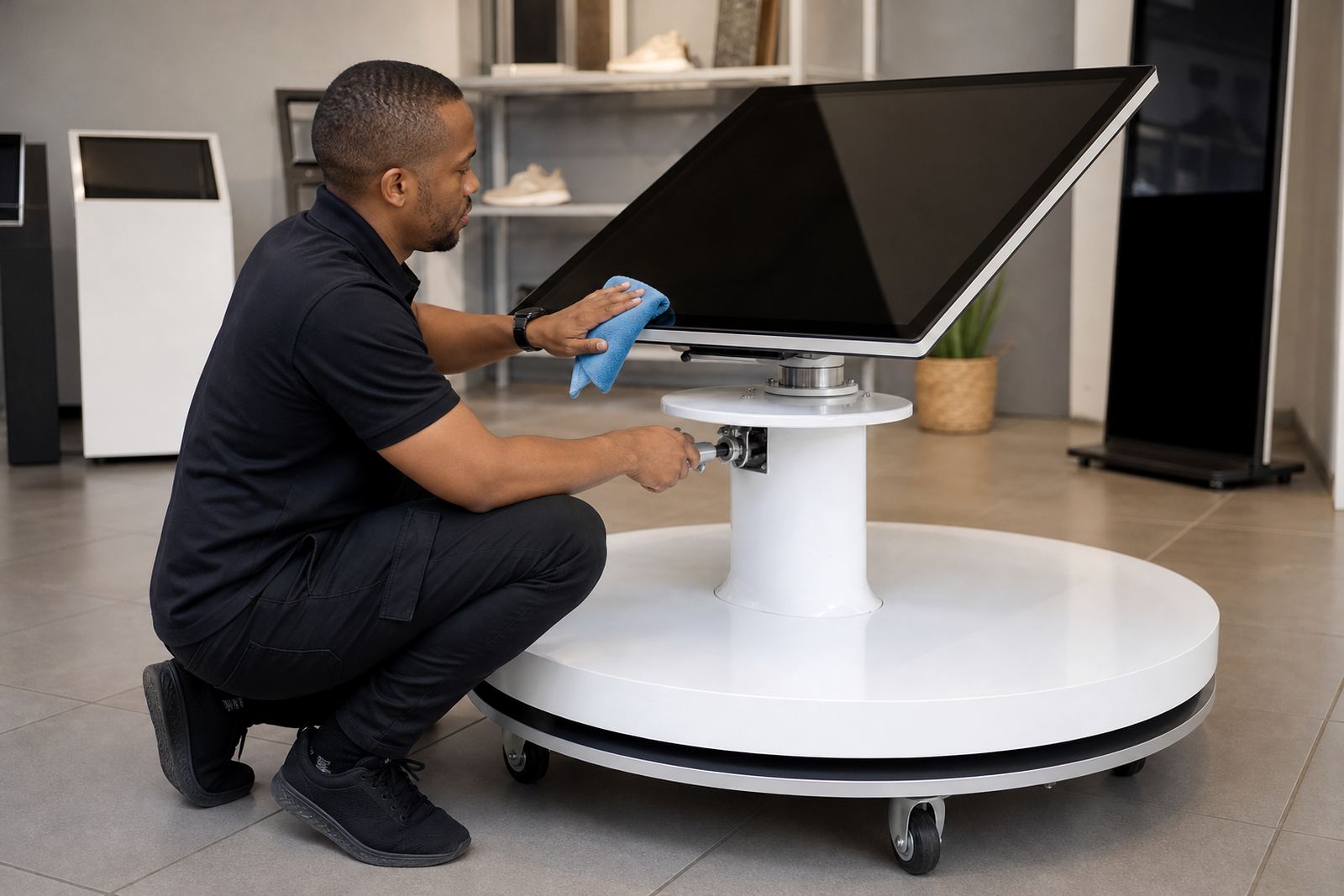
- Screen cleaning, bezel cleaning and inspection of touch response
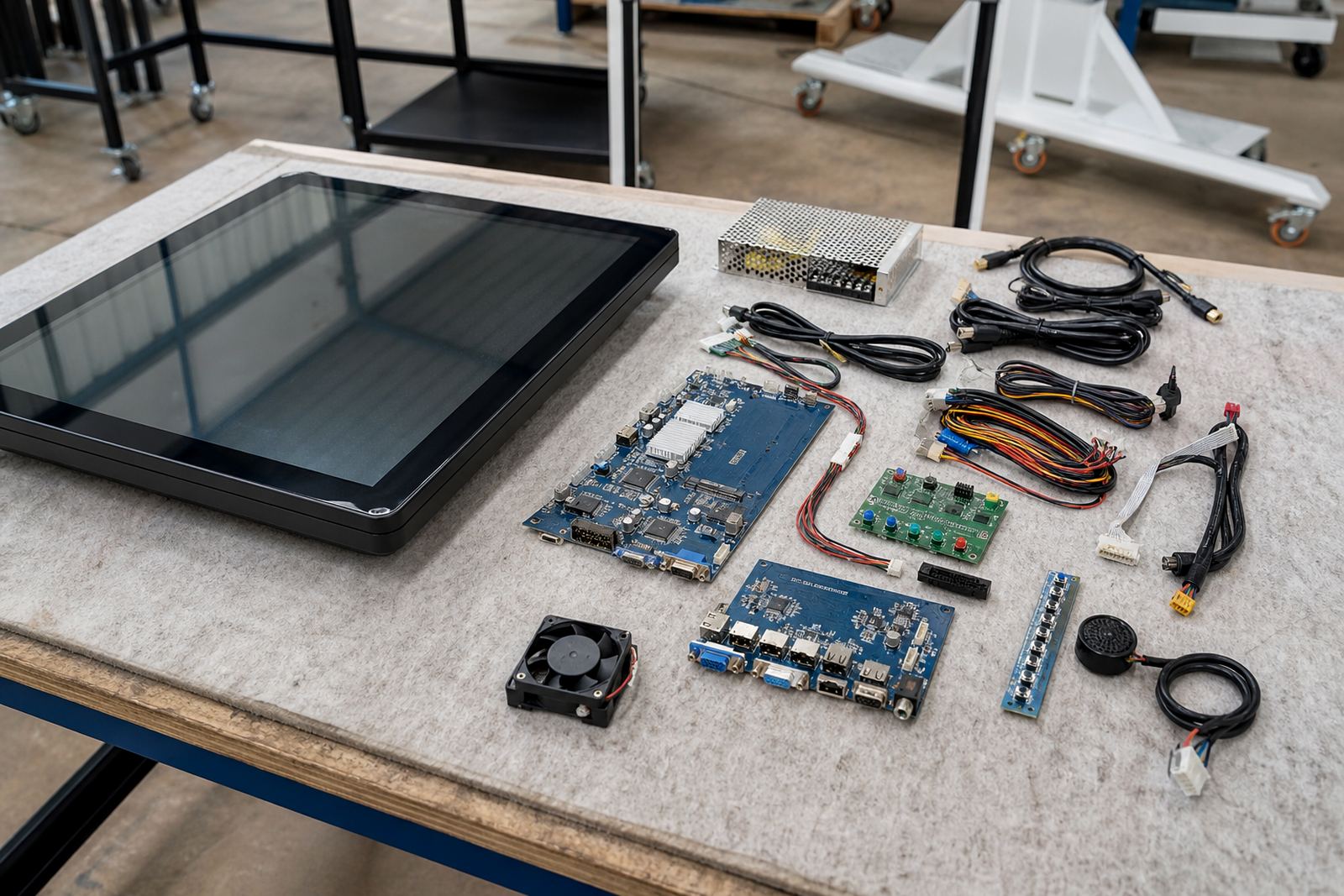
- Check of cables, connectors, plugs, power supplies and surge protection
- Test of fans, vents and internal heat build up
- Inspection of rotating motors, bearings, drive components and alignment
- Software check for kiosk operation, auto-start settings and content loop timing
- Firmware or configuration review where needed
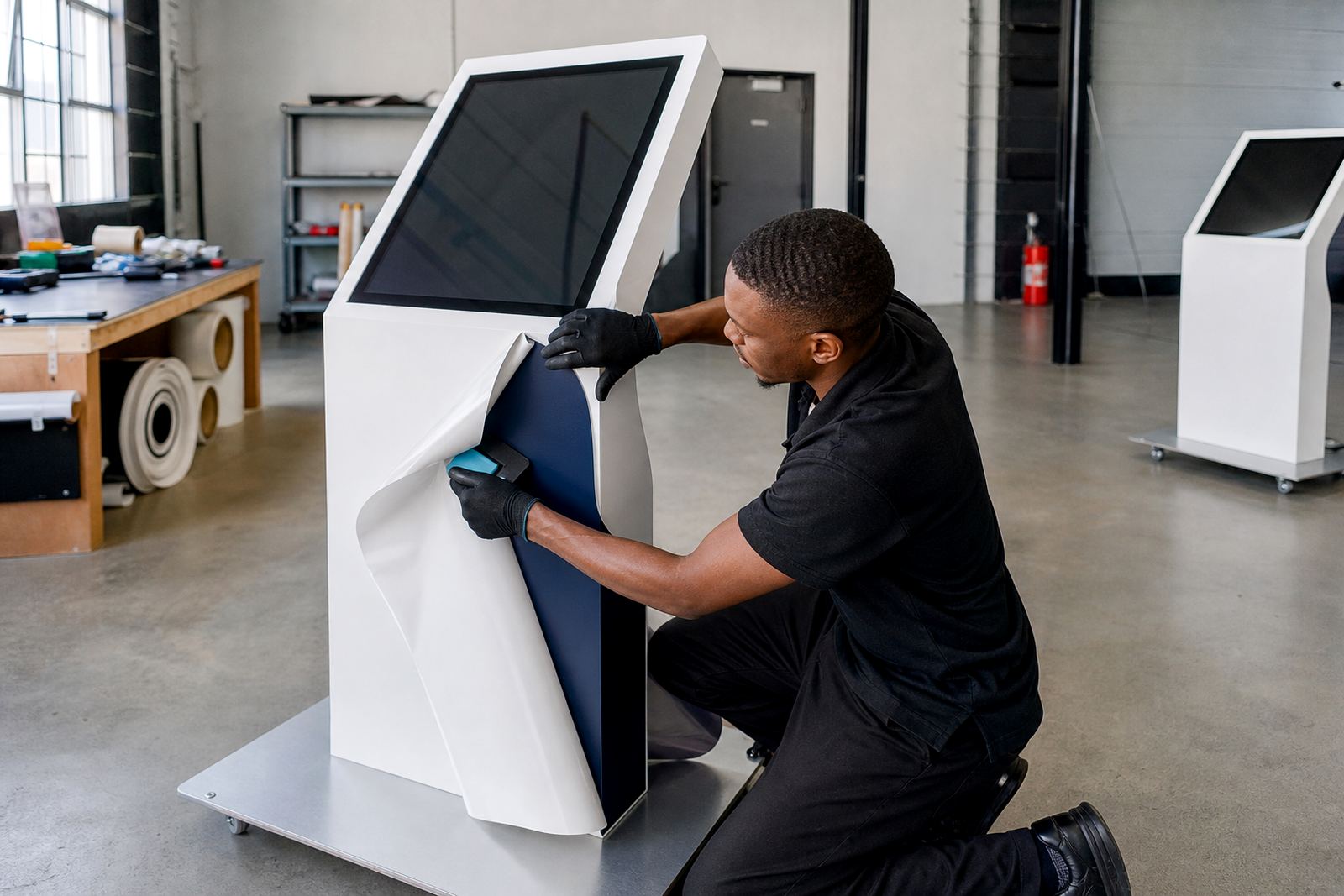
- Visual inspection for loose panels, worn parts and signs of moisture or corrosion
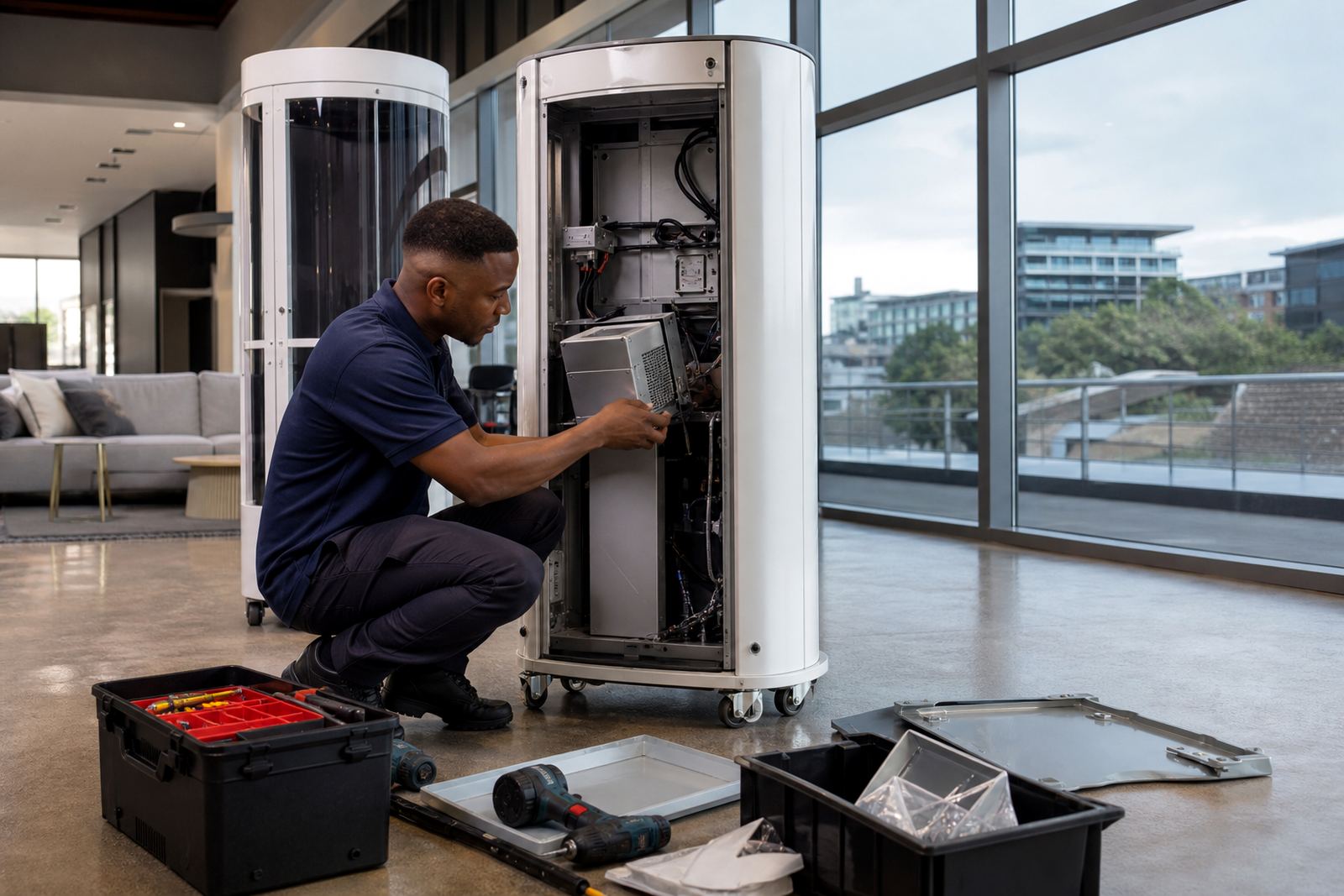
- Basic fault correction on site where the issue is minor and parts are available
On coastal sites in Durban and Cape Town, we pay extra attention to humidity-related corrosion and moisture ingress. Inland, dust and static build up can be the main issue, especially where air conditioning runs hard during peak trading months.
How our maintenance process works
Our process is practical and straightforward. First we capture the unit details, location, usage pattern and any known issues. Then we book a maintenance window that suits the store, often before opening, after close or during quieter trading periods. If the unit is part of a chain rollout, we can align service dates across several branches to keep admin simple.
When our technician arrives, the service begins with a full visual and functional check. The unit is then powered down safely, cleaned, tested and recommissioned. If we spot a part that is close to failure, we flag it early so the client can plan a replacement rather than waiting for a breakdown. That saves time and usually saves money too.
- Site review and access confirmation
- Unit inspection and performance testing
- Cleaning, adjustment and recalibration
- Minor repairs or part replacement if approved
- Final test, sign-off and service notes
Recommended service intervals by use pattern
There is no single interval that suits every store. A kiosk in a busy mall foyer will need more frequent attention than a stand used for seasonal promotions. We usually recommend a monthly, quarterly or six-monthly plan depending on foot traffic, dust exposure, running hours and the type of product being displayed.
As a general guide, high use retail sites should book monthly checks, standard in-store units work well on a quarterly cycle, and lower use display stands can often be maintained every six months. Where the unit runs for long hours or handles continuous customer interaction, the interval should be shortened. In practical terms, it is easier to service before faults become visible to shoppers, not after.
We also advise a service visit after any major store refit, power event, software update or relocation. Moving a kiosk or rotating stand can loosen fittings, shift alignment or disturb the cable routing, even if the move is only a few metres.
Turnaround times and parts planning
Preventative servicing is usually scheduled as a planned visit, so turnaround depends on how many units are on site and whether parts are needed. A single kiosk or display stand can often be checked and returned to service the same day. Larger multi-site plans are scheduled in blocks so stores can keep trading with minimal disruption.
If we identify a worn motor, damaged touch component or power item, we will advise the client on the expected lead time before any work proceeds. Where the fault is minor, the repair may be completed during the same visit. Where parts need ordering, we keep the unit serviceable where possible and book the follow up without dragging the matter out.
For retailers with several branches, a rolling service schedule works best. It gives each store a predictable visit window and helps the team keep records clean. It also means the support lead is not chasing random breakdowns every week, which is a relief for everyone.
Pricing approach that suits single sites and rollouts
Our pricing is based on the unit type, the number of devices, the site location and the condition of the equipment. A well maintained kiosk in Midrand does not need the same level of intervention as a heavily used rotating stand in a coastal mall, so we quote according to actual work rather than a one size fits all rate.
Clients can choose ad hoc servicing, scheduled maintenance visits or a support retainer for ongoing coverage. Retail groups often prefer a retainer because it makes budgeting easier and keeps service response predictable. For one off calls, we quote after the initial review so the scope is clear before any work starts.
Where a store network spans Johannesburg, Pretoria, Centurion, Sandton, Cape Town, Durban and Bloemfontein, we can combine visits to reduce callout overheads. That keeps the Rand value sensible without cutting corners on the actual service work.
Why preventative care protects both uptime and presentation
A kiosk that responds slowly or a stand that wobbles sends the wrong message on the floor. Preventative servicing protects both performance and appearance, which matters in retail because shoppers judge what they can see and touch. It also reduces the chance of a unit failing during peak trade, promo periods or festive season traffic.
For stores running on backup power or recovering from load-shedding, preventative servicing matters even more. Power dips can stress control boards, touch modules and moving parts, so a planned check after unstable power periods is a sensible habit. Regular care keeps the unit looking good and running properly, and it helps staff focus on customers instead of fighting equipment issues.
- Lower risk of sudden failure during trading hours
- Cleaner presentation for customers and brand teams
- Better touch response and motion consistency
- Longer working life for motors, screens and control parts
- More predictable budgeting for maintenance and repairs
Key facts
| Service type | Preventative servicing for interactive touchscreen kiosks and 360 degree display stands |
|---|---|
| Typical unit sizes | Tabletop, floor standing and custom retail formats from compact units to large format displays |
| Power checks | Mains input, plug integrity, surge protection and recovery after outages |
| Mechanical checks | Motors, bearings, drive alignment, fixings and vibration |
| Software checks | Auto-start, content playback, configuration and basic network review |
| Recommended intervals | Monthly, quarterly or six-monthly depending on usage and site conditions |